

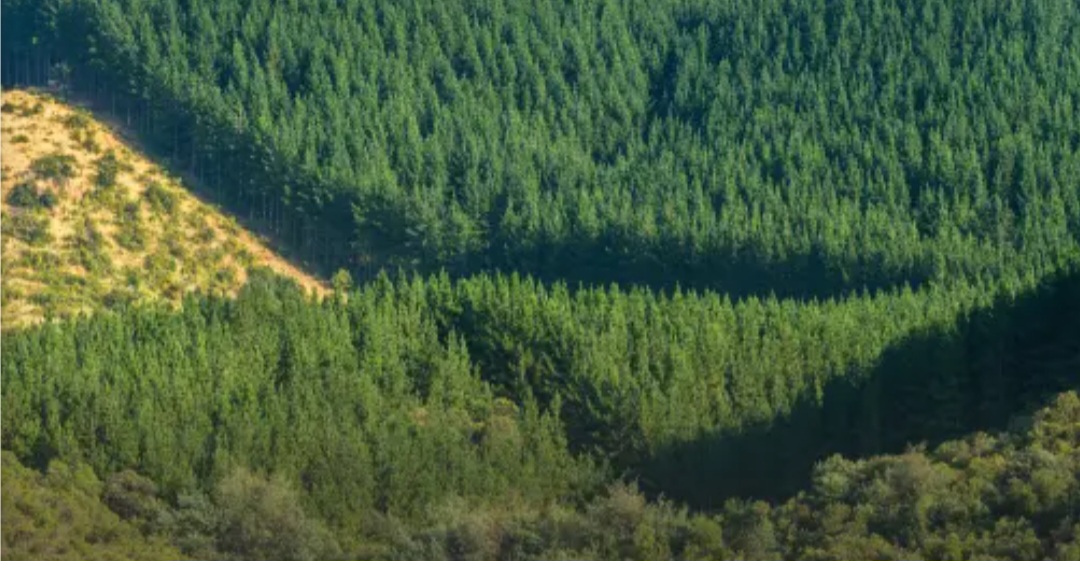
The manager of the Association of Forestry Contractors, René Muñoz Klock, outlined the main variables that have led to a decline in exports from forestry producers to various global markets.
According to data from the Forestry Institute (Infor), an agency under the Ministry of Agriculture, forestry exports between January and September 2023 reached USD 4.175 billion, a figure representing a 20% drop compared to the same period last year.
According to René Muñoz, the decline is explained by foreign purchase prices, along with domestic issues such as attacks affecting the sector, damages caused by wildfires, and laws surrounding forestry production.
The leader noted that "the decrease is driven by external variables, such as weakened prices for timber and pulp, resulting from increased supply from new plants, which drives prices down."
In fact, the sharpest declines were seen in MDF moldings (-59.6%), raw pulp (-50.3%), and radiata pine wood moldings (-47.3%).
However, the leader emphasized internal problems: "Security issues make it impossible to work in certain areas, leaving standing supply untapped. This extends supply distances and makes it impossible to compete with foreign prices because greater distances increase production costs."
He elaborated on the issue, stating that "violence and the intentionality of wildfires are another significant variable and are gaining strength in this 2023-2024 season, which is forecasted to be tough and difficult."
On the other hand, regarding tenders and contracts, Muñoz Klock stated that "their duration and the reduced activity caused by the crisis directly impact contractors and labor, meaning those in this sector are affected by it."
The situation in the industry has led to "a significant reduction in labor at sawmills, industrial plants, and the reorganization of large companies."
The leader acknowledged that "another variable is institutional, referring to the laws regulating the sector, where we have seen significant delays. For example, there is a lack of promotion for afforestation and reforestation, as well as the creation of the National Forestry Service—issues that would help improve the sector's situation. This uncertainty is reflected in low investment. Without clarity on the legislation governing our sector, capital moves to other countries."
INTERSECTORAL DIALOGUE
On how to address these challenges, the forestry contractors' leader shared, "We are grouped in an organization called Futuro Madera, which brings together six forestry associations, from producers to contractors, forestry engineers, and timber SMEs."
He added that this group is "in talks with the government. We are seated at the Wood Table, promoted by the Forestry Institute. There, action plans are being developed to address current gaps."
"The forestry sector must always plan long-term, with a horizon of 12 to 25 years for introduced species, while for native species, it ranges from 60 to 100 years. So, what we fail to do today will be noticeable in 12 to 15 years," he explained.
For this reason, he insisted that "we must sit down to discuss and plan how to project the sector," calling for reflection on "what legislation we incorporate and what instruments we use, because in 15 years, we will see a shortage of timber."
In his view, "we must be at the table, and we, responsibly through Futuro Madera, are at those tables, discussing and planning the sector's future."
Source:www.latribuna.cl
/data/user/0/com.samsung.android.app.notes/files/clipdata/clipdata_bodytext_231111_094002_787.sdocx





Comments (0)
No comments yet. Be the first to comment!
Leave a comment