

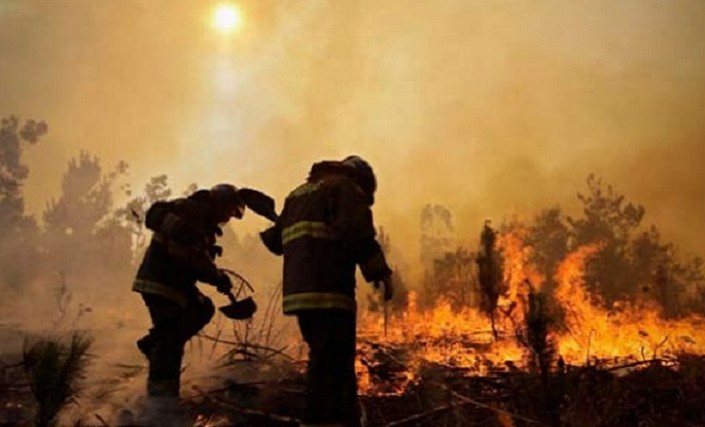
The proposal also seeks to increase penalties for intentional fires set in forests that harm wildlife and result in human deaths, mutilations, or severe injuries, raising the prison term from 5 years and a day to 20 years, or 15 years and a day to 20 years.
A group of lawmakers introduced a bill aimed at modifying the Penal Code and the Forest Law to increase penalties for the crime of arson.
The initiative, submitted this Tuesday, November 5, was presented by congressmembers Jorge Brito, Karol Cariola (author), Andrés Celis, Luis Cuello, Tomás De Rementería, Marta González, Tomás Lagomarsino, Miguel Mellado, Gaspar Rivas, and Camila Rojas.
The proposed changes include increasing penalties for intentional arson, currently punishable by 5 years and a day to 20 years, to 10 years and a day to 20 years—even without fatalities—when committed in buildings or places intended for habitation, aircraft, ships (or similar structures) if unoccupied, in native forests, or when affecting native flora and fauna.
The bill also proposes harsher penalties if intentional forest fires that harm animal life result in human deaths, mutilations, or severe injuries, increasing the sentence from 5 years and a day to 20 years, or 15 years and a day to 20 years.
Similarly, it considers raising penalties for negligent fires in urban, semi-urban, or rural areas caused by productive or industrial activities that, by law, should have ensured environmental or structural conditions to prevent them. The penalty would increase from 541 days to 5 years to 3 years and a day to 5 years. Additionally, in cases involving deaths (or mutilations, severe injuries), the penalty would rise from 541 days to 5 years to 5 years and a day to 15 years.
Finally, the bill proposes increasing penalties for negligent fires in urban, semi-urban, or rural areas by one degree if committed during a constitutional state of emergency, raising the sentence from 541 days to 5 years to 5 years and a day to 10 years.
"This bill aims to address gaps in our current legislation through concrete measures that can no longer wait, as they could make a significant positive difference in tackling this socio-environmental issue," stated the lawmakers in the submitted text.
Environmentalist deputy Félix González noted, "This bill will likely go to the Constitution Committee to assess whether different penalties apply. Sometimes, individuals already convicted end up benefiting from new legal classifications, so this requires careful review, especially considering the recent major fires we’ve had in our region."
González also urged expediting the processing of the so-called Short Fire Law, which mandates firebreaks in areas at risk due to forest plantations.
Source:La Discusión


Comments (0)
No comments yet. Be the first to comment!
Leave a comment