

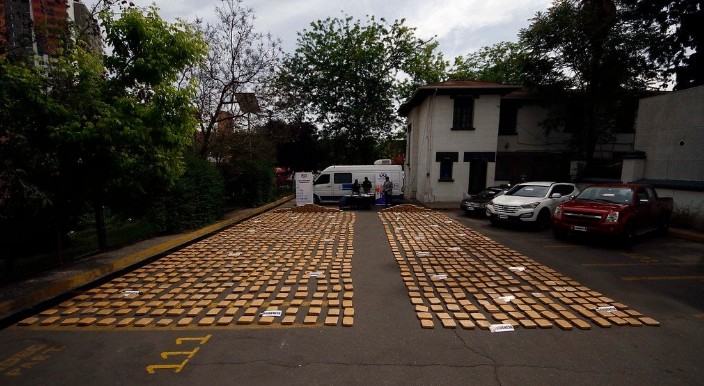
The 2025 Organized Crime in Chile report, prepared by the National Prosecutor's Office, caused an impact by indicating that the presence of transnational criminal organizations, such as cells linked to the Tren de Aragua, has been detected in the southern macrozone. The main activities of these organizations, the document states, are drug trafficking, extortion, and human trafficking.
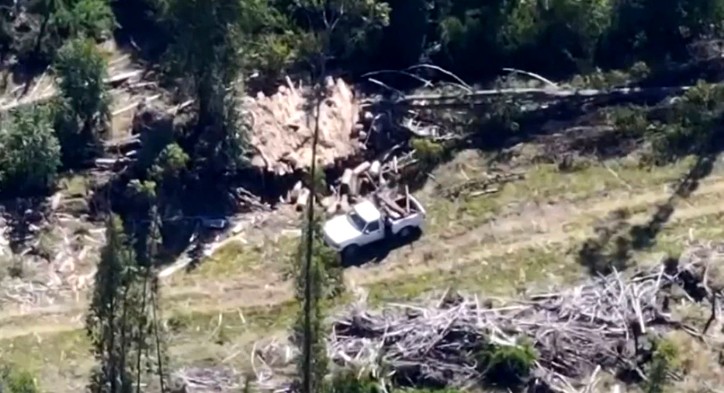
A distinctive feature of the southern macrozone is the convergence of traditional illicit economies—such as drug trafficking, extortion, and human trafficking—with crimes associated with natural resources, like timber and salmon theft.
The report also notes that these crimes have evolved, developing complex logistical chains and acquiring the ability to launder assets in formal markets. In the case of timber theft, the organizations operate in a coordinated manner at all levels of the logistical chain and employ the method of document forgery to launder the resource.
STRUCTURAL VULNERABILITIES
According to the director of the Observatory of Organized Crime and Terrorism (OCRIT), Pablo Urquíizar, the entry of transnational criminal organizations like the Tren de Aragua and the consolidation of highly profitable illicit markets—such as timber and drugs—demonstrate that "organized crime is taking advantage of the state's structural vulnerabilities, which include low institutional presence in rural and urban areas, scarce police staffing, and the risk of corruption."
For the former security coordinator in the southern macrozone, the report also warns of increased technological and financial sophistication in crime, connecting local economies with global asset laundering networks.
"This poses an urgent challenge for the state: to strengthen asset pursuit, international cooperation, and, above all, to regain territorial control in critical rural and urban areas," he stated.
Urquizar added that, in summary, the document shows that the southern macrozone no longer faces only the violence and terrorism that were known, but a complex criminal reconfiguration, where traditional crimes coexist with modern and transnational criminal structures. In this context, the state response must transcend public security and advance toward a comprehensive strategy of security, development, and sustained institutional presence.
DRUG TRAFFICKING: THE ARTICULATING AXIS
The report reveals that drug trafficking has consolidated as the main criminal threat in the southern macrozone. It is the axis that articulates other illicit activities and leads to an increase in levels of violence, homicides, and kidnappings.
In this macrozone, micro-trafficking has diversified to include marijuana, crack cocaine, cocaine, and, to a lesser extent, synthetic drugs like ketamine and methamphetamine.
In this regard, lawyer and director of the Center for Security and Organized Crime Studies (CESCRO) at San Sebastián University, Luis Toledo, believes that the report confirms a profound transformation in the organized crime landscape in Chile.
In his view, in the southern macrozone, drug trafficking has become the main driver of criminality, by articulating other illicit activities such as extortion, kidnapping, timber theft, and even salmon theft.
Regarding the presence of international gangs like the Tren de Aragua, which operates with structures and methods typical of global crime, what is concerning for the specialist is that "violence previously concentrated in the north or the Metropolitan region has now expanded to historically calmer territories like Los Ríos or Los Lagos." "There, gangs not only traffic drugs but also begin to control local economies and launder assets in formal markets, which endangers the social and economic fabric of those regions," he added.
For Toledo, the state must act with a coordinated and sustained strategy over time: strengthen asset pursuit, modernize criminal intelligence, and protect territories where institutional presence is weakest. "This report demonstrates that the southern macrozone is no longer a transit zone but a new epicenter of organized crime in our country," he concluded.
Source:La Tribuna





Comments (0)
No comments yet. Be the first to comment!
Leave a comment