

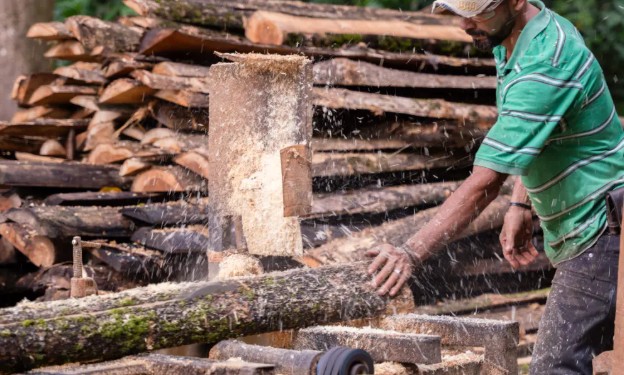
Costa Rica has completed the initial phase of a process that will lead to the first National Civil Construction Code for Wood, a tool aimed at organizing, modernizing, and ensuring the safe use of this material under technical, environmental, and productive criteria aligned with local realities.
This preliminary stage focused on an in-depth diagnosis of the current state of the sector. The analysis ranged from reviewing international regulations to evaluating national capacities, available construction systems, and technical requirements that will need to be incorporated into the future code.
The work was coordinated by the Forest, Wood, and Industry Chamber (CFMI), with the support of the "Support for Sustainable Forest Management" project, funded by the cooperation of the Grand Duchy of Luxembourg and implemented by the agency LuxDev. As part of the study, existing codes and standards from countries such as the United States, Canada, various European nations, and Chile were analyzed, complemented by specialized literature and secondary technical sources.
This exercise was complemented by a validation process with national and international specialists, who contributed criteria through interviews and technical consultations. This feedback helped identify successful practices and assess their feasibility within the Costa Rican context.
One of the central findings was the need to close gaps in the production chain. Field measurements and industrial analysis revealed challenges in raw material standardization, traceability, quality, and technological capabilities, but also opportunities to strengthen the forestry sector and its link to construction.
The CFMI emphasizes that the future code must be accompanied by clear domestic demand for wood with defined technical specifications. In this way, the market itself would become a driver of modernization, pushing national industries to supply tomorrow's construction needs.
For this first phase, a strategic focus was defined: housing and buildings of one to three levels. This segment will allow for the validation of construction solutions, development of technical capacities, and generation of greater confidence among architects and engineers before advancing to more complex projects.
The project, with an estimated duration of 18 months, includes an intensive agenda for 2026 and 2027, encompassing structural tests, performance analyses for different wood species, development of technical guides, regulatory annexes, and training programs aimed at the professional sector.
The initiative also responds to the country's climate commitments. The Nationally Determined Contributions establish that Costa Rica must have a wood construction code by 2027, as part of its decarbonization strategy. The use of wood in building reduces emissions and contributes to carbon storage, aligning productive development with climate action.
With the support of the Federated College of Engineers and Architects and the future participation of universities and specialized laboratories, the country is moving toward a regulation that promises to invigorate the local economy, strengthen forest producers, and position Costa Rica as a regional reference in sustainable construction.
Source:Revistaeyn.com






Comments (0)
No comments yet. Be the first to comment!
Leave a comment