

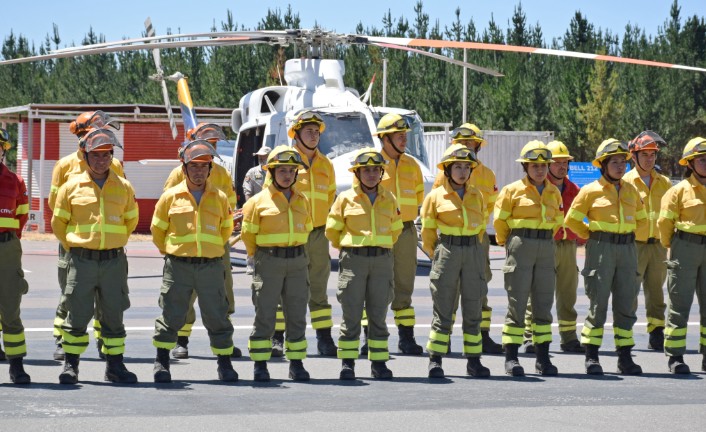
With a tribute to the four brigade members who died in a forest fire in the commune of Los Sauces, La Araucanía region, in January of this year, CMPC unveiled its forest fire prevention and combat strategy for the 2025-2026 season. The presentation took place at the Trilahue base, located in Monte Águila, within the commune of Cabrero, where the aircraft, helicopters, ground mechanized vehicles, and personnel deployed for the coming months were displayed.
CARE FOR PEOPLE
Bernardo Larraín Matte, president of Empresas CMPC, remembered the brigade members who died during the previous season: Duban Olate, José Luis Quezada, Cristián Guerra, and Gabriel Toro.
"I want to tell you, taking advantage of this painful reflection, that the first priority is the care of the people who work for the company, the contractors, and the suppliers. We are challenging ourselves every day to improve capabilities and training so that those dangers do not occur," he stated.
For Francisco Ruiz-Tagle, general manager of CMPC, the ceremony was fundamental because it allowed highlighting the necessary coordination to face a fire season that will likely be very complex and where prevention will play a key role.
LOGISTICAL DEPLOYMENT
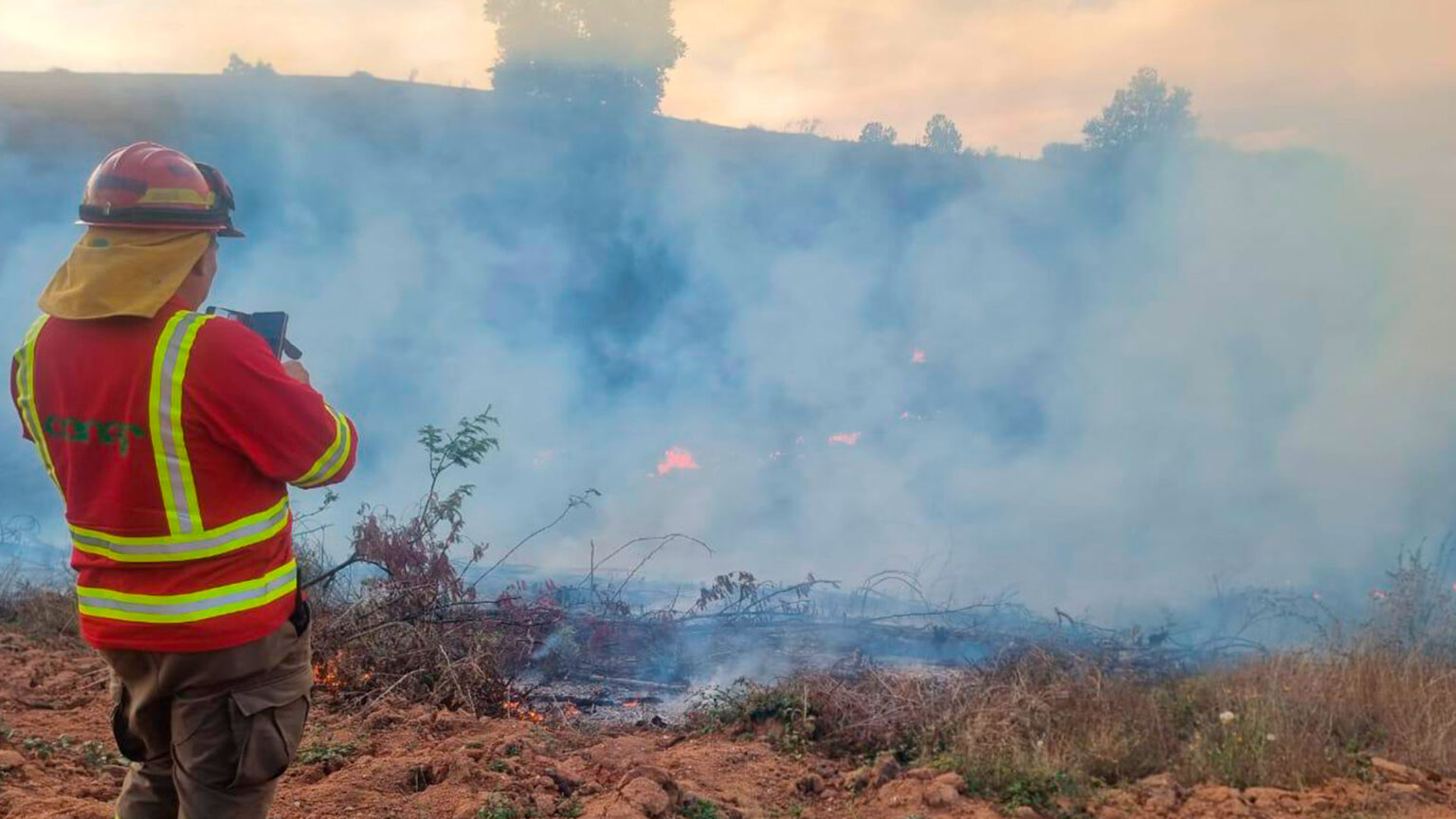
Regarding the logistical resources deployed, Ruiz-Tagle highlighted that they have 10 Air Tractor (AT) planes, two coordination aircraft, and 9 helicopters, including a CH-46 Chinook with a 5,000-liter water capacity. Regarding personnel, the general manager of CMPC indicated that 145 brigades will be operational this season, with a total of 1,083 men and women.
"We have practically more than 100 multipurpose brigades that are patrolling the entire territory on hot days and days of greater fire exposure," he emphasized.
Along with the above, he highlighted that today there are various communities and forest fire prevention commissions actively participating in this work.
INTENTIONALITY AND "TOUGHER" LAWS
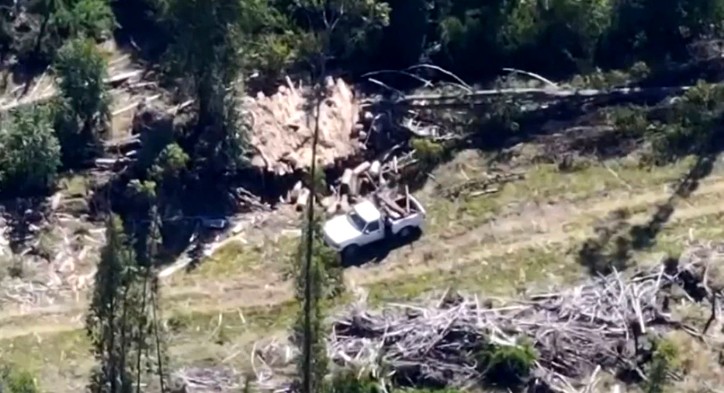
The intentionality of fires was one of the central topics of the event. From the Chilean Wood Corporation (Corma), its president for the Biobío and Ñuble regions, Alejandro Casagrande, asserted that it is necessary for Congress to create "tougher" laws for those accused by the justice system.
"The greatest boost the country can give in terms of prevention is, indeed, to pass a very good Fire Law," indicated the representative.
Casagrande added that the work between the Public Ministry and the police is fundamental to finding those responsible. However, he considers that the penalties against those who cause fires through negligence are very low.
In his opinion, it is unacceptable that less than 1% of complaints result in effective convictions. "That has to increase. In Europe, we are talking about percentages of 25% or 30%," he stressed.
IMPACT ON ECONOMIC DEVELOPMENT
The regional presidential delegate of Biobío, Humberto Toro, emphasized that when a forest fire occurs, not only are the property owners affected.
"Jobs, productivity, economic development, the heart and soul of the region are burned," he emphasized.
For the Executive's representative in the area, this kind of partnership is fundamental to facing these emergencies: "A country's purpose is to develop its productive vocations. Therefore, the public-private alliance is strategic, not tactical," affirmed Toro.
COMMUNITY PERSPECTIVE
Present at the event, the regional director of the National Forestry Corporation (Conaf) in Biobío, Esteban Krause, highlighted the private company's openness to working with other public institutions.
"One of the things we have learned over time is that alone we are not capable. That's why, when I say we need everyone, I very strongly include the communities," said Krause.
The director added that prevention is fundamental, as fires in our country are, for the most part, caused by negligence or intent.
AIR AND GROUND RESOURCES
CMPC reported that it has 12 aircraft for this season, of which 10 correspond to AT 802 tanker aircraft for initial attack, with a capacity of 3,000 liters for water and retardant drops, and two coordination units.
Likewise, there will be 9 helicopters: one CH-46 Chinook, with a drop capacity exceeding 4,000 liters, and 8 medium-sized Bell 212 and 412 aircraft for transporting brigade members and water drops with a capacity of 2,000 liters each. Regarding the teams, the company reported that they are divided into type 1, 2, 3, and 4 ground tele-transported brigades, mechanized and multipurpose.
Source:La Tribuna


Comments (0)
No comments yet. Be the first to comment!
Leave a comment