

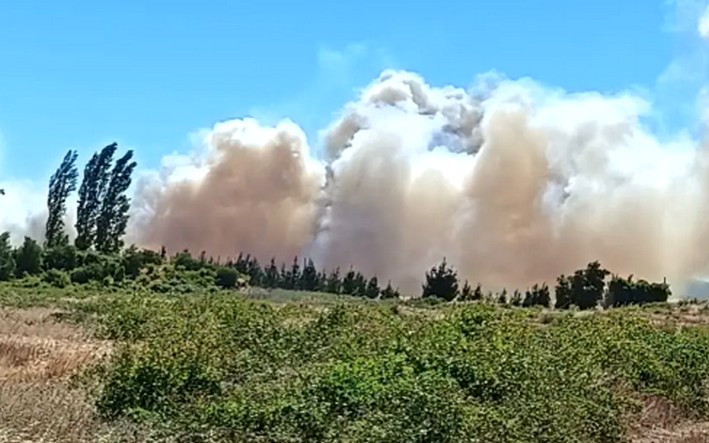
The province of Biobío leads the regional wildfire statistics and, furthermore, groups together the communes that historically present the highest frequency of incidents and the largest areas affected by this type of emergency.
This was confirmed by the provincial head of the National Forestry Corporation (Conaf), Juan Carlos Bascur, who provided a detailed balance of the past season and the current scenario, marked by adverse climatic conditions, high rurality, and a concerning intentionality in the origin of the incidents.
In this context, during the previous season, the commune with the highest occurrence is Los Ángeles, recording the highest number of wildfires, with 154 events, followed by Mulchén, with 80, and Yumbel, with 57 fires.
These communes coincide with those that Conaf has defined as "critical," along with Laja and Cabrero, due to the combination of factors such as intense winds, a high rural population, and productive activities that elevate the risk.
In terms of affected area, Los Ángeles reached 253 hectares consumed, while Mulchén experienced one of the most complex episodes of the year, with 2,105 hectares affected, mainly due to a fire that occurred in March, when high temperatures, low relative humidity, and strong winds combined.
"The wind is like the engine of the fires, so to speak colloquially, because the wind gives the projection, the direction of the fire, where it is going to go, but also, the most complex thing, is that it gives it high speed and that makes it very complex, very difficult for our response teams. The fire becomes very resistant to control with a high wind speed," explained Bascur.
Yumbel, meanwhile, presented less impact, with 71 hectares, although the authority warned that the most concerning aspect remains the occurrence.
"A small fire can quickly transform into one of great magnitude, especially when there is simultaneity of events, as recently occurred in the Santa Fe sector, in Los Ángeles," said the Provincial Head of the National Forestry Corporation, Juan Carlos Bascur.
In that episode, the fire put homes at risk, forcing the activation of an evacuation alert, although ultimately no houses were destroyed.
Regarding evacuation protocols, the provincial head of Conaf indicated that a request for an SAE (Early Evacuation Alert) is made when there is imminent risk to people's lives, homes, or other critical infrastructure. These alerts can be requested by Conaf, Carabineros (police), or the municipalities, which are currently mandated by law to manage risks in their territories.
As for the current season, Bascur indicated that Los Ángeles again leads in occurrence, with 50 fires, followed by Mulchén, with 10, and Yumbel, which remains among the communes with the highest recurrence. To date, the province has recorded 100 wildfires and an affected area of 349 hectares, including significant incidents such as one in the mountain area, near the border with Argentina, and the Santa Fe fire.
One of the most concerning aspects, according to Conaf, is the origin of the fires. Statistics from the past season reveal that only 9% of the incidents had an undetermined cause, while 35.4% were caused by negligence, which would have allowed the prevention of nearly 180 fires if appropriate safeguarding measures had been taken. Added to this is a high level of intentionality, considered the main challenge for prevention.
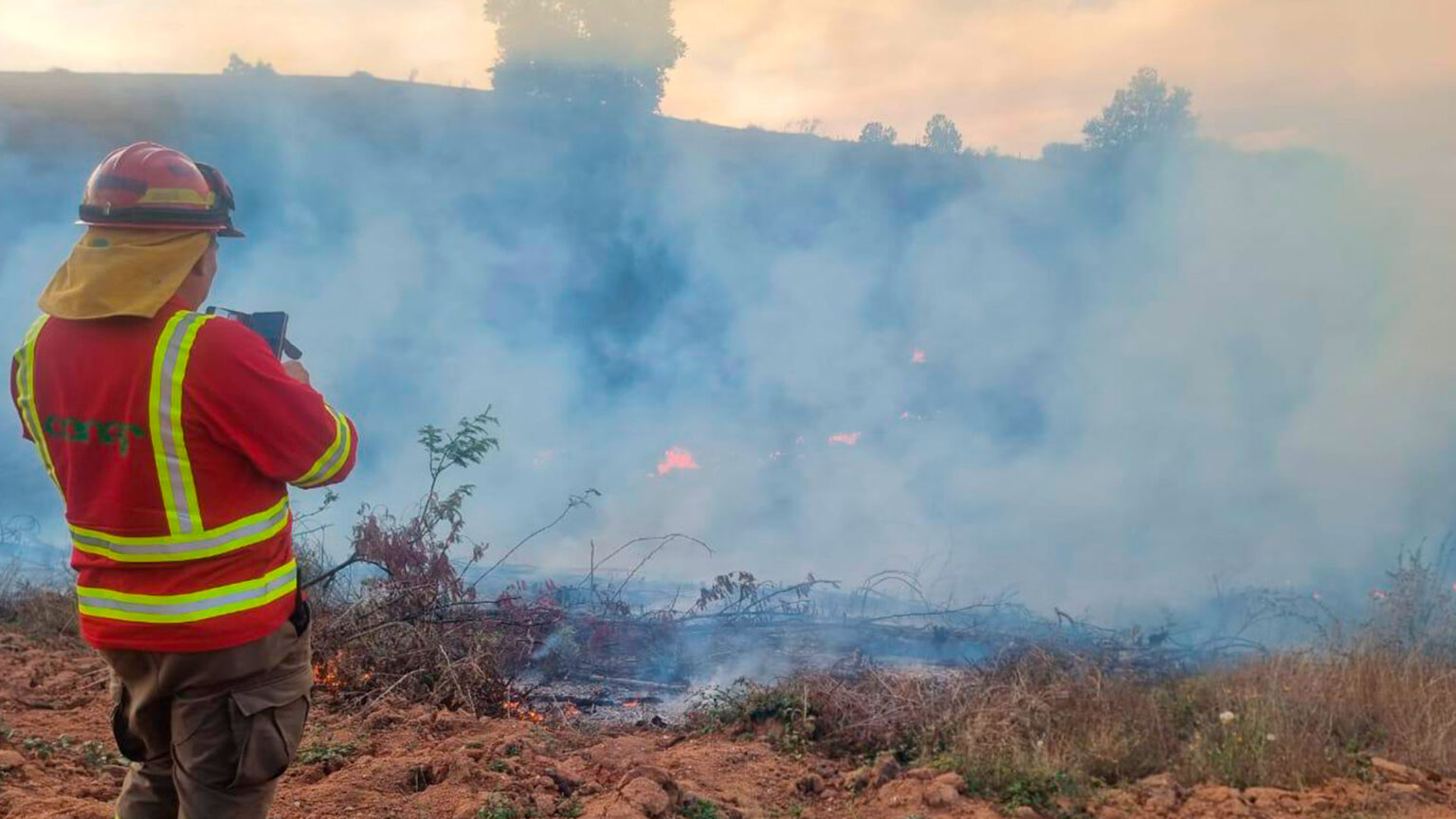
The provincial head highlighted the deployment of resources that Conaf has in the Biobío province, including 14 daytime brigades, one nighttime brigade, mechanized brigades, water tanker brigades, and aerial resources, such as air tankers, helicopters, and the Hercules C-130. However, he emphasized that the main focus remains prevention: "If we manage to reduce the occurrence, we will also prevent major impacts. Prevention is key to protecting lives, homes, and the environment."
WORK IN PREVENTION
Another line of work, in addition to fighting wildfires, is the one Conaf carries out in terms of prevention.
"We are working on fuel removal, creating firebreaks in different villages, helping communities and localities in the rural sector where they do not have the capacity to create their own firebreaks to protect their homes; we are supporting them as the National Forestry Corporation," affirmed Bascur.
Similarly, he detailed that they have held many coordination meetings and are carrying out outreach to the different territories, because "that is where our focus is, working in the different localities of the rural sector because that is where wildfires occur. When prevention fails, fires happen."
In this last line, Bascur detailed, they are working with patrols, as well as training and disseminating the different ways to protect homes, primarily.
Source:La Tribuna




Comments (0)
No comments yet. Be the first to comment!
Leave a comment