

The forestry sector faces a historic crossroads. While the current scenario threatens the social and productive fabric of the rural world, it also represents a unique opportunity to revitalize it if the right decisions are made.
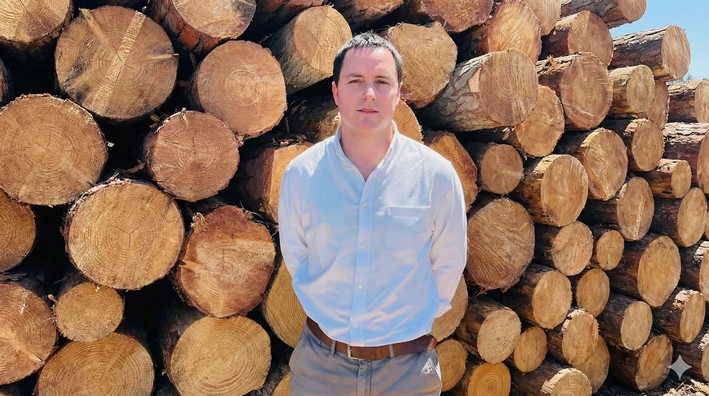
Ignacio Vera Izquierdo, General Manager of Forestal Santa Blanca, warns that the administration taking office next March 11th will inherit an industry battered by a "perfect storm," but with the potential to reverse the lack of incentives. According to the executive, it has been forgotten that forestry is a "patient business" radically different from traditional agriculture: while annual crops yield returns in five or six years, a pine plantation requires a 20-year cycle.
This is where one of the main challenges for the new government arises: to revitalize forestry SMEs again. These companies, which in past times were a powerful engine thanks to the existing promotion policies, have lost considerable ground. Asking an SME to immobilize capital for two decades without the state support that existed before 2012 is complex, but the new administration has the opportunity to transform these producers back into protagonists of rural development.
Added to this economic scenario is a cultural battle that has unjustly "demonized" the industry. Vera argues that pine has been accused of drying out soils, ignoring evidence that, in many eroded areas of the coastal drylands, it has been the only species capable of providing green cover and halting the advance of the desert.
To reverse this, the proposal is to transition towards a model of forest mosaics. This strategy not only seeks to recover productivity but also to integrate landscape management by combining conservation areas, biological firebreaks, and productive zones. The forest mosaic is the technical response to socially validate the sector and allow SMEs to operate under modern sustainability standards.
Infrastructure and New Governance
However, environmental sustainability will be a dead letter if the logistical urgency is not resolved. Vera warns that projects like the new commercial port for Maule in Constitución —a potential investment of US$532 million— risk becoming "white elephants" if they are not accompanied by the execution of the San Javier-Constitución double highway (Route L-30-M). This project is vital not only for safety but also to efficiently connect local producers with global markets.
Therefore, the final challenge is clear: President-elect José Antonio Kast has the unavoidable challenge of leading this public-private alliance. Unlike previous governments, the next administration has the opportunity and responsibility to involve more stakeholders when discussing public policies. It is not enough for conversations to be with Arauco and CMPC; it is imperative to also involve a group of forestry SMEs that have much to say.
"His administration must be responsible for synchronizing investment in public works with productive promotion, fostering a forestry sector that, far from being the problem, is part of the solution for the recovery of degraded soils and the engine of development for thousands of families," concludes Ignacio Vera.




Comments (0)
No comments yet. Be the first to comment!
Leave a comment