

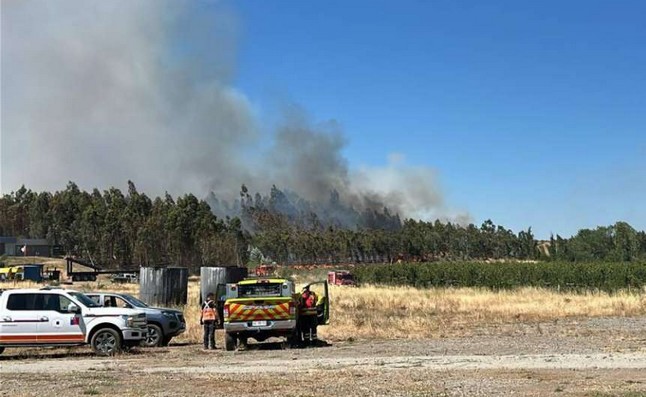
Since the forest fire season began in July, 166 fires have been recorded in Ñuble, representing a 28% increase compared to the previous period. The area affected so far is 454 hectares, which is a 62% decrease from last season. The area consumed by fire is mostly grasslands and scrubland, especially in interface zones near homes, while only 10% is forest.
Precisely this Saturday, the regional office of Senapred declared a Regional Red Alert for extreme heat, considering the forecast issued by the Chilean Meteorological Directorate (DMC). According to the DMC, maximum temperatures could reach or exceed 34°C for at least 3 consecutive days, mainly in the coastal mountain range, valley, and foothills of the Ñuble Region, starting Monday, December 29.
Forest fires have occurred in all 21 communes of the region during this season. According to statistics from the Regional Directorate of Conaf, Chillán has the highest number of incidents so far, with 22; followed by San Carlos, with 19; and Coihueco, with 13.
Some of these fires posed a threat to populated areas and properties, reaching conditions that warranted the activation of a Red Alert by Senapred. To date, five Red Alerts have been declared in Ñuble: in Ránquil on December 16 due to two simultaneous fires in the Uvas Blancas and Rahuil sectors; in Chillán and Chillán Viejo on December 17 due to fires in San Bernardo and El Quillay; in San Nicolás on December 24; and in Bulnes on December 25.
The fire that affected the El Quillay sector last week was a large-scale emergency that endangered homes and the industrial sector of Chillán Viejo. However, the timely deployment of response teams allowed the spread of the flames to be controlled, avoiding casualties and regrettable damage.
"So far, we have not had a single home affected. I want to highlight the work we did in the El Quillay fire; there the system worked perfectly. Although the fire advanced, just over 200 hectares were consumed, but no homes or warehouses were affected. We saved between 8 and 9 companies from an important industrial belt for the region; there were fuel plants that supply the southern zone of our country, there was a company linked to timber, a company in the automotive sector. Protecting all that with Firefighters, Carabineros, the municipality, private companies, and of course, the ground crews and Conaf's aerial resources was a job done spectacularly, which I want to highlight and thank for, and let's hope it doesn't happen again because that fire, which was a negligent act by a person, could have left a greater disaster in the region," explained the regional director of Conaf, Juan Salvador Ramírez.
The director reiterated that 99% of the forest fires that occur in Ñuble are human-caused, and this year continues the same trend. Furthermore, he expressed concern because 82% of the incidents this period have been due to negligent acts.
"We have had only one fire of natural character, which was in the mountains, caused by lightning. The rest, all human-caused, and of that human cause, 86% to date are negligent and 10% are intentional. It is concerning that 86% of the fires are a negligent act, like the one that occurred in El Quillay, where three people were having a barbecue with a temperature of 32°C, with 30 km/h wind speed and low humidity, and there was a scrubland and grassland area next to it; you don't even have to be an expert in the matter to know that is a risk focus," he specified.
"Although we have more fires and less impact, there is one leg of this table that is not working, which is the community, which is unfortunately the one generating the fire," he added.
More Resources
This year, Conaf in Ñuble has 20 ground crews (19 daytime and 1 evening). For the first time, they have a mixed crew, which is a vehicle that mobilizes a water tank and also carries crew members to create firebreaks. "That is relevant because today when a ground resource arrives, two resources arrive: the water tank carried by the vehicle and the crew members," said Ramírez.
Regarding aerial resources, today there are a total of six emergency aircraft for fighting forest fires: Two AT planes, one medium helicopter, one heavy helicopter, and two light helicopters. In addition to this, there is a coordination plane, and its function is, when there are large-scale or simultaneous incidents, to assess from the air what type of combat is required according to the type of fire.
The director of Conaf Ñuble highlighted that resources for the prevention, mitigation, and control of fires have increased in the last four years.
"It must be noted that this government took office with $50 billion for fire prevention and control; today it will be $160 billion. That is, it is a significant exponential growth and it has been reflected in the increase of crews in the region, where today we have crews in the communes of Pemuco, Bulnes, Quillón, Quirihue, and in Chillán, which is our central base. In addition to this task force, there is the Regional Coordination Center (Cencor), which is little known, seldom seen by neighbors; however, it does fundamental work and we have it stationed at our Vivero de Álamos base in Chillán. It is an office where we have screens to see in real-time the weather forecast, wind speed, type of combustible vegetation, humidity level," he specified.
To this Conaf equipment are added the forest crews and aerial teams from the private sector, the work done by municipalities and police forces. This coordination has been key to containing and controlling fires in time, avoiding greater impacts.
"We also have an important agreement today with Corma, and it is equally relevant to highlight this public-private coordination. We have more than 40 surveillance cameras in Ñuble, which belong to private companies, which have their own ground and aerial crews, which are ultimately necessary to be able to fight fires when they are simultaneous," added Ramírez.
Disaster Risk Management
The regional director of Conaf stated that, in general, people do not have a culture of prevention or disaster risk management; on the contrary, we are accustomed to reacting after emergencies. We do not measure the risks involved in actions like burning trash or carrying out agricultural tasks when conditions are ideal for favoring the generation and spread of fires.
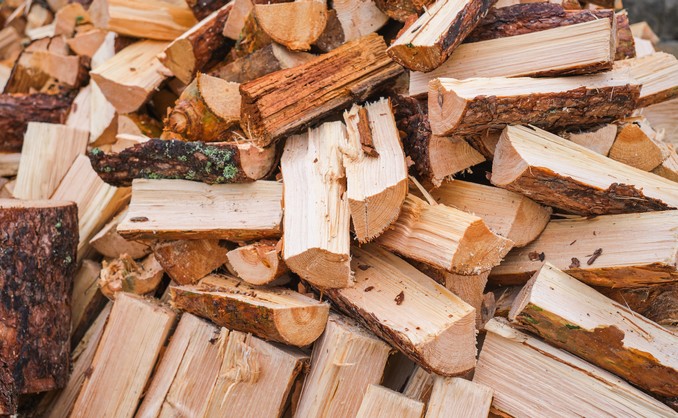
"We have little culture of disaster risk management; as a society, we are accustomed to emergencies, to being reactive, and there we have a difficulty. Chile is indeed a country prone to disasters; we all know we shouldn't build by the sea, the river, or at the foot of a volcano, but there we are building. In the countryside, it's the same; when one goes to live in the countryside, in subdivisions, I have other types of risks and vulnerabilities. Therefore, one must create a firebreak beforehand, move the woodshed that was attached to the house 20 meters away, clear the scrubland, plant trees that were close to the house a bit farther away. These are acts and actions of prevention so that, first of all, hopefully, a fire does not occur, and if it does, to mitigate the impact," he explained.
Other problems that can arise in subdivisions are narrow roads that hinder access for response vehicles, lack of access to water, or issues with garbage collection. "These are things we really need to work on."
"I want to make my call for people to become aware that in a fire, we all lose, and climate change is here to stay. In the middle of summer, there will be temperatures over 40°C, low relative humidity, and winds of 30 to 40 km/h. These will be favorable conditions for the creation of a tremendous fire if human beings carry out irresponsible actions," he warned.
Source:La Discusión

Comments (0)
No comments yet. Be the first to comment!
Leave a comment