

By Ignacio Vera Izquierdo, General Manager of Forestal Santa Blanca
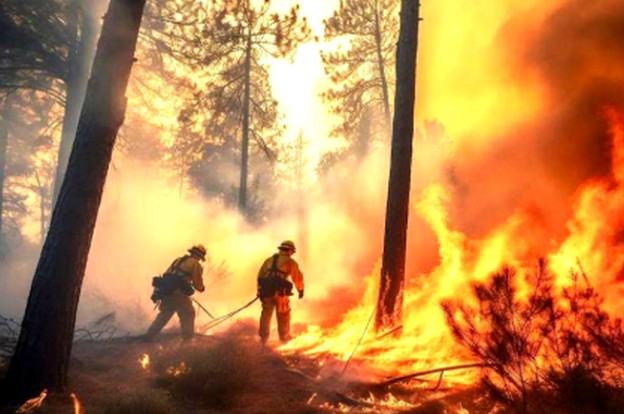
The forestry sector views the projected scenario for the coming years with concern. The national report for the 2023–2024 season records 73,841 burned hectares, of which 58,965 are categorized as "Under Investigation." This figure reflects the magnitude of the damage and the urgency to improve investigation, prevention, and sanctioning processes. This is compounded by recent reports confirming a sustained increase in fire incidents, heatwaves exceeding 30°C, and weather conditions that favor the spread of fire. All of this compels the forestry sector to urgently reconsider its role in prevention, response, and recovery as a top priority.
Recent history confirms the severity of the problem. In 2017, Chile faced the most devastating fires in its history, with over 500,000 hectares consumed between Coquimbo and Los Lagos, 11 fatalities, and losses exceeding 350 million dollars affecting plantations, productive infrastructure, and high-value ecosystems. Years later, in 2023, Santa Juana became the epicenter of another tragedy: over 200,000 hectares razed, 26 fatalities, and a severe social and economic impact on rural communities and the forestry and agricultural chain. These milestones reveal the vulnerability of the forestry model and the urgency to strengthen territorial planning and resilience in the face of climate change.
The threat is territorially diverse. In La Araucanía, alerts remain active due to high temperatures and abundant fuel load. In Biobío, the occurrence has grown notably: Los Ángeles, Lebu, Hualqui, Tomé, Coronel, and Penco concentrate most of the fire hotspots, which has necessitated reinforced patrols and coordination with police forces. In Ñuble, although rapid response has limited damage in some cases, the region remains vulnerable due to the combination of heat, wind, and fuel.
The risk extends beyond the south. In Maule, the Early Preventive Alert remains active due to high-temperature episodes in the mountains, coast, and valley. In the northern macro-zone, Limarí has recorded 19 fires in recent months, 13 of them in Ovalle, equivalent to 70% of the provincial total. Although the affected area decreased compared to the previous year, the 111% increase in the number of events highlights the need to maintain focused resources. Furthermore, fires in the high mountains, such as the Alto Biobío complex, demonstrate the logistical complexity when firefighting depends on helicopters and specialized resources.
Faced with this scenario, a Fire Law is urgently needed to coordinate prevention, firefighting, investigation, and recovery, with clear responsibilities among the State, regional governments, municipalities, and private entities. It must include a public registry of the accused and effective sanctions, as well as obligations for landscape management: firebreaks, regulation of plantation distances, and promotion of productive mosaics that reduce fuel continuity.
Community prevention and shared responsibility are unavoidable pillars. The forestry sector is willing to fund education programs, firebreak training, and inspection campaigns, along with support mechanisms for small landowners and municipalities. The adoption of technology—AI-powered cameras, drones, and real-time data analysis—and the operational modernization of brigades and aerial fleets are equally priorities.
Finally, post-fire recovery and hydrological risk mitigation must be mandatory parts of public policy. Vegetation restoration, erosion control, and hydrological monitoring are essential to protect watersheds and communities. The challenge for 2026 is significant and multifaceted, but with determination and coordination, we can reduce the country's vulnerability and ensure the safety of those who depend on our forests.
Comments (0)
No comments yet. Be the first to comment!
Leave a comment