

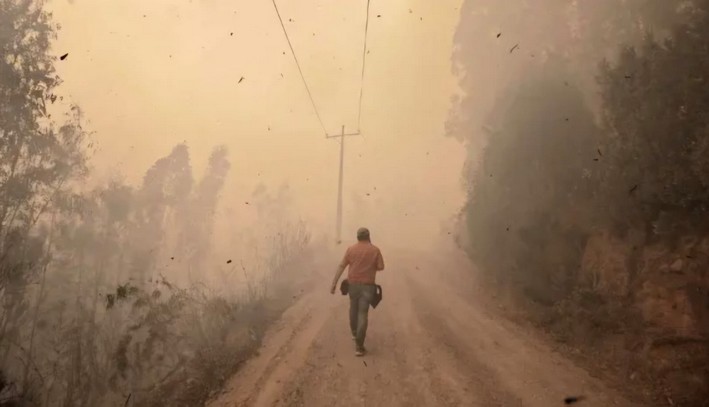
During the 2024-2025 wildfire season, which ended on June 30, forestry companies filed 324 reports and 45 lawsuits for intentionality in forest fires, as revealed by the regional president of Biobío and Ñuble for the Chilean Wood Corporation (Corma), Alejandro Casagrande.
Most of the cases correspond to episodes that occurred during the peak period, which is concentrated between December 15 and March 15.
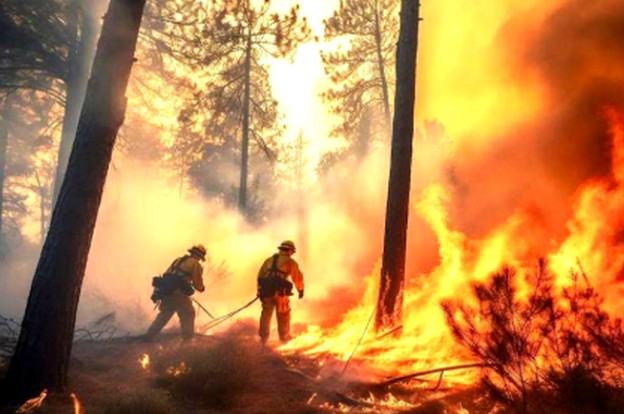
However, in the current 2025-2026 cycle, from July 1 to December 5, corresponding to the "low" fire season, an increase in their number is noted compared to the same period last year. According to figures from the National Forestry Corporation (Conaf), broken down by region, the increases range from 6% to 44%.
Furthermore, in the locations where the incidents were recorded, according to Casagrande, "simultaneous multi-focus fires" and "proximity to populated areas" have been detected, prompting the trade organization to call on authorities to "improve investigative capabilities."
Casagrande confirms that the background information gathered from cases occurring from July to date "has become formal complaints in Maule, Ñuble, Biobío, La Araucanía, and Los Ríos," and that the public prosecutor's offices have been requested to "investigate all events showing signs of intentionality."
From Bosques CMPC, the Corporate Affairs Manager, Ignacio Lira, corroborates that "between July 1 and December 5, we have suffered 61 fires," and laments that "half of them show clear characteristics of intentionality."
As an example, he mentions that in late November "we had four fires in Angol, north of La Araucanía, all multi-focus. It is impossible to think this is negligence or coincidence," he emphasizes.
Ten points of origin for the flames in Collipulli
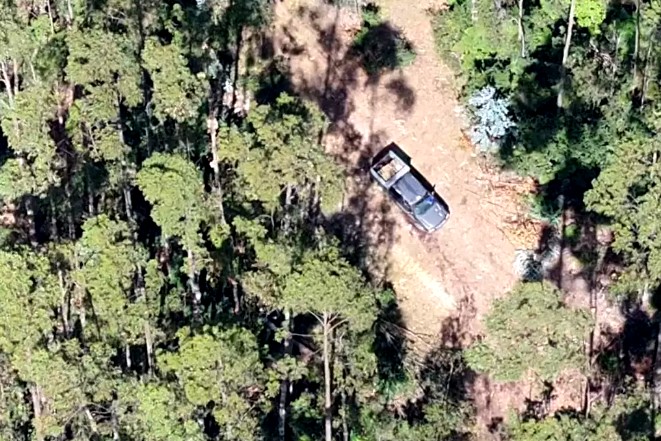
He also reveals that on Friday the 5th, a fire a few kilometers from the urban area of Collipulli had 10 ignition points. "Due to the climatic conditions of this time of year, the fire did not gain as much strength, but if it had occurred in the coming weeks, it would be a different story," he comments.
The executive alerts authorities and police and security forces "to take the necessary safety and surveillance measures, because if this scenario continues, the peak fire season could be very critical."
In its November "Violence Report," published on Thursday, the Multigremial of La Araucanía advocates for measures ahead of the start of the "highest risk season" for forest fires. The document notes that "last summer, the burned area in La Araucanía increased by 206%, and that region accounted for one in three fires in the south."
Similarly, it highlights that 52% of the fires in that area "were classified by Conaf as of unknown origin," indicating "a possible unclarified intentionality."
Temperature, Drought, and Intentionality
Academic from the Center for Research and Transfer in Irrigation and Agroclimatology (Citra) at the University of Talca, Patricio González, confirms that "since 2010, there has been an increase in forest fires during seasons when, in the 20th century, they did not occur; specifically, in winter and spring." The specialist illustrates that "this is due both to the progressive increase in maximum winter temperatures and to the megadrought recorded since 2007, which has been generating water stress in both native trees and those introduced to the country, such as pine and eucalyptus, which are highly flammable."
The expert adds to these two variables "the intentionality behind many fires, which in Chile's case is very serious." He maintains that "this has increased the proportion of forest fires in summer, but they are also appearing in a winter that is shorter, has scarce rainfall, shows an average increase in maximum temperatures, and where humans, whether due to pyromania, ideological reasons, or any other, find favorable conditions to start fires."
Professor González believes that "as long as Chile does not control that malicious human hand, we will continue to have very destructive fires."
Source:El Mercurio
Comments (0)
No comments yet. Be the first to comment!
Leave a comment