

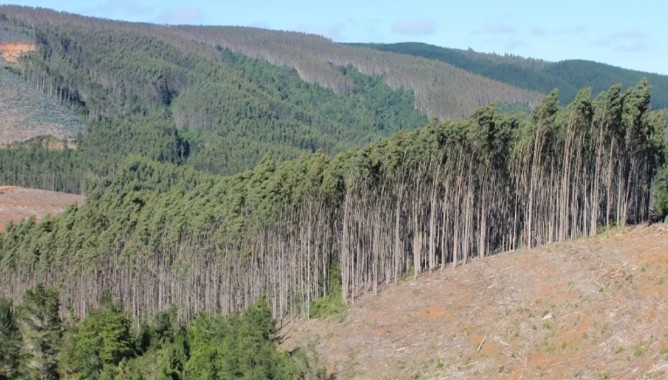
Authorities stated that the reduction in forestry plantations in La Araucanía is due to a "global trend" and the high rate of wildfires, while industry groups indicate it is also associated with a lack of incentives.
For 10 years, the hectares allocated for this activity have been showing a decline in the region. Although there were periods of recovery, the situation continues to trend downward.
Figures from the Forestry Institute (Infor) indicate that in 2015, forestry plantations covered an area exceeding 23 thousand hectares, showing a decline to about 13 thousand hectares by 2017.
A figure that has varied over time, with 2022 being the most critical year, when forestry plantations were just over 8,800 hectares in the region.
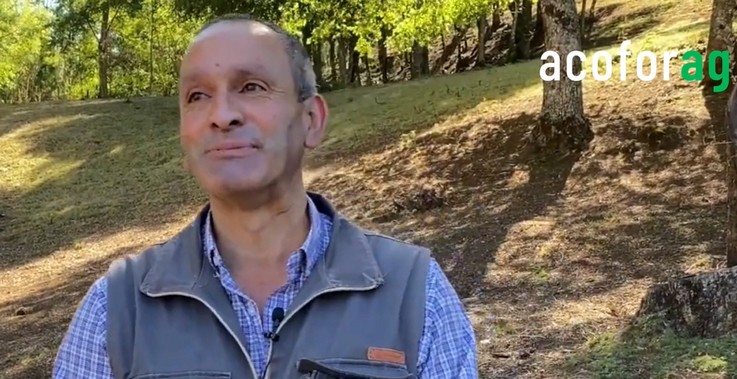
The manager of the Association of Forestry Contractors, René Muñoz, asserted that this situation responds to several factors, including wildfires and the lack of incentives for companies seeking to establish themselves in La Araucanía. "There is no state policy that promotes forestry. So, if there are no tools to encourage forestry, and if there is also no security, given that you don't know if the forest you plant will be burned, because nowadays negligence due to intentionality ranges between fifty-one and seventy percent in some communes of the southern macrozone," he pointed out.
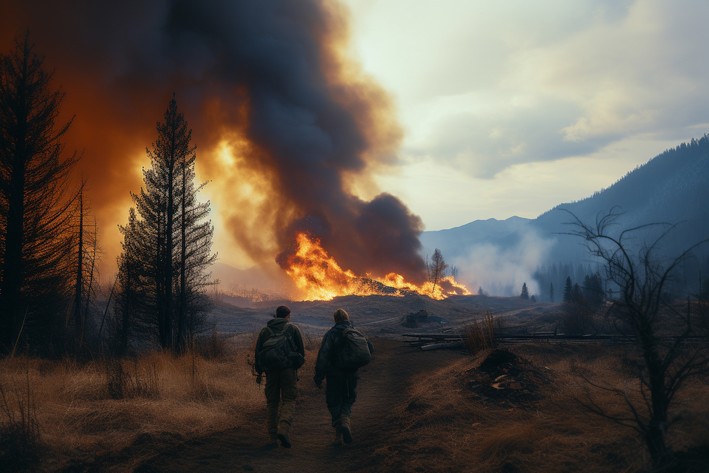
The Regional Ministerial Secretary (Seremi) of Agriculture in the area, Carlos Labrín, indicated that forestry plantations have not achieved stabilization due to wildfires and that it is also a "global trend." "This is a trend that is occurring globally, and the Araucanía Region has been particularly impacted, mainly for the reason I mentioned. The high rate of wildfires that have occurred, the number of hectares burned, and that also generates some concern for the investment the business sector wants to make," he noted.
According to the Forestry Institute, in 2023 forestry plantations showed a recovery in La Araucanía with over 13 thousand hectares.
However, the following year recorded a decrease with just over 11 thousand hectares across the entire region.
Source:BiobioChile

Comments (0)
No comments yet. Be the first to comment!
Leave a comment