

With less than two months until the new government takes office on March 11, the continuity of the Constitutional State of Exception in the Biobío Region is once again at the center of political debate.
The issue is analyzed not only from a security perspective but also in terms of its productive, social, and political effects, in an area that has been under a measure that, by definition, should be temporary for almost four years.
Official figures from Carabineros de Chile show a marked progression in rural violence episodes recorded in the Southern Macrozone in recent years, creating a scenario that has escalated in intensity and recurrence.
While 1,679 events were counted in 2021, 2022 ended with 1,161 incidents, showing a decrease from the previous peak, though maintaining high levels of conflict.
In 2023, records noted 966 cases, confirming a downward trend that deepened in 2024, with 516 episodes. So far in 2025, Carabineros reports 69 events, a significantly lower number compared to previous years.
During the campaign, President-elect José Antonio Kast placed security as one of the central pillars of his programmatic proposal. In that context, he was particularly critical of the current Government's use of the State of Exception in the Southern Macrozone, arguing that its prolongation has been "unusual and unjustified," which in his view would demonstrate a capitulation to violence.
However, the soon-to-be President was emphatic in stating that he would not rule out resorting to this constitutional tool in scenarios he described as "internal war," especially following high-impact events, such as the murder of three Carabineros officers in the commune of Cañete in April 2024.
In his statements, Kast has insisted that there are no autonomous territories in Chile and that the State must fully exercise its authority. In line with this, he proposed measures such as controlling the entry and exit of people in sectors like Temucuicui, with the participation of police and Armed Forces, as well as strict enforcement of basic Rule of Law norms, like inspecting vehicles without documentation or irregular situations that, in his opinion, are not adequately controlled today.
View from the Associations
From the Association of Forestry Contractors (Acoforag), its manager René Muñoz was even more explicit when evaluating the effects of the measure. "We believe the State of Exception must continue," he stated, highlighting an objective decrease in attacks, from 104 incidents in 2022 to 27 in the 2024-2025 period.
However, he warned that this reduction does not equate to eradicating the problem, as the association continues to record, on average, more than two attacks per month for the past four years. "It decreases, but the problem is not eradicated or solved, and that is our main complaint," he maintained.
Muñoz stated that the sector expects the next government to fulfill the narrative it upheld during the campaign, although he acknowledged it is a deeply rooted problem with a complex solution.
In that sense, he expressed his support for increasing security measures and granting greater powers to the Armed Forces, which, in his opinion, requires the approval of laws such as the Rules on the Use of Force and Critical Infrastructure laws.
"The presence of Carabineros is not enough; a different force is needed, with political backing, to act effectively," he affirmed, noting that there are currently areas where intervention is not possible precisely due to the lack of that backing.
From the regional business world, the discussion is viewed with a mix of caution and expectation. The president of CPC Biobío, Álvaro Ananías, acknowledged that, in an ideal scenario, it should not be necessary to maintain a State of Exception for such a prolonged period.
However, he stated that current conditions still do not allow for dispensing with this measure. "From CPC Biobío, we would very much like it not to be necessary to continue with the State of Exception in the Southern Macrozone, which has now been in place for almost four uninterrupted years. But unfortunately, we believe it is still very necessary to continue with the State of Exception in force, until new measures are defined and violence is definitively stopped and the Rule of Law becomes a reality," he said.
Ananías recalled episodes that, in his opinion, illustrate the seriousness of the situation, such as the death of worker Manuel León Urra, the burning of nearly 50 trucks at the Rucalhue Hydroelectric Plant, and the recurring impact of attacks on the forestry sector.
In that context, he valued the signals given by the President-elect's team regarding security and expressed his expectation that the new administration will promote different measures to end acts of violence that affect both productive activity and the daily life of communities.
However, he warned that it is concerning that an exceptional tool has, in practice, become an almost permanent state in the area.
A similar view was expressed by the regional president of Corma Biobío and Ñuble, Alejandro Casagrande, who directly linked insecurity with the crisis facing the forestry sector.
As he explained, the lack of security conditions has directly impacted the decline in investment, the closure of industrial companies, job losses, and the uncertainty faced today by workers and small business owners.
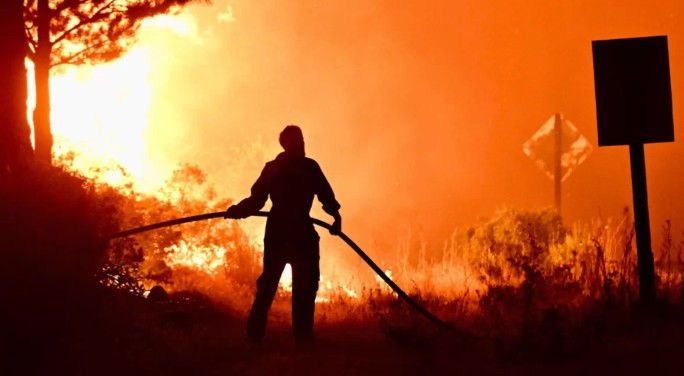
Casagrande detailed that 415 forest fires have been recorded in the Biobío Region, 55% of which are believed to be intentional, highlighting a structural problem. At the same time, he acknowledged a decrease in the occurrence of these events compared to previous years, which he attributed to better coordination between the National Defense Chief, the police, and the Public Ministry.
The association leader also recalled that just last year, 27 attacks against forestry contractors were counted between Biobío and Los Lagos, with 74 pieces of equipment destroyed and estimated losses of over 13 billion pesos, directly affecting SMEs in the sector and local economies.
Therefore, he argued that as long as the organized groups responsible for these acts are not dismantled and stable security conditions do not exist, the continuity of the State of Exception remains a necessary tool, regardless of changes in government.
Parliamentarians from Biobío
Deputy of District 21, Clara Sagardía, confirmed that the current Government will leave the State of Exception in force at the end of its term and expressed her agreement that the measure should continue when the new administration takes office.
However, she expressed concern about a potential hardening. "I also hope that the incoming Government will continue with the State of Exception and gradually de-escalate it and not harden it," she stated, trusting that the problems of the southern zone will be addressed comprehensively.
From the incoming ruling party, Republican Deputy Cristóbal Urruticoechea was critical of how the measure has been applied so far, calling it misused and poorly executed. In his view, the goal must be to definitively end terrorism, so that the State of Exception is no longer necessary and does not operate as a "patch" for a structural crisis.
UDI Deputy Flor Weisse, meanwhile, acknowledged that the tool has been necessary to confront violence in Biobío but warned that it cannot become a permanent policy.
She questioned the lack of changes over the past four years and called on the next government to promote a comprehensive security plan combining effective State presence, police strengthening, better intelligence, support for victims, along with productive reactivation.
A similar view was expressed by Deputy Joanna Pérez, who argued that, while the State of Exception is a valid tool, it does not constitute a total solution to a much deeper crisis.
She also criticized the non-fulfillment of announcements such as the compensation plan for victims of violence and called on the future Government of President Kast to confront the problem differently, reviewing the methodology and strengthening intelligence work to dismantle the responsible groups.
Source:Diario Concepción
Comments (0)
No comments yet. Be the first to comment!
Leave a comment