

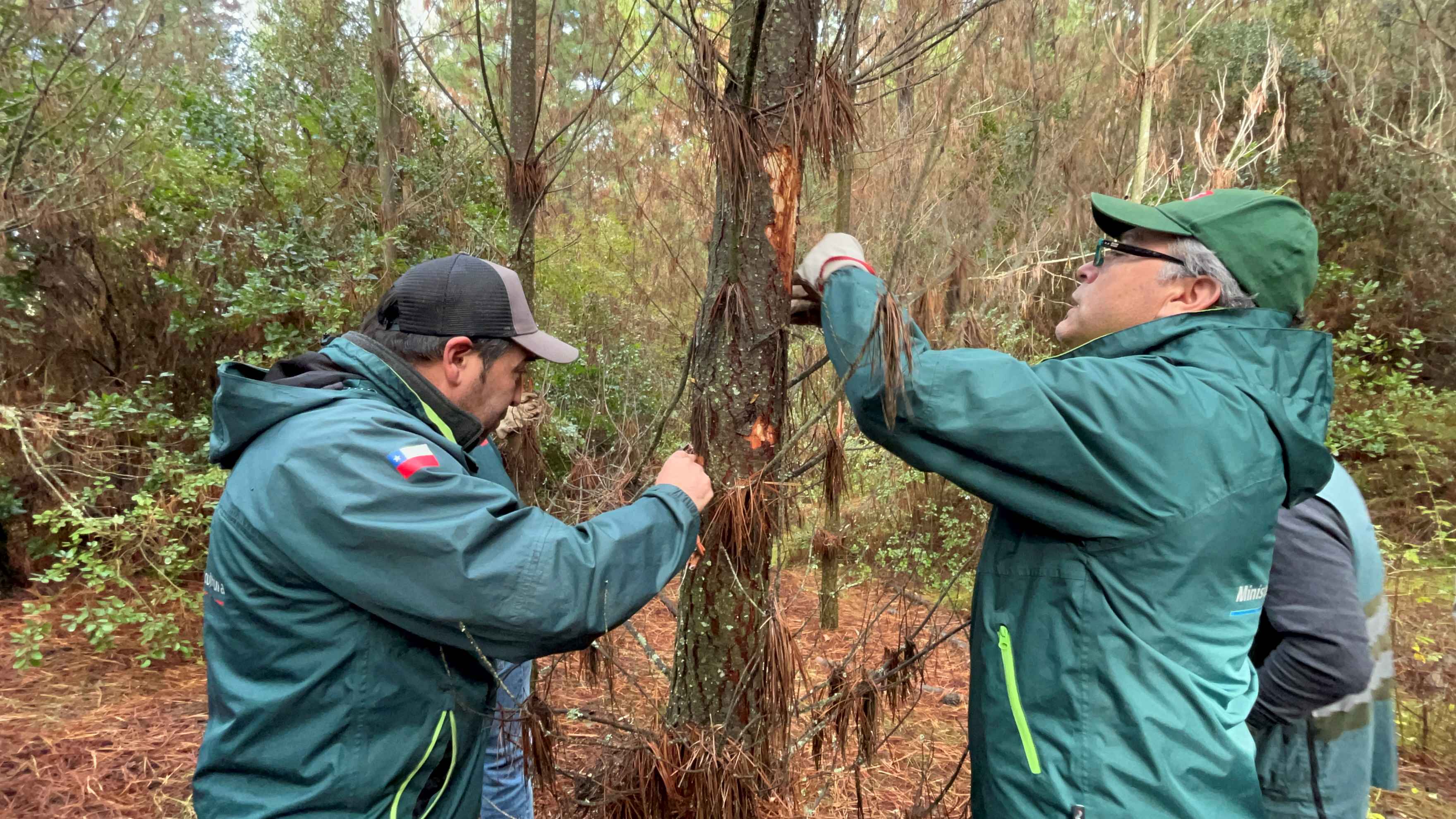
Pissodes castaneus, known as the pine bark weevil, is a beetle measuring between 4 and 5 millimeters that poses a serious threat to pine forests in Chile. Roberto Ferrada, regional director of the Agricultural and Livestock Service (SAG) of Biobío, explains that it is an insect native to Central Europe that arrived in the country from Argentine Patagonia, transported by the wind.
"Until before its detection in 2013, it was considered a quarantine pest, absent from the country. We knew it would eventually arrive because it was present on the other side of the mountain range. This year we detected it for the first time in the Biobío region," he stated.
The weevil had slowly established itself in southern regions and advanced northward through the country's central valley. In May, SAG confirmed its presence in plantations near the commune of Los Ángeles. Currently, there are eleven detected outbreaks in the region, distributed among the communes of Los Ángeles, Laja, and other localities in Biobío province.
Ferrada details that the insect originally arrived in Chile via wind and that in other regions it had advanced earlier. This demonstrates that the weevil's natural movement is slow but constant, allowing for the planning of containment and control strategies at regional and national levels.
Forest Damage
Pissodes castaneus primarily attacks radiata pine, although it can also affect other species such as Douglas fir and some types of cedar. Unlike secondary pests, this weevil is a primary pest, capable of killing healthy and vigorous trees without them needing to be previously weakened.
"It feeds under the bark, where the tree's nutrients and water circulate. By doing so, it interrupts the vital flow and the tree ends up dying," explains Ferrada.
The weevil's life cycle includes several larval stages. Females lay eggs under the bark, and the larvae emerge and feed on the internal tissue. Their mass feeding weakens the tree in one or two seasons, depending on the specimen's vigor and climatic conditions.
"The weevil is gregarious; a female can lay dozens of eggs, and the larvae act together weakening and eventually killing the tree. This causes mechanical damage to the wood, such as perforations that reduce its commercial value," adds Ferrada.
The risk posed by Pissodes castaneus not only affects timber production. The loss of trees in industrial plantations also has a significant environmental impact because it alters forest composition, increases vulnerability to other secondary pests, and creates spaces that can be occupied by invasive species. With nearly one million hectares of radiata pine in the Biobío region, the insect's presence necessitates constant vigilance to prevent massive damage.
Biological Control
To combat the pest, SAG implemented a biological control plan, releasing natural enemies of the weevil. These are micro-wasps of the genus Eupelmus, which parasitize the eggs and larvae of Pissodes castaneus, preventing their development and proliferation.
In the Biobío Region, releases have already been carried out at four points, with the collaboration of forestry companies and associations such as Corma and Pymemad. Ferrada emphasizes that "releasing the micro-wasps is only the first step. They must survive, reproduce, and generate new generations capable of adapting to the local climate."
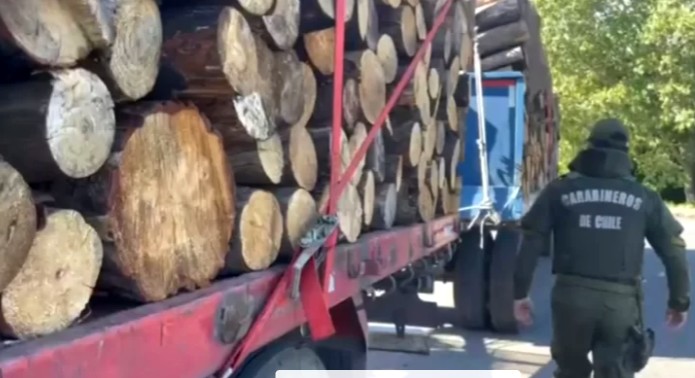
Simultaneously, strict control is maintained over the movement of wood and logs, regulating transport from infested zones to pest-free areas to prevent the accidental spread of the pest. These measures include seasonal restrictions and mandatory transport notification so that infested specimens are not disseminated to new areas.
"Collaborative work with companies is key. If a tree with abnormal symptoms is detected, such as yellowing crowns or perforations, it must be reported immediately to act with preventive measures," explains Ferrada.
Near Future
The main objective is to contain the weevil's advance and protect the region's forests. Although the outbreaks are limited, its destructive capacity demands permanent vigilance.
SAG will continue with the release of micro-wasps and reinforce phytosanitary surveillance, conducting periodic inspections to detect early infestations. "Acting in time is crucial. This type of pest moves slowly, but once established it can cause severe damage. With early detection and biological control we hope to keep it under control," concludes Ferrada.
From Acoforag, we believe containing pests like Pissodes castaneus is fundamental for the health of the forestry sector. Each lost tree represents not only economic damage but also a significant environmental impact. Coordination between companies, authorities, and communities is essential to protect our forests and ensure the industry's sustainability.
The article available in ourRevista Contratistas Forestales



Comments (0)
No comments yet. Be the first to comment!
Leave a comment