

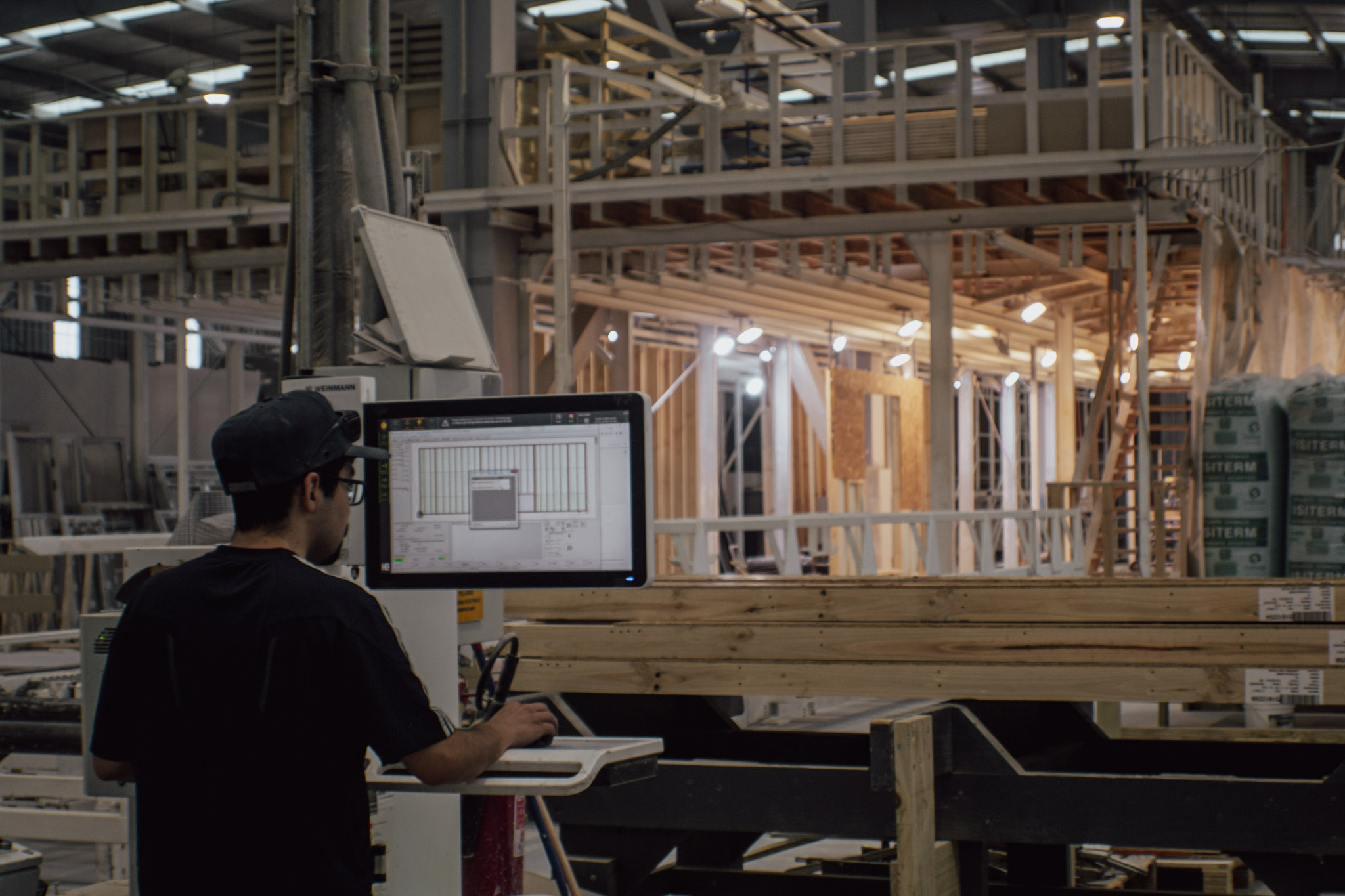
Timber construction is experiencing a true renaissance in Chile. What was barely a trend a decade ago is now consolidating as a national strategy to promote sustainability, productivity, and innovation.
At the heart of this change is the Regional Strategic Program for Modern Sustainable Timber Construction Methods, led by Biobío Madera and supported by Corfo, which has just concluded its second year with significant progress.
"The challenge is to create a favorable context for the development of timber construction, which is already an international trend," explains Frane Zilic, manager of Biobío Madera. The program aims to transform traditional construction into a modern industrial system, capable of producing sustainable housing on a large scale, while simultaneously strengthening the forestry chain and local employment.
Industrialize to Include
The goal is not to replace, but to integrate. The model proposes incorporating SMEs into the manufacturing of specific components—walls, panels, or beams—under a collaborative "Lego-like" scheme, where different companies contribute parts that are later assembled in the plant or on-site.
"SMEs can manufacture in series, while the construction company assembles the whole. Large industries are not needed, but rather coordination, standards, and access to technology," notes Zilic.
This approach promotes efficiency, standardization, and regional development. Furthermore, timber offers environmental advantages: it reduces the carbon footprint, accelerates timelines, improves thermal comfort, and allows for component recycling, being key to decarbonizing the construction sector, one of the world's largest CO₂ emitters.
Demonstration Laboratory
The second stage of the program includes a demonstration project in San Pedro de la Paz, where four industrialized timber houses will be built, with prefabricated components produced by local SMEs. The initiative brings together the Regional Productive Development Committee, San Sebastián and Concepción universities, the IDB, Serviu, and various sector companies.
"It is the concrete proof that the collaborative model can work. Research, financing, and training converge in a single project," highlights Zilic. Construction is expected to begin by the end of 2025.
Sustainable Chain
The success of the strategy depends on having sufficient, quality structural timber. It is estimated that Chile will need two million cubic meters annually by 2050, a goal that requires planning from now on.
"It's not enough to plant more; we must make better use of what we have," warns Zilic. Biobío Madera is working on updating structural standards, applying structural finger-joint, and a new certification system to reduce costs and provide greater certainty to the market.
The program also considers the sustainable management of native forests. "Millions of trees with no economic value are lost each year. If we can generate engineered products from that biomass, we can conserve them with a productive purpose," adds the executive.
Long-term Policy
Timber construction is already part of Chile's Long-Term Climate Strategy and the green taxonomy, which facilitates access to international financing. "IDB funds prioritize sustainable projects, such as timber ones," emphasizes Zilic.
This institutional support is fundamental for the industry to gain confidence. "It's not about a large company solving the housing deficit. The challenge lies in creating a competitive ecosystem where many companies participate and innovate," he asserts.
From Acoforag, we value the momentum of the Regional Strategic Program for Modern Sustainable Timber Construction Methods, highlighting how projects of this kind enhance the value of Chilean timber as a renewable and strategic resource.
The article in ourRevista Contratistas Forestales



Comments (0)
No comments yet. Be the first to comment!
Leave a comment