

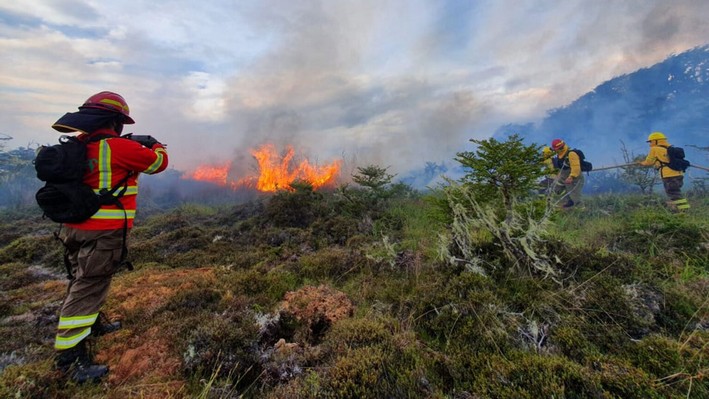
The current forest fire season has become one of the most complex in recent years in Chile. According to the most recent figures, 25 fires remain in active combat, primarily concentrated in the regions of Biobío, Ñuble, and La Araucanía, although there are also fires in the central zone of the country.
According to the balance updated at 10:00 a.m. on Monday, January 19th, the situation remains critical, with emergency brigades deployed in different points of the territory to contain the advance of the fire, which threatens both rural areas and zones near populated centers.
Most Affected Regions
The breakdown by region shows that La Araucanía leads with 8 active fires, followed by Biobío and Ñuble, with 7 fires each. Further behind are the Metropolitan Region, O'Higgins, and Los Ríos, each with one fire in combat.
Among the most significant incidents are fires in communes of Biobío such as Concepción, Laja, Arauco, and Florida, in addition to active fires in Yumbel and Santa Juana, areas that have historically been highly vulnerable to fire. In Ñuble, fires in Pinto, Quillón, and Ninhue stand out, while in the Metropolitan Region a fire persists in Tiltil.
Affected Area
The figures for damaged area reflect the magnitude of the phenomenon. Just some of the active fires far exceed 1,000 hectares consumed, such as the fires in Concepción, Arauco, and Yumbel, which has forced the reinforcement of ground and aerial resources to prevent their spread towards inhabited sectors.
Nationally, the summary for the 2025-2026 season accounts for 49,931 hectares affected, a figure that represents a 165% increase compared to the last season. However, when contrasted with the historical average of the last five years, the burned area still remains 59% below the five-year average, which evidences a disparate scenario highly conditioned by specific extreme events.
Biobío and Ñuble Under Pressure
In the regional breakdown, Biobío records over 26,500 hectares affected, implying an increase of more than 2,600% compared to the previous season, although it still remains below the historical average. Meanwhile, Ñuble accumulates nearly 6,600 burned hectares, with an increase of over 220% compared to the previous period.
Authorities have reiterated the call for prevention and citizen responsibility, considering that a significant portion of the fires have human origins. Meanwhile, emergency teams continue working to control the active fires and prevent new emergencies, in a scenario marked by high temperatures, winds, and low humidity, conditions that favor the rapid spread of fire.

Comments (0)
No comments yet. Be the first to comment!
Leave a comment