


In a global landscape marked by the persistence and transformation of terrorist threats, Chile once again finds itself in a notable position within the global terrorism ranking. According to the Global Terrorism Index 2025 (GTI 2025), produced by the Institute for Economics & Peace (IEP), Chile ranks 21st globally among 163 countries evaluated, and is the second most impacted country by terrorism in South America, only behind Colombia in the region.
The IEP report, which compiles data on incidents, deaths, injuries, and kidnappings caused by terrorism over a weighted five-year period, provides a fairly clear comparative snapshot of the regional situation:
South America Ranking (score / global rank):
Colombia: 6.381 (15th)
Chile: 5.162 (21st)
Peru: 2.062 (44th)
Followed by: Ecuador (56th), Brazil (59th), Argentina (76th), and Venezuela (81st).
This data shows that, while Chile does not face internal armed conflicts like other countries on the continent, its position is comparatively high and surpasses several larger regional economies, such as Brazil and Argentina.
What does the GTI measure and how does it interpret impacts?
The IEP's Global Terrorism Index is an international benchmark for analyzing the impact of terrorism on nations worldwide. Its methodology is based on data collection since 2007 on events cataloged as terrorist acts and weights the following factors:
Total number of terrorist incidents.
Fatalities caused by such incidents.
Injuries and non-fatal victims.
Kidnappings, hostages, and other incidents with serious consequences.
All these indicators are weighted using a five-year average to reflect trends beyond isolated annual variations.
Chile: a particular case within the ranking
According to the GTI 2025 trends table, Chile has a score of 5.162, placing it as the second most impacted nation by terrorism in South America behind Colombia, whose score is significantly higher.
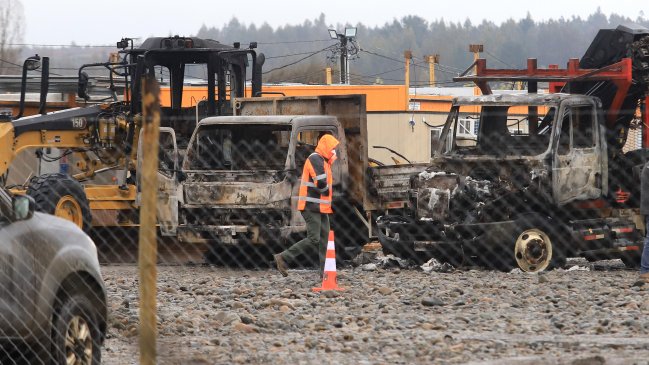
A relevant and specific detail from the report is that, among the events the IEP database classifies as attacks in Chile, over 63% are attributed to groups it calls "Mapuche militants."
This percentage has generated debate within and outside the country, as it includes in the measurement incidents that, for some local analysts, could have connotations different from conventional terrorist attacks seen in contexts of prolonged armed conflict. However, it is important to clarify that the GTI uses technical criteria defined by the organization to classify and count these events.
Regional and global trends
In the global context, GTI 2025 shows that terrorism is not limited to traditional war zones but has diversified. Some regions record increases in specific incidents, while others show relative improvements. The report also highlights that the number of countries recording terrorist attacks has increased, while international extremist groups adapt their strategies, sometimes shifting their focus to regions different from traditional conflict zones.
This places Chile in a group of countries that, without being at war or facing prolonged insurgencies like other more affected states, appear in high positions due to the relative frequency of incidents that fit the index's definition.
Chile's presence in this position on the index has generated various reactions among academics, authorities, and citizens. Some sectors see the result as a warning sign to reinforce security policies and prevent local extremism, while others warn about the risks of conflating social violence with terrorism in public discourse, given that many recorded situations do not involve groups with a capacity for organized threat comparable to what is observed in contexts of external armed conflict or historical insurgencies.


Comments (0)
No comments yet. Be the first to comment!
Leave a comment