

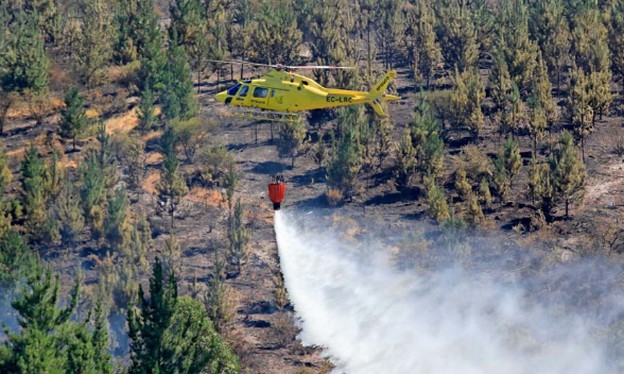
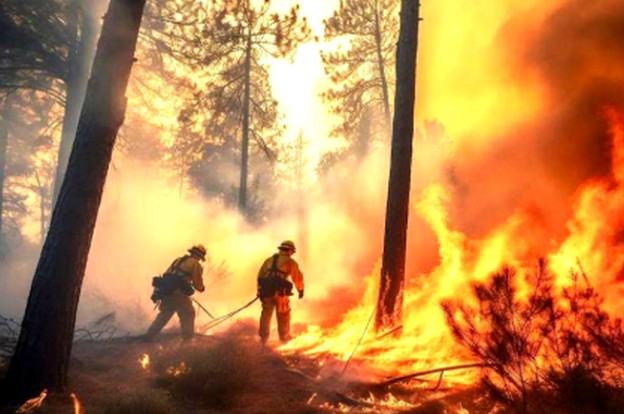
The forestry industry has been hit in the last decade by voracious fires: 2017, 2023, and this year. Also by drought and insecurity in the macrosur zone. All these factors have diminished the investment and afforestation plans of companies in the sector.
This scenario is leading to a reduction in the projected availability of timber in the country for the coming years.
"Factors associated with climate change, larger-scale fires, recovery of areas affected by fires, changes in site conditions due to prolonged drought in the central zone, pressures from land use, decline in afforestation, species change, among others, are presented as determining factors in the reduction of projected timber availability," states the latest yearbook of the Forestry Institute (Infor), an agency linked to the Ministry of Agriculture.
Declining Figures
The Biobío Region concentrates most of that area, with 26%, equivalent to 587,933 hectares. However, this is 32% less than the plantations that area recorded in 2018, its last peak.
In this context, Infor data indicates that timber availability will drop from 44.7 million m³ (solid without bark) in 2022 to less than 41 million m³ in the period 2026-2028. The decline in radiata pine is notable.
The Reasons
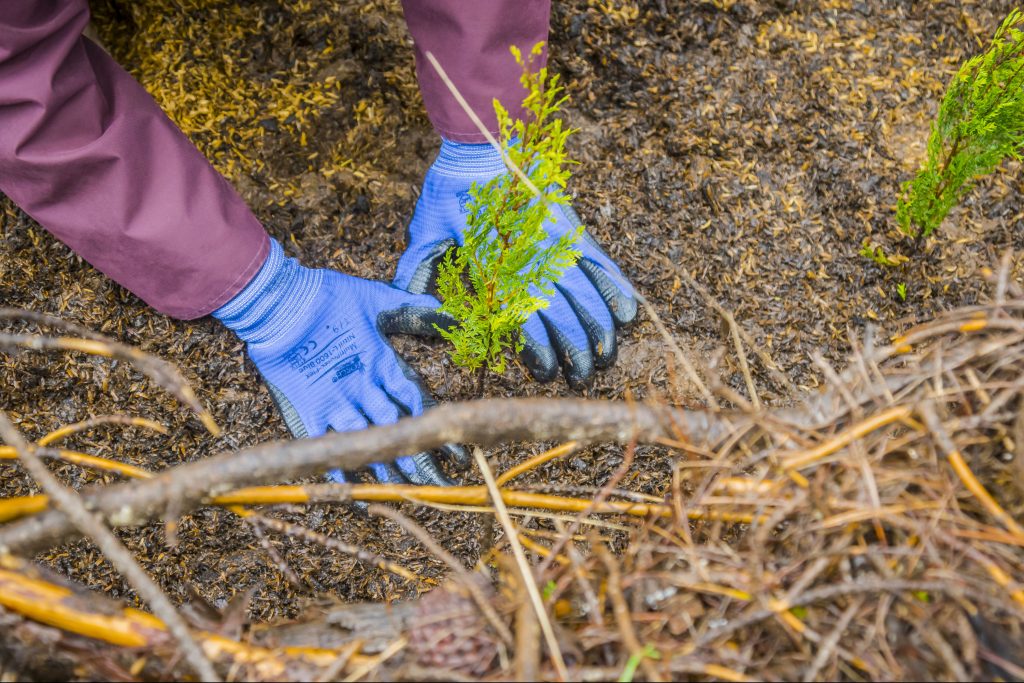
Michel Esquerré, president of PymeMad —a guild that groups together SMEs in the forestry sector— explained that after the 2017 and 2023 forest fires, the replanting of affected forests has decreased. "Many SMEs did not replant because they lacked state support," he commented. He stated that the elimination in 2012 of Decree 701 for forestry promotion "was a mistake, as state policy."
Esquerré commented that today there are no insurance or financing options for afforestation and suggested that authorities should promote incentives for SMEs.
Antonio Minte, general manager of the Chilean Wood Corporation (Corma), agreed on the "absence of incentive and promotion instruments for small and medium-sized forest owners." Regarding the lower timber availability, he admitted that "it is a very worrying situation, because it could become a structural problem, not only for the forestry industry, but for the economic and social development of broad areas of the country."
Minte warned that if the country does not act on this situation "urgently," there is a risk of losing installed forestry capacity, in "long-term investments in plantations, industry, and associated services." At the same time, employment would be affected, he said.
Effects on Prices
The executive director of Infor, Sandra Gacitúa, stated that in the last two or three years, the effects of lower timber availability and increased log prices —which supply SMEs— have not manifested "with full intensity," due to the contraction in demand from the decline in construction. But she affirmed that the recovery of building permits could translate into greater dynamism in the requirement for construction materials in 2026. "In that context, greater demand for timber, combined with a more limited availability of the resource, could exert upward pressure on log prices," she admitted.
Along those lines, Minte indicated that "lower timber availability inevitably generates pressures on prices and reduces the market's capacity to respond."
International Scenario
Alongside local concerns, the general manager of Corma acknowledged that "the international scenario remains highly uncertain. To the inherent fluctuations of the pulp market are added trade tensions, geopolitical conflicts, and tariff discussions that generate volatility in external demand."
Sandra Gacitúa recalled that a relevant part of Chilean pulp exports goes to the Chinese market, so the performance of that economy affects this sector. Regarding the tariffs applied by the United States, she commented that they imply adjustments for some Chilean forest products that previously entered with zero tariff. But she explained that "several of Chile's main competitor countries in that market face more restrictive trade conditions, which allows maintaining spaces of relative competitiveness for national exports."
Source:El Mercurio

Comments (0)
No comments yet. Be the first to comment!
Leave a comment