

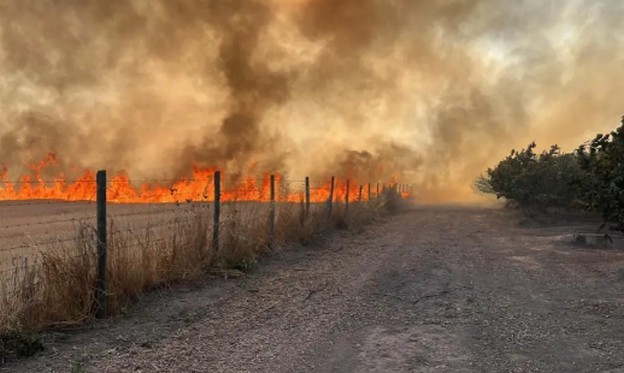
The Observatory of Forests and Forest Policies —Bosquentrama— insisted on the urgency of advancing the Forest Fire Prevention and Mitigation Law (Bill No. 16,335-14) after fires ravaged nearly 40,000 hectares in just the Ñuble and Biobío regions during the current season. The network of organizations reiterated the call they made over four months ago to parliament to prioritize this law and open spaces for community organizations to voice their needs.
According to technical analyses by the National Forestry Corporation (Conaf) and causality reports from the National Disaster Prevention and Response Service (Senapred), 98.7% of the events are linked to human activity, suggesting that 75% of these fires could have been avoided with basic preventive measures. As of January 22, Conaf reports a total of 2,972 incidents nationwide, which have consumed a preliminary area of 63,522 hectares.
The Biobío region leads in impact with 38 fires and 31,378 hectares ravaged, while in Ñuble, 10 fires remain active and the affected area reaches 8,281 hectares. Organizations from Bosquentrama demand that the new law include binding citizen participation in prevention plans, territorial planning focused on risk minimization, funding and strengthening of community organizations, and stricter regulations.
UNPROTECTED
Marcela Morandé, leader of the Raíces del Sol Women's Association of Collipulli, described a state of "psychosis" and emotional exhaustion that is leading many families to consider abandoning their lands. "Every year it's tremendous stress, and each year the fires are worse. It's impressive, and there's no shortcut—why must all these deaths and this terrible destruction happen," she emphasized.
Rodrigo Vargas, president of the Canal del Chacao Association of Quilpué, argued that the law is only one piece of a larger set that must include construction standards and community emergency plans.
"We have to find a way to be prepared before the fire. To prevent and not be reacting as we are now. We lack, for example, guidelines on how to build in urban-forest interface areas, what construction materials to use, or what mitigation measures to take," he noted.
RISK FACTORS
Raúl González from Oficios de Nahuelbuta highlighted, from Santa Juana in the Biobío region, the critical impact of crops on fire spread. "All the plantations are adjacent to main roads, and that way of organizing the city has never been changed," he stated.
Ricardo Medina, president of Peuma Florida, warned that the fire season started early in the first half of January. "It's terrible because we have to make it to the end of the month, and then comes February, which is the most critical period," he criticized.
INSUFFICIENT LEGISLATIVE PROGRESS
On January 21, the Senate Finance Committee approved the submission of amendments to the Forest Fire Prevention and Mitigation Law bill, and the debate now moves to the Senate floor. However, organizations warn that communities cannot keep waiting.
Fabiola Videla, president of the Paine Communal Environmental Committee, expressed the vulnerability felt by territories in the face of the fire threat.
"When we see this happening and the legislative response remains there, dormant or stalled by interests that are not about protecting life, it's desperate. Every day that passes without this law is another day we leave our natural heritage unprotected, which is ultimately what sustains life in these territories," she added.
Source:La Tribuna
Comments (0)
No comments yet. Be the first to comment!
Leave a comment