

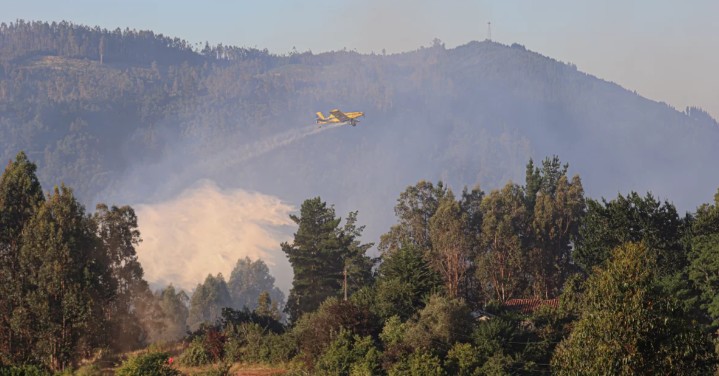
The Los Lagos Region has more than 67,000 hectares of forest plantations, mainly concentrated in communes such as San Juan de la Costa, Fresia, and Purranque.
Conaf explained that there are requirements included in the respective management plans, while municipalities have differing relationships with the companies engaged in this activity.
All of this, amid the impact of the wildfires that have affected the south of the country.
Los Lagos Region adds up to over 67,000 hectares of forest plantations
The Los Lagos Region is an area with a forestry vocation, but primarily for native forests.
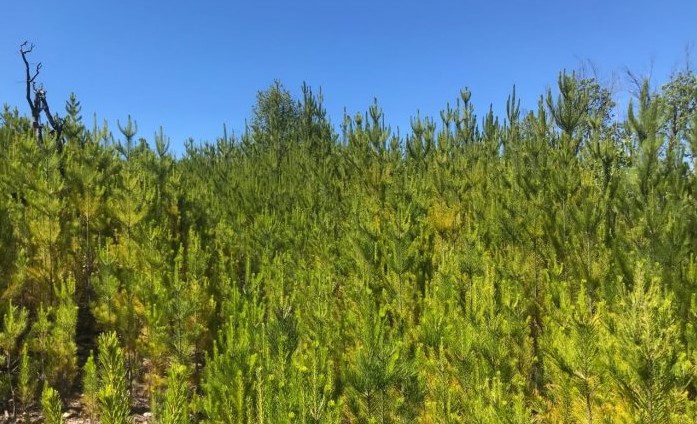
However, despite the sustained decrease recorded in recent years, there are still 67,890 hectares covered by pine and, predominantly, eucalyptus plantations. A figure that, in light of the recent and severe wildfires, reignites the debate on mitigation measures associated with this type of cultivation.
The National Forestry Corporation (CONAF) explained that such considerations are included in the management plans, which must be submitted at the time of logging or harvesting on properties with forest soils. In this regard, the regional director of the agency, Marco Inarejo, specified that these plans include specific requirements aimed at risk prevention.
Inarejo added that, for plantations established before the regulatory adjustments, they are being "brought up to date" whenever trees need to be cut.
By province, Osorno concentrates the largest planted area, with 45,639 hectares, followed by Llanquihue with 18,137. Further behind are Chiloé, with 4,113 hectares, and Palena, with only one hectare, according to INFOR data updated to December 2022.
The Uneven Municipal Relationship with Forestry Companies in the Region
Being a neighbor to a plantation entails specific risks and challenges: from wildfires to trees falling on power lines—resulting in supply suspension—as well as impacts associated with water resource management, among others.
In that context, we consulted municipalities about their relationship with forestry companies, starting with the commune with the highest presence of plantations in the region: San Juan de la Costa, which concentrates 10,294 hectares.
Mayor José Luis Muñoz indicated that they have gradually opened communication channels with the two companies operating in the territory to address issues such as firebreaks, although he warned that an evident risk persists.
Fresia is another commune with forestry companies, reaching an occupation of 10,042 hectares. Its mayor, Miguel Cárdenas, laments the lack of coordination with the companies, with the exception of ProBosque.
In third place is Purranque with 9,807 hectares. Mayor Alicia Villar emphasized the update of the communal emergency plan and assures permanent communication.
Unlike Río Negro, where they are concerned about their 8,450 planted hectares, noted Mayor Sebastián Cruzat, which also want to expand near communities, threatening their water flow.
And an excellent relationship exists in Puerto Octay with the forestry companies, which concentrate their activity on 8,298 hectares, in a relationship beneficial for all, acknowledges Mayor María Elena Ojeda.
The differences in the relationship between municipalities and these companies indicate that this relates to trust and responsibilities, fundamental for addressing the externalities of this type of activity, which, whether desired or not, entails risks that must be anticipated.
Source:BiobioChile




Comments (0)
No comments yet. Be the first to comment!
Leave a comment