

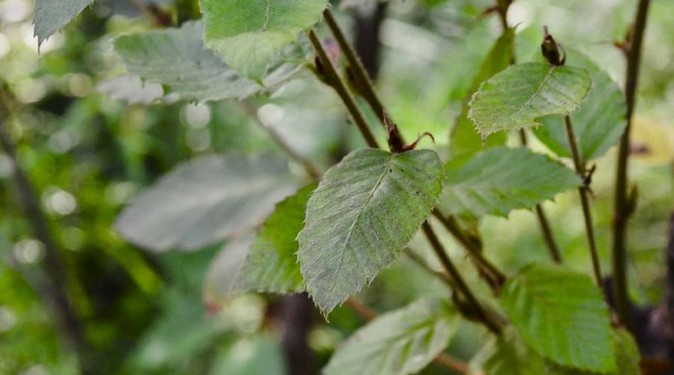
Reversing the trend towards the disappearance of Nothofagus, essential tree species in the ecology of Southern Hemisphere forests, is the task undertaken since 2022 by the project "Conservation and Restoration of Threatened Nothofagus Species in South America." This initiative addresses problems stemming from factors such as land-use change, overexploitation of native forests, urbanization, pests, fires, and climate change, among others. All these aspects have contributed to fragmenting and destroying the habitats of Nothofagus alessandrii (ruil), N. glauca (hualo), and N. macrocarpa (Santiago oak) between the Valparaíso and Biobío regions, including Ñuble.
Through international funding provided by the Swiss Franklinia Foundation, the project coordinates efforts from the University of Chile, the Forestry Institute (Infor), the Catholic University of Maule, the University of Talca, INIA Intihuasi, the Talca Tree Club, and Botanic Gardens Conservation International (BGCI) from England. These entities worked to reverse degradation processes and promote the conservation of Nothofagus species in Chile. All these institutions were led by the University of Concepción, through its Landscape Ecology Laboratory.
The director of this entity and academic, Dr. Cristian Echeverría Leal, states that "for UdeC, leading this initiative has been a concrete way to put science at the service of the territory. We proved it is possible to reduce threats, advance towards integrated conservation, and recover hualo, ruil, and Santiago oak forests, while simultaneously generating knowledge, training students, and coordinating stakeholders. In the long term, this means we are not only leaving pilot sites but a roadmap to scale up these actions and build safer, more biodiverse, and resilient landscapes for communities."
Conservation
Fredy Mora Poblete, a forestry engineer and academic at the University of Talca, comments that "one of the central contributions was establishing genetic guidelines for seed collection, considering minimum distances between seed trees, pollen dispersal patterns, and the degree of genetic structuring of the populations. These criteria help reduce the risk of inbreeding and increase the genetic viability of future generations, both in nurseries and in restoration programs."
"Simultaneously, genetic information was integrated into the design of in-situ conservation actions, supporting the prioritization of sites for ecological restoration and population reinforcement. In this sense, genetics was not worked on in isolation but as an applied tool to decide where to conserve, what material to use, and how to maximize the impact of field actions, especially in a context of climate change, forest fires, and accelerated habitat loss."
Dr. Karen Peña, from the Faculty of Forest Sciences at the University of Chile, explains that the project "allowed for a deeper understanding of the current status of these species' populations, which have historically been subjected to fragmentation processes, along with the effects of climate change. In particular, there is evidence that populations located at the northern distribution limit of the Santiago oak are increasingly affected by a drought that has lasted for over 15 years, which has limited their natural regeneration, as seedlings lack the necessary resources to establish themselves," she emphasizes.
Results
The project identified threats such as degradation by livestock, illegal logging, fires, and extreme drought, especially in northern populations. Similarly, the status and structure were evaluated in 19 sampling sites containing the target species N. alessandrii, N. glauca, and N. macrocarpa.
Between 2023 and 2025, 13.42 kg of seeds were collected, covering 71% of the genetically identified populations. Restoration actions were initiated at four sites, five degraded sites were characterized, and seven reference ecosystems were identified. Furthermore, differentiated approaches were applied at the various sites, focusing on assisted natural regeneration and invasive species control.
Thirty-seven species, distributed across seven countries in the Southern Hemisphere, make up the Nothofagus genus, which holds particular importance in southern Chile and Argentina, where it is found in a wide range of environments. Additionally, they play a fundamental role, creating habitats for a great diversity of flora and fauna, contributing to the development of rural communities and crucial processes such as soil formation, nutrient cycling, carbon storage, and regulation of water flows within Andean basins, among others.
The International Union for Conservation of Nature (IUCN) Red List reveals that the three threatened Nothofagus species in South America exist only in Chile: Nothofagus alessandrii (ruil), endangered; N. glauca (hualo) and N. macrocarpa (Santiago oak), vulnerable.
In the context of the project "Conservation and Restoration of Threatened Nothofagus Species in South America," collaboration with local stakeholders and communities will continue. Similarly, in the medium term, the aim is to incorporate other institutions, with the goal of contributing to the implementation of public policies for species conservation in Chile.




Comments (0)
No comments yet. Be the first to comment!
Leave a comment