

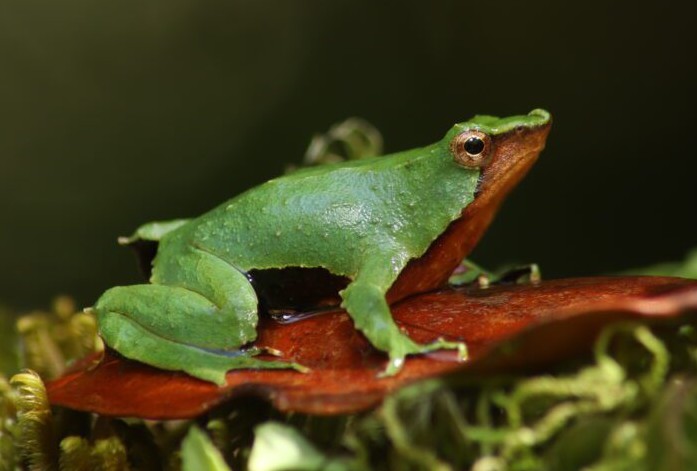
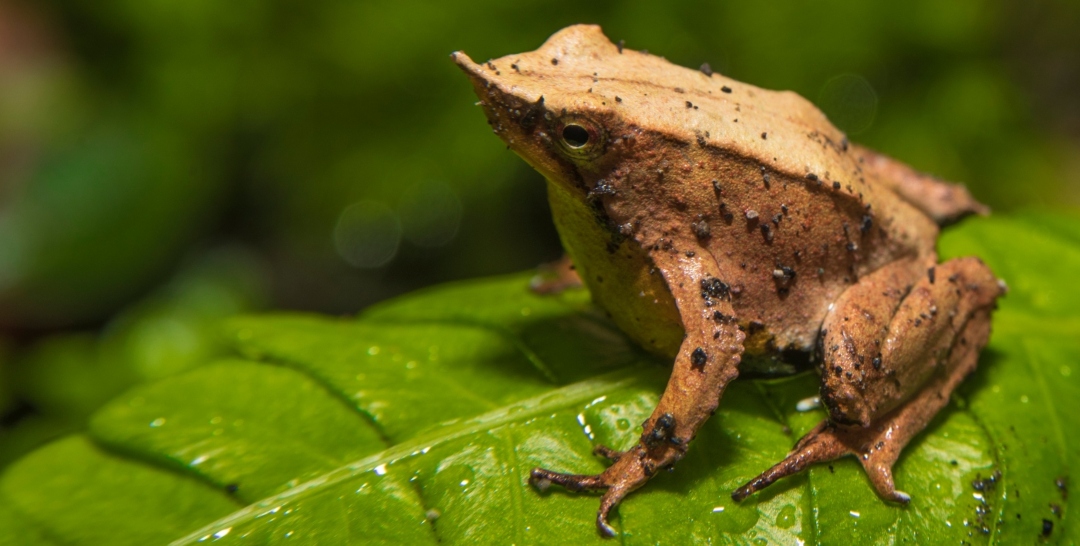
A multidisciplinary team of scientists has published an alarming study in the journal Nature Ecology & Evolution about the critical situation of Darwin's frog, an endemic species of Chile.
The chytrid fungus, responsible for the disease chytridiomycosis, has been identified as the main factor behind the extinction of subpopulations of this small frog. The research, led by Dr. Andrés Valenzuela-Sánchez of the NGO Ranita de Darwin, took nearly a decade and involved collaboration with experts from Chile, France, Switzerland, and the United Kingdom.
The study, which has captured the attention of the scientific community to the point of deserving a specialized commentary from the editors of Nature Ecology & Evolution, shows how the chytrid fungus, believed to have been introduced to Chile from Asia in the 1970s, is decimating Darwin's frog populations. This pathogen has already been linked to the disappearance of the northern Darwin's frog, also known as the vaquero toadlet, in the 1980s.
Dr. Valenzuela-Sánchez, who is also the deputy director of a master's program at the Royal Veterinary College in the United Kingdom, has highlighted the severity of the situation, noting that the vaquero toadlet is the only Chilean animal likely to have gone extinct in modern times due to this pathogen.
Soledad Delgado, a member of the NGO Ranita de Darwin and co-author of the study, refuted a long-held hypothesis by the scientific community, which suggested that a fungus with an aquatic infectious phase could not effectively spread in terrestrial amphibian populations. The study demonstrates that the chytrid fungus can, in fact, spread and cause significant damage in terrestrial populations like Darwin's frog.
The research was conducted in three key areas: the Contulmo Natural Monument, the Huilo Huilo Biological Reserve, and Tantauco Park in Quellón. In the latter, an outbreak of chytridiomycosis caused the death of more than 1,300 Darwin's frogs in just one year, leading to an emergency rescue coordinated by the park administrators and Dr. Valenzuela-Sánchez's team.
The rescued specimens are being cared for at the London Zoo, with the goal of breeding the species for future reintroduction in Chile and developing research to combat chytridiomycosis. The study's results are not only crucial for the conservation of Darwin's frog but also offer a guide to mitigating the disease's impact and finding solutions to the pandemic affecting amphibians worldwide.
In response to these findings, the NGO Ranita de Darwin has released a manual for preventing the spread of chytridiomycosis, available for free on its website, aimed at educating and protecting amphibian populations in national parks and other wildlife areas.





Comentarios (0)
No hay comentarios aún. ¡Sé el primero en comentar!
Deja un comentario