

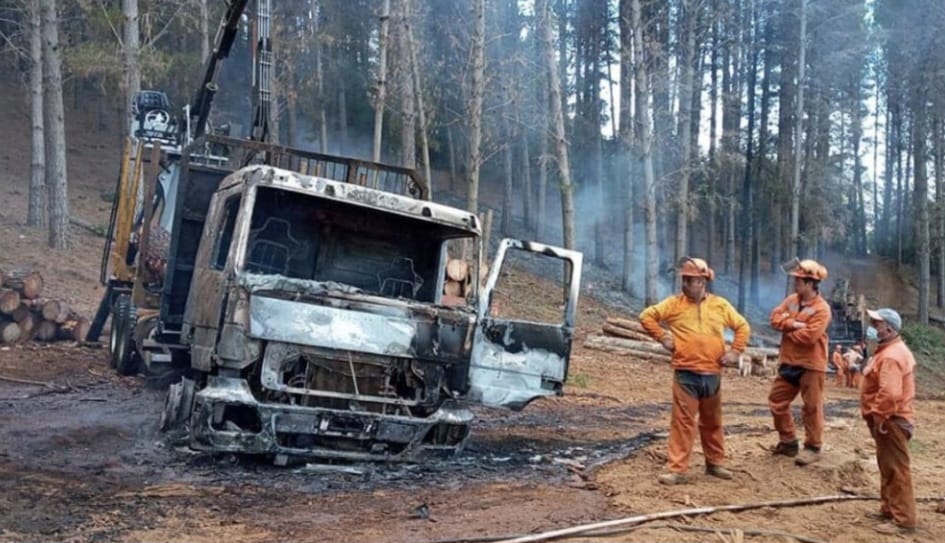
At the end of last year, the Government submitted a bill to Congress that recognizes, qualifies, and repairs victims of violence in the southern zone of Chile, which also broadens the scope of rural and institutional violence.
The proposal establishes a legal framework aimed at recognizing, qualifying, and repairing—if applicable—"persons affected by actions of violence related to the intercultural and territorial conflict" in the mentioned zones.
Furthermore, it defines the concept of violence and broadens its scope beyond acts traditionally associated with so-called rural violence, also incorporating expressions of institutional violence, as well as impediments to free movement and the development of educational, economic, religious, or spiritual activities.
According to the Ministry of the Interior, the project establishes the reparation of victims for physical, psychological, patrimonial, cultural, and social harms, "whose solutions go beyond economic compensation and include actions to restore social activities and collective interventions for containing and preventing violence, as well as initiatives for awareness, memory, promotion of dialogue, and strengthening coexistence."
It also proposes creating a commission to qualify victim status, implementing a program to coordinate and execute actions for care, support, and comprehensive reparation, and establishing an official registry to enroll those who qualify as affected.
SKEPTICISM
From the National Federation of Forestry Transport Unions (Fenasitransfor), its president, Heriberto López, was emphatic in stating that when it was proposed to include workers affected by acts of rural violence, there was a refusal.
The leader asserted that the State only concerned itself with returning the affected machinery and tools to the business owners.
For López, there was a whole "political game" in this, where many benefited from what has happened until now with the very pressures exerted by the Government. For this reason, he was skeptical about the possibilities for change and, even less so, with the new parliament that will take office in March. "I believe that, despite however many good intentions this bill may have, it will become stalled, like many others," he asserted.
Heriberto López insisted that they, as workers, continue to feel "used" in a conflict that involves workers but—according to him—does not concern them, but rather things that happened in the past.
"We have doubts about what will come of it, but we will continue insisting that it is the workers themselves who have suffered the most from rural violence in this sector, and we believe it will continue to be so," he emphasized.
DISTRUST
Deputy for district 21 Joanna Pérez (Democrats) admitted to not having sufficient confidence in the presentation of this bill by the Executive, especially because it occurs months before handing over power to the new government.
For the legislator, a permanent member of the Interior Government, Nationality, Citizenship, and Regionalization committee of the Lower House, the fine print of the bill must be reviewed to know what interpretation and ideology it contains. "We know there are victims of rural violence and terrorism in the area who have not been compensated. The Government did not want to recognize what forced displacement is, in work done by Sergio Micco at the National Institute of Human Rights (INDH), and it still has not delivered the reports we have formally and officially requested," she asserted. Joanna Pérez criticized that the Government "has refused to hand them over and, therefore, it will be an issue for the next parliament and government to decide."
TOO LATE
Her colleague in the Chamber of Deputies, Flor Weisse (UDI), considers the Executive's presentation to be late, since, in her opinion, it should have been done at the start of the term.
"It was an absolutely necessary initiative from the beginning of the Government, because for years thousands of Chilean men and women have suffered attacks, material losses, and physical and psychological damages without a comprehensive response from the State, and the care deserved by those who have lived through extreme situations in regions like Biobío, La Araucanía, Los Ríos, and Los Lagos has been left as a debt," she stated.
For the opposition parliamentarian, it is inexplicable that this initiative—which should have been a priority long ago—is being pushed when there are only days left to end the term, which raises doubts about the real political will to consistently confront this social drama.
"Even so, we commit to moving this law forward in Congress, because it is indispensable to provide care, protection, and comprehensive reparation to the victims of violence in the southern macrozone, who have suffered so much pain and attacks over decades," stated Weisse.
Source:La Tribuna




Comentarios (0)
No hay comentarios aún. ¡Sé el primero en comentar!
Deja un comentario