

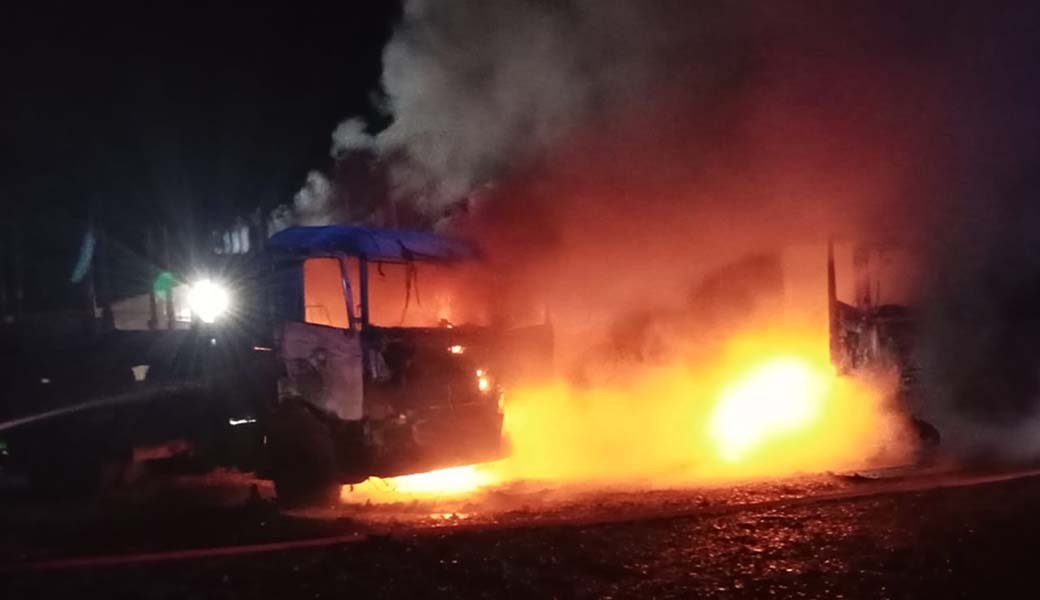
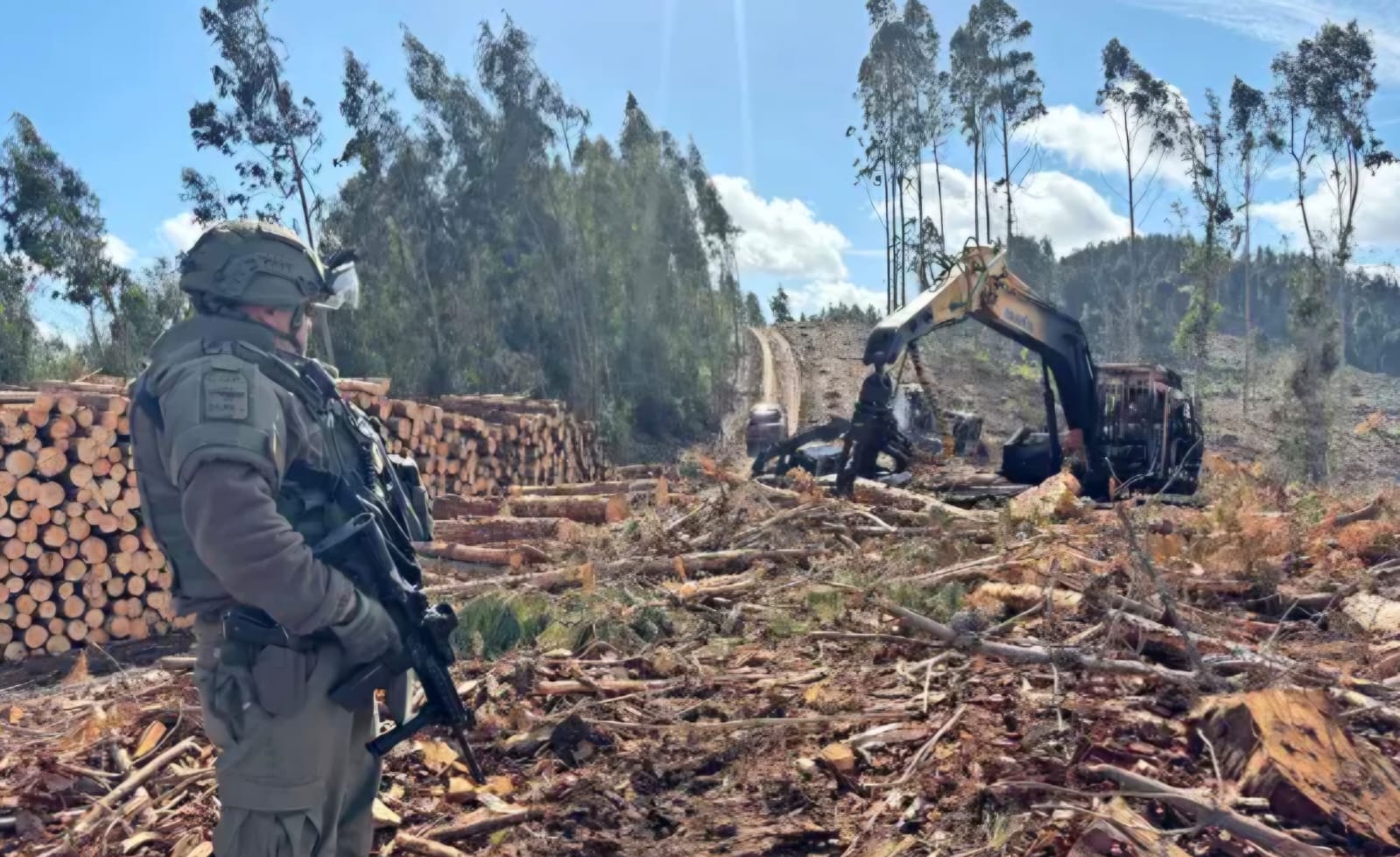
A total of ten communes in the southern macrozone concentrate the highest number of attacks against forestry contractors between 2014 and 2025, highlighting the persistence of rural violence in areas key to forestry production activity.
This is revealed by a report prepared by Acfoforag, which systematizes over a decade of violent incidents targeting the sector.
According to the document, the commune of Collipulli, in the La Araucanía Region, tops the list with 53 attacks, positioning it as the most affected territory during the analyzed period. It is followed by Lumaco, also in La Araucanía, with 43 attacks, and Contulmo, in the Biobío Region, with 42 violent incidents, forming a critical axis of insecurity for forestry contractors.

The territorial distribution confirms that the violence is not an isolated phenomenon, but rather persistent and focused on communes where forestry activity has deep productive and labor roots.
René Muñoz, manager of Acoforag, stated that the report highlights that La Araucanía and Biobío concentrate all the communes on the list, reflecting the sustained impact of the conflict in these regions. "For forestry contractors, this reality has meant not only economic losses associated with the burning of machinery, trucks, and facilities but also a permanent risk to the safety of workers and their families," he affirmed.
The forestry sector has repeatedly warned that the continuity of these attacks creates a climate of structural insecurity, affecting investment, local employment, and the stability of production chains associated with the industry. Furthermore, they have indicated that many of these incidents not only aim to damage infrastructure but also to intimidate and expel productive activity from certain territories.
More than ten years after the start of the analyzed period, the ranking of the most affected communes once again brings to the table the urgency for targeted security measures, inter-institutional coordination, and effective support for victims of rural violence, in a context where the forestry sector continues to be one of the most exposed in the country's southern macrozone.




Comentarios (0)
No hay comentarios aún. ¡Sé el primero en comentar!
Deja un comentario