

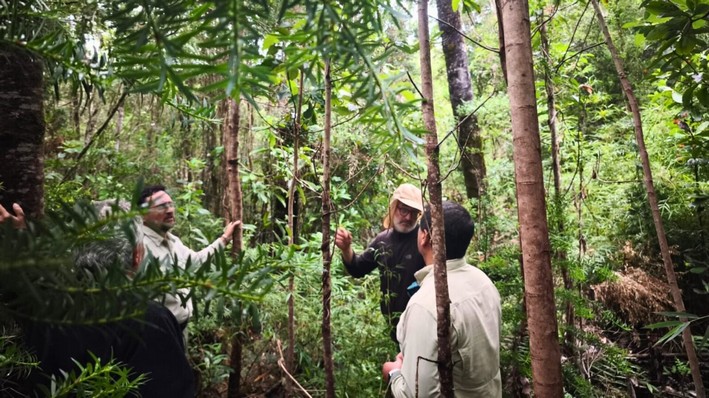
The manager of Forests and Climate Change of CONAF, Jorge Céspedes, and the head of the Dept. of Climate Change and Ecosystem Services of the institution, Hugo Rivera, carried out an intense work agenda over two days in the Los Lagos Region. They visited various properties in Los Muermos, Maullín, and Pargua to learn about the territorial reality on the ground.
During the tour alongside CONAF Los Lagos professionals, Céspedes and Rivera gathered information about the needs of the forestry sector and how to strengthen sustainable development.
In this regard, the regional director of CONAF Los Lagos, Marco Inarejo, stated that "it was a very productive visit. We held a conversation where we shared information. Furthermore, they learned about the local experience firsthand. We talked about native forest management policies, about how cross-cutting the problems associated with the conservation and management of native forests are, and about the need to adapt policies and instruments to the local reality."
Along the same lines, Jorge Céspedes emphasized that "on February 3rd and 4th, we carried out a program of activities in the region that included visits to experiences and projects. We wanted to see on the ground the work executed within the framework of the National Strategy on Climate Change and Vegetation Resources (ENCCRV) through the benefit distribution system, initially granted under the +Forests Program and which will soon be complemented by the execution of the Emissions Reduction Program (ERP). We began our visit with an important meeting alongside the regional director of CONAF Los Lagos, who briefed us on all the institutional work and the reality of the region."
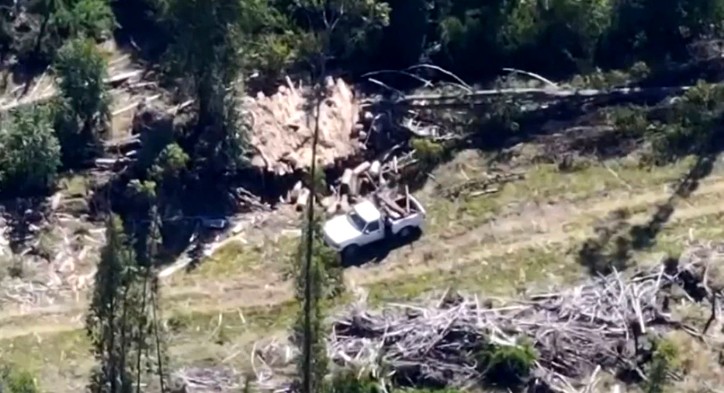
For his part, Hugo Rivera explained the next steps in this reinforcement of the sustainable development of native forests, noting that "we analyzed some of the existing problems in the region, one strongly related to land subdivisions. We are in the process of updating the National Strategy on Climate Change and Vegetation Resources (ENCCRV), which is very important to see what measures could be applied. This allows us to have greater clarity to focus future work on the Strategy (2017-2025), which was extended to this year 2026 by the Council of Ministers for Sustainability, giving us the space to conduct a better analysis, determining which are the facilitating measures and, above all, the direct action measures that will be implemented in the territory," he concluded.



Comments (0)
No comments yet. Be the first to comment!
Leave a comment