


By Dr. Eduardo Peña F, academic at the Faculty of Forestry Sciences of the University of Concepción.
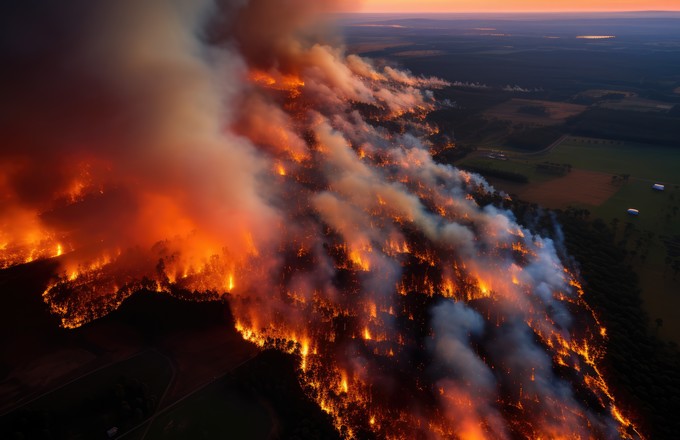
There is a widespread belief among the general public that native forests are less susceptible to being affected by wildfires. However, the truth is that this has never been the case; it is enough to recall that in Chile's history, the southern forests burned for months in Coyhaique and in Osorno-Puerto Montt. This is confirmed by the Agua Fría fire in Molina, which burned for 76 days (2020), and the Cochrane fire (2019), which burned native forest for 90 days.
Indeed, in the past when it rained more frequently and temperatures were lower, the moisture in the dead fuel on the forest floor prevented ignition from occurring. However, with climate change, this fuel is now in a condition to burn and facilitate the spread of fire.
Several factors that make native forests more susceptible to fire will be discussed below.
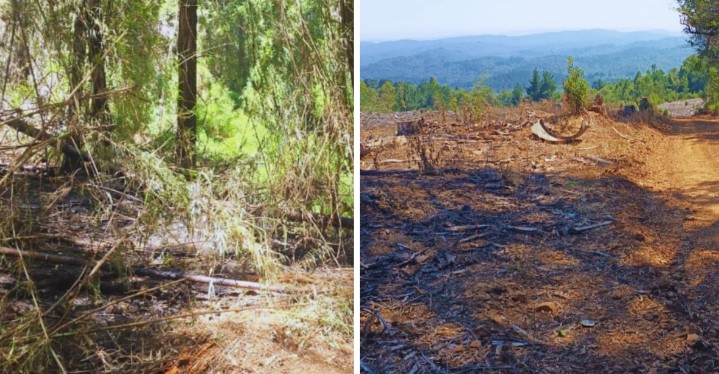
Dead Fuel Load: Native forests generally tend to accumulate a greater fuel load, especially coarse fuel, which, combined with organic soil, will generate fires that burn for a long time in the same spot, thereby causing more severe damage to ecosystems.
Greater Resistance to Control: Firefighting brigades are effective if they can quickly access the affected site and construct control lines; in mountainous areas, this is not possible effectively. This explains the prolonged duration of the last two fires in native forests, both of which exceeded 2 months of spread, each burning over 13,000 hectares.
Limited Effectiveness of Helicopters and Aircraft: The effectiveness of these assets depends on dropping with high frequency and at low altitude for greater precision and less evaporation. In mountainous terrain, this is not possible without risk to the pilots, so they must do it from a higher altitude or, in some ravines, they cannot drop at all.
Increase in Lightning-Caused Fires: In the high mountains and since 2002 onward, fires caused by lightning are increasing, to the extent that in the 2015 season, more than 50 fires caused by lightning were recorded, most of them in the Andes Mountains.
Later Detection of Fires in the Mountains: The success of firefighting depends on detecting the fire immediately, arriving within 12 minutes, and controlling it within 20. In areas of native forest and rugged terrain, this often fails due to a lack of timely detection and systems in the mountains.
Henceforth, fires in native forests will be more frequent, extensive, and damaging, even affecting areas that had never burned before, due to the high fuel load on the ground. Therefore, as in the 2024-2025 season, it is justified to restrict access to the mountains during red alerts.
The column in theAcoforag Magazine
.
Comments (0)
No comments yet. Be the first to comment!
Leave a comment