

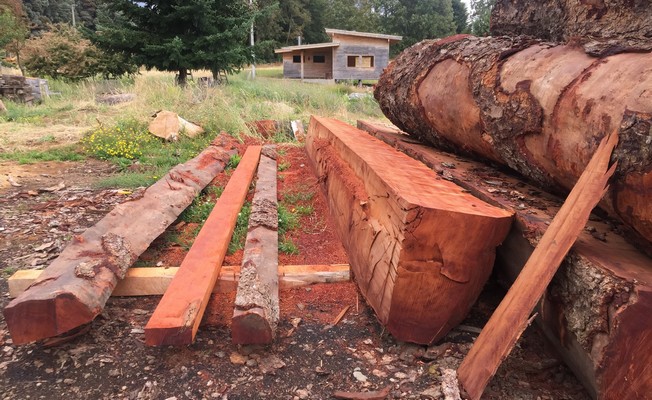
The production of sawn wood from native forest species in Chile declined again in 2024, consolidating a downward trend that has been ongoing for several years. This is revealed by figures published by the Forestry Institute (Infor), which show a new decrease in this segment of the industry.
According to the report, 44,164 cubic meters (m³) of native wood were produced during 2024, representing a mere 0.6% of the national total. In global terms, the total production of sawn wood in Chile reached 7,036,724 m³ last year.
Of the total volume produced, 98.3% corresponds to Radiata Pine, while other exotic species contributed 1.1%. The share of native species continues to shrink and maintains a marginal presence in the country's forestry production matrix.
The year-on-year comparison also highlights the decline. Compared to 2023, the production of native sawn wood decreased by 12.6%, which translates to a drop of 0.1 percentage points in its share of the national total. This decline makes 2024 the year with the lowest production of sawn wood from native species in the last decade.
According to the historical evolution recorded by Infor, in 2015 native wood production exceeded 120 thousand m³ and its share was around 4%. Since then, volumes have shown a sustained decline, with more pronounced drops starting in 2020. Although a slight rebound was recorded in 2022, the overall trend remained downward until reaching the current low.
The figures thus confirm a long-term process that has significantly reduced the weight of native forests in the sawmill industry, in contrast to the marked predominance of exotic species, especially Radiata Pine, which continues to be the pillar of Chilean forestry production.







Comments (0)
No comments yet. Be the first to comment!
Leave a comment