

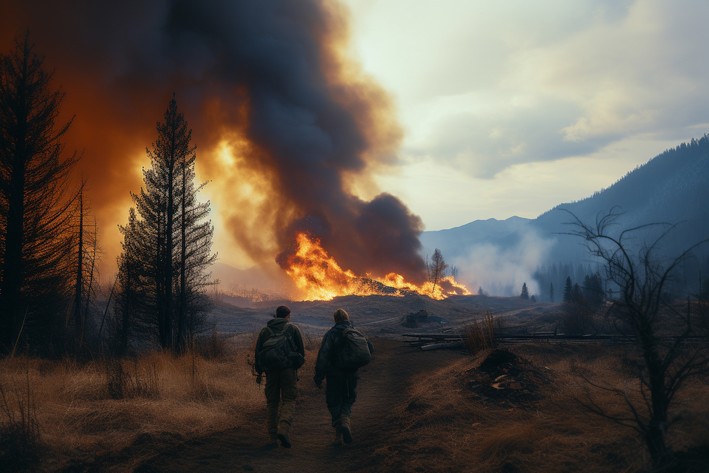
The recent wildfires that have ravaged regions of Chile and Argentina have been largely driven by climate change, according to a study by World Weather Attribution (WWA). +
The research, which analyzed extreme weather events in Argentine Patagonia and southern Chile, concluded that these phenomena were between 2.5 and 3 times more likely due to global warming. Clair Barnes, from Imperial College London, warns of the "clear and dangerous footprint of climate change" in these natural disasters.
In January of this year, Argentine Patagonia and southern Chile suffered devastating wildfires that, according to the WWA, have been exacerbated by climate change. The research shows that the burning of fossil fuels has increased the likelihood of hot and dry conditions, ideal for the spread of fire. Although the "La Niña" phenomenon played a minor role, the reduction in precipitation by 20-25% and the increase in temperatures have created an environment increasingly prone to wildfires.
In Chile, the Biobío and Ñuble regions were particularly affected, with a toll of 23 people dead, more than 1,000 homes destroyed, and around 52,000 evacuated. Temperatures above 37 °C and strong winds of up to 40 km/h contributed to the rapid spread of the flames. On the other side of the Andes Mountains, in Argentine Patagonia, the fire devastated parts of Los Alerces National Park, endangering ancient trees and unique ecosystems.
Juan Antonio Rivera, from the Argentine Institute of Snow, Glaciology and Environmental Sciences, underscores the impact of the fires on communities and natural heritage. Furthermore, he points out that the crisis is aggravated by the limited institutional response capacity, especially in Argentina, where budget cuts have weakened fire prevention and management strategies.
This study underscores the urgency of addressing climate change and improving wildfire prevention and response policies to protect both communities and vulnerable ecosystems.






Comments (0)
No comments yet. Be the first to comment!
Leave a comment