

In the humid forests and silent meanders of the Pacific Northwest, where centuries-old trees and winding rivers have sustained for centuries ecosystems linked to salmon and other native species, a long-overdue ecological recovery process is now underway.
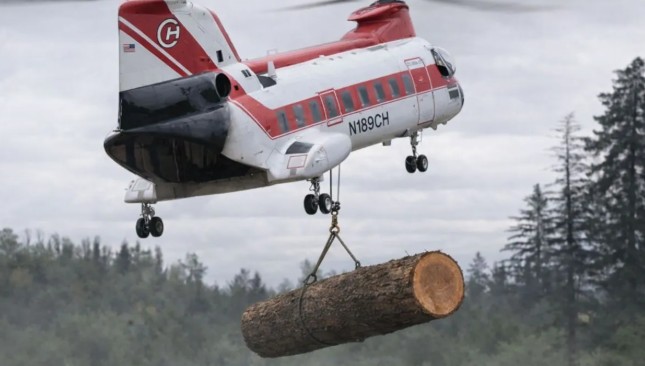
Helicopters are transporting tree logs and depositing them in a controlled manner into hard-to-access rivers and streams in central Washington and nearby areas. The intervention is part of a river restoration program aimed at restoring the structural complexity of the waterways.
For much of the 20th century, the management of these watercourses followed a simplistic logic. If there were tree logs, they had to be removed. It was believed that a "clean" river facilitated a fast flow, free of obstacles for the current and for fish. The result was precisely the opposite. Habitats were impoverished, waters warmed, deep pools disappeared, and so did the salmon.
Today, science and environmental management are turning that page with an almost meditative humility. Over 6,000 logs, from native trees, are being strategically placed along more than 38 kilometers of rivers and streams, many of them unreachable by land-based means.
The Advantages of Throwing Logs into the River
This is not about randomly throwing logs, but a design conceived to reactivate natural processes. To create pools, widen the channel, cool the waters in summer, and form shelters for invertebrates that will become food for other species.
The helicopters rise like temporary guardians of the landscape, lifting logs from forested slopes and placing them with almost surgical precision into arms of water that, for decades, have suffered the rigidity of human management that considered them "too clear."
Wood in rivers acts as a complex structure that favors shelters, traps sediments, and redistributes the energy of the current; in other words, it turns the channel into a more alive, more hospitable space for biodiversity. Studies like those from Smithsonian Magazine have documented how wood in water gives rise to key habitats. From aquatic insects to larger species like birds and fish, all are linked in a web that the previous vision considered "messy."
Source:Diario UNO



Comments (0)
No comments yet. Be the first to comment!
Leave a comment