

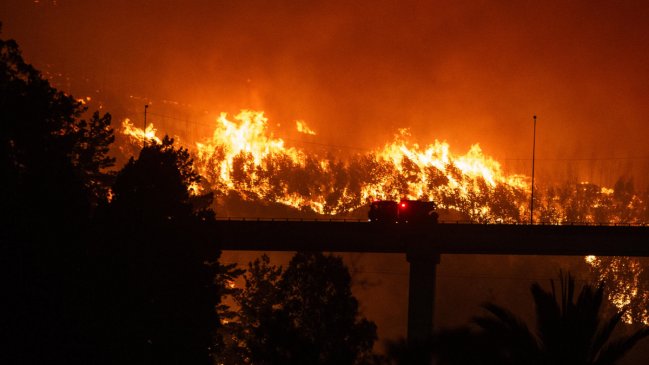
Since 2010, flames have destroyed over two million hectares in Chile due to wildfires, equivalent to burning the regions of Valparaíso and Santiago, the country's most populous, together.
Fires that have gone from being common to becoming megafires that ravage forests and cities in their path due to a series of combined reasons explained to EFE by the National Forestry Corporation (Conaf), the international scientific community, and the Ministry of the Environment.
Fire and Atmosphere
The head of Chile's Department of Forest Fire Development and Research, Jorge Saavedra, pointed out that one of the central elements of these extreme fires is the direct interaction between fire and the atmosphere.
"The fire ceases to be just a phenomenon that responds to the wind and begins to modify the atmospheric conditions around it, generating very intense convective columns, local wind changes, air inflow towards the fire, and collapses that produce secondary hotspots at a great distance," he explained.
This gives rise to difficult-to-predict hotspots, where firefighting capacity is not limited to the number of personnel used but to foreseeing where a new hotspot may emerge.
Iñaki Bustamante, from the European Union's Forest Assessment and Support Team, who traveled to Chile to help fight the fires, told EFE that it was a "matter of availability, not resources."
"We would have to know in advance that the fire is going to occur there and mobilize all the equipment. But once the fire has started, even if you have a strong initial response, it would require so many resources that don't exist to stop it," he added.
Increase in Fuel for the Flames
The megadrought affecting Chile has significantly reduced the relative humidity in forest soils, coupled with the fact that since the 1970s, the country has undergone a transformation in the type of plantations that populated the forests for productive reasons, with more pines and eucalyptus.
The increase in temperature and the absence of precipitation since 2010, a fact that scientific experts attribute to climate change, worsen these circumstances.
Álvaro G. Gutiérrez, an ecologist from the University of Chile and the Institute of Ecology and Biodiversity, spoke of a "homogenization of the landscape."
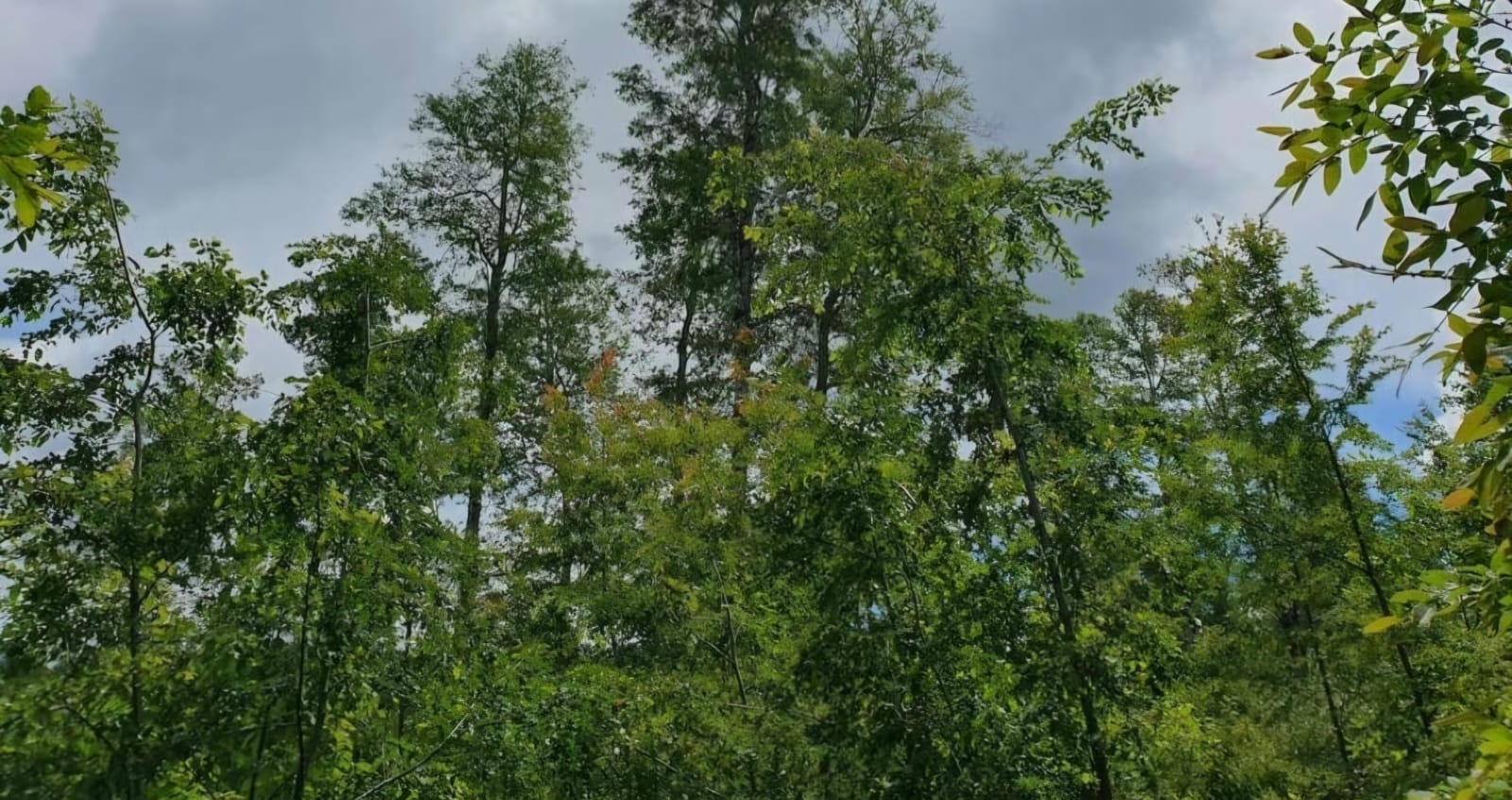
"The homogenization of the landscape that has occurred from the 1970s in Chile to the present day causes fire to spread very rapidly through the vegetation. The fires we have experienced are an ecological drama; 800,000 hectares of natural vegetation have burned, unique forests of endemic Chilean species that grow only here," he explained.
The National Forestry Corporation also insists that the process of land modification should not be "demonized," as "forest plantations had and have a productive purpose, with benefits," and they explain that the type of vegetation is not the problem for the flames but rather "the continuity and fuel load at the landscape scale."
"The focus today cannot be solely on firefighting or attributing responsibility to a specific type of forest. The challenge is to converge land management, prevention, and mitigation to move towards more resilient scenarios," added Jorge Saavedra, head of Conaf's Research and Development Department.
Plans Against Climate Change
From the Regional Ministerial Secretariat (Seremi) of the Environment of the Biobío Region, where the 'Trinitarias' fire left 21 dead, they confirmed that the new Regional Climate Change Plan focuses on mitigation and landscape management to reduce this fuel.
"Landscape restoration and prevention are the main concepts. We seek to manage the landscape against fire spread with very concrete measures and building capacities in Chile's communities," stated Seremi Pablo Pinto.
In the current 2025-2026 season, which began last September, over 64,000 hectares have already been destroyed, representing an increase of more than 226% compared to the 2024-2025 season, when 19,252 hectares burned.
Source:Cooperativa


Comments (0)
No comments yet. Be the first to comment!
Leave a comment