

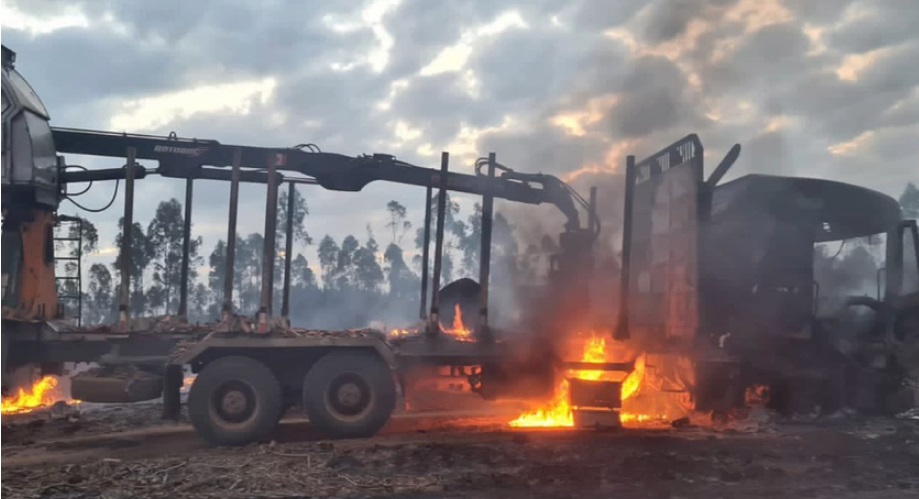
Rural crime and insecurity stand as the primary focus of concern for the agricultural sector. In fact, some industry players rank this issue as the top priority to be addressed by the incoming government of José Antonio Kast starting in March.
Farmers accuse that they face a severe security crisis in their fields, with episodes of theft becoming increasingly recurrent (see related note). Although rural crime has intensified in recent years, they warn that there is very little data reflecting the true reality faced by an industry that moves US$13.5 billion annually.
This scenario was one of the reasons that led the National Agricultural Society (SNA) to conduct surveys to measure the impact of theft on agriculture. In its second edition of the Agricultural Theft Barometer —conducted among 655 small, medium, and large farmers between December 25 and January 26— it indicated that 77.4% of the sample reported having been a victim of theft in the last 12 months (see infographic).
Within this group, 43% indicated they suffered thefts 3 or more times. Among the respondents, 9.7% stated there was physical violence during the thefts recorded on their property.
According to the study, the elements causing the greatest economic losses for the sector are agricultural inputs ($2.730 billion), electrical installations ($2.519 billion), animals ($913 million), and machinery ($885 million).
"There really is brutal rural insecurity. I have lived in Maule since '88 and had not seen a situation like this before," says Antonio Walker, president of the SNA. "20 or 30 years ago, living in the countryside was synonymous with tranquility, peace, and working peacefully, today it is not (...). Thefts now not only occur at night but often in broad daylight," he adds.
Economic Effect
In this context, the SNA report estimated that projecting the economic impact of annual thefts in agriculture, the figure amounts to US$530 million, a 39% increase compared to the first measurement (US$380 million).
For Walker, this is "the most important indicator, because it reflects the level of rural insecurity and brutal thefts we have (...) The worrying thing is that instead of decreasing, all this is increasing."
Faced with the increase in the economic effect due to thefts in rural areas, the leader asserts that this situation could affect the operation of the agricultural industry if it continues to rise in the coming years.
"With tight profitability in the agricultural sector, we cannot afford to have this level of theft and violence. We are very vulnerable in rural areas, it is urgent to address this issue (...) Agriculture employs 1 million people and exports US$13.5 billion. This is one of the main issues to address, with the aim of continuing to develop agricultural and export activity normally," he states.
In this context, Walker maintained that rural security was one of the central pillars of the proposals they delivered to the President-elect during his campaign period, so they hope to advance with the future administration on this matter. "The number one issue is rural security, if we want greater investment and for agriculture to continue developing," he notes.
And he proposes that at the legislative level, projects should be discussed to increase penalties for thefts in rural and uninhabited areas, just as happened with the "brutal" decrease in timber theft crimes and land usurpations following the approval of their respective laws.
Source:El Mercurio

Comments (0)
No comments yet. Be the first to comment!
Leave a comment