

Cumulative human pressures over the last centuries—land-use change, disturbances (such as fires, logging, or fragmentation), and climate change—are altering the distribution of many tree species, which has increased the extinction risk for those already listed as threatened.
Simultaneously, the introduction and expansion of naturalized exotic species are reshaping global tree diversity, with potential effects on ecological processes (how the ecosystem functions: nutrients, water, carbon) and on forest stability, although some may improve certain functions or provide benefits to people.
These are the main conclusions of an international study published in Nature Plants, led by Aarhus University and involving forestry engineer and Doctor of Natural Sciences Álvaro Gutiérrez, who is a principal investigator at the Institute of Ecology and Biodiversity (IEB) and a professor in the Department of Environmental Sciences and Natural Resources at the Faculty of Agronomic Sciences, University of Chile.
The study establishes that fast-growing species with high environmental tolerance tend to expand better under conditions of climate change and greater human intervention, while slow-growing species face an increasing risk of disappearance.
"The relevant point is that our study brings together information on both the global distributions of tree species (where they are present) and their functional traits, which are the different characteristics that have a functional implication in tree biology (traits that affect their growth, survival, and resource use)," explains Gutiérrez. The analysis, he adds, includes 31,001 species, "about half of the known tree species in the world. So, that makes it a very interesting study because the patterns we found scale to global tree diversity."
Three Groups Compared
The study compares three mutually exclusive groups: naturalized exotic species, threatened native species, and non-threatened native species. In the paper, threatened species were defined according to IUCN (International Union for Conservation of Nature) Red List categories, while naturalized exotic species were considered those that form self-sustaining populations (capable of maintaining and reproducing without assistance) outside their native range following human introduction. In total, the evaluated dataset includes 1,633 species classified as naturalized somewhere in the world, 9,529 species identified as threatened, and 19,839 species considered non-threatened.
In the case of naturalized exotics, these are basically species that humans have moved from their natural distribution and located in other places, mainly for economic or ornamental purposes, and over time, they have become established in those places.
The analysis was built from functional traits and environmental conditions. The paper describes working with eight traits related to leaves, wood, and seeds, and with 49 species-specific environmental parameters (climate and environmental variables that characterize the place where the species lives).
These data were integrated using statistical methods that allow analyzing many variables simultaneously to characterize the "functional space" and "environmental space" occupied by the three groups (a way of representing which combinations of traits and which environmental conditions are common in each group).
The underlying idea is that, although both naturalized and threatened tree species are equally subject to distribution restrictions and human pressures, their ecological trajectories diverge: naturalized species tend to benefit from human-mediated dispersal (transport and plantings that move them to new areas) and disturbances, while threatened species often experience range contractions (reduction in their distribution area) and an increasing risk of disappearance.
There are key differences. "Naturalized species grow fast and use nutrients very efficiently," says Gutiérrez. "In contrast, endangered species grow slower and are more conservative in how they use resources." The paper translates this difference into a framework known to ecologists as the "acquisitive" versus "conservative" spectrum: strategies that favor fast growth and high resource use (acquisitive), versus strategies of slow growth and resource conservation (conservative).
"All this has to do with the intensification of human land use. Climate change is ultimately an expression of that intensification... there are already signs that humans tend to homogenize the biota, meaning that the diversity of species that are more specific to certain environments is beginning to disappear, and we have species that are more generalist," states the academic.
This replacement would not be neutral in terms of forest functioning. "What we predict is that there will be a more functional change in forests on a global scale," he says. "On one hand, the nutrient cycle will be modified" (how essential elements circulate in the ecosystem) "one would expect a change in nutrient cycles, like nitrogen, for example." He adds the carbon component: "Since these species grow faster, it will also have an impact on carbon cycles. That is, the accumulation and sequestration of carbon in forests will change over time."
Short-Lived Species
The point is not only how much carbon enters the system, but for how long it remains stored, considering that exotic species are generally shorter-lived, which may translate into less stable carbon sequestration in forests in the long term. He adds that multiple other ecosystem services will also be affected, meaning the benefits that ecosystems provide to people, such as water regulation, soil fertility, or erosion control, as the diversity of species making up the forest changes.
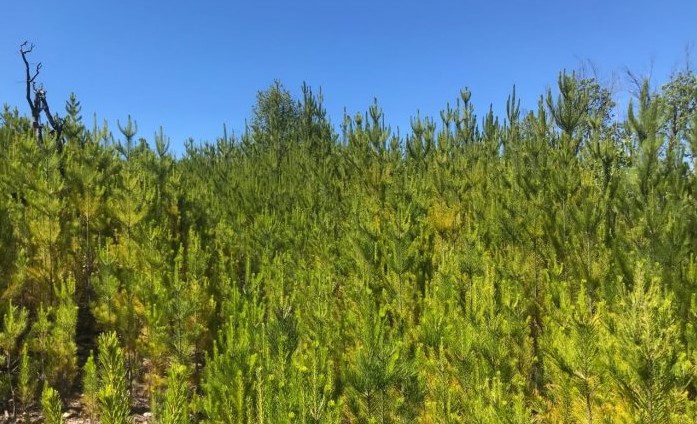
Although the greatest global impact is projected for the tropics and subtropics, due to the concentration of diversity and the intensity of human pressure, Gutiérrez emphasizes that Chile also faces similar processes. "What is happening here, mainly in Chile's forests, is that exotic species that are already naturalized, such as, for example, radiata pine, ponderosa pine, Douglas fir, tend to naturalize and invade spaces that are effectively colder and in environments where our native tree species are not as efficient."
He also mentions concrete signs in the south: "We already see that these species are even capable of invading the Patagonian steppe." Likewise, sycamore maple is strongly invading the Valdivian ecoregion (a large ecological unit with characteristic climate, vegetation, and fauna) and with very little control, invading mainly the shady environment within the forest."
Part of the phenomenon is amplified when disturbances exist, especially fires. In the case of radiata pine, he describes a very specific mechanism: "It disperses mainly by wind, and it has these cones that are usually closed, but when forest fire conditions occur, they tend to open or explode, so they tend to disperse many seeds at the same time." For the researcher, this connects with invasion ecology: species with small seeds and good aerial dispersal "do very well in environments where there have been more human disturbances." And he contrasts that pattern with the local biota: "In Chile, in general, we do not have species that are as adapted to disturbance conditions as the new disturbances we are seeing, which are this incidence of more frequent mega-forest fires."
Control Actions
Regarding actions, the researcher proposes two priorities. The first is early control of invasive species. "The main thing is controlling the invasive exotic species. Once they are naturalized, it is extremely difficult." He recalls a Chilean example after the 2017 fires: "On the Maule coast, the invasion of radiata pine in those burned territories generated an impressive overpopulation." However, he maintains that in other cases there is still time: "In others, we are still in time. For example, the case of Pittosporum is just beginning its colonization in natural ecosystems."
The second priority is to reinforce the conservation of endemic species (unique to a territory and not naturally found elsewhere) and slow-growing species, which the paper associates with greater future vulnerability. "They are the ones that will have the greatest conservation problems in the future... so we must reinforce our efforts to protect them," he notes.
He mentions among them gymnosperms like the alerce, araucaria, Chilean cypresses," and also broadleaf species with critical status, like "ruil, Nothofagus alessandrii. Several vulnerable species are understory (the vegetation under the forest canopy), arrive later in succession (the process by which an ecosystem changes over time after a disturbance), and are affected by additional pressures like livestock within the forest, due to their regeneration under shade (ability to regrow from seedlings or sprouts).
The researcher hopes to turn the global diagnosis into actions tailored at the country level. "What is needed after this study is to be able to conduct a fine-scale study of what is happening here in Chile and how native species are being influenced by naturalized exotic species," he explains.
Source:El Mostrador





Comments (0)
No comments yet. Be the first to comment!
Leave a comment