

Following the general approval of the bill establishing a system for the recognition, qualification, and reparation of victims of acts of violence in the Biobío, La Araucanía, Los Ríos, and Los Lagos regions, parliamentarians from the Biobío Region expressed their stance in favor of its progress and discussion, as well as those points they consider require more in-depth work.
This is because on March 9, the Senate's Human Rights Commission approved in the first stage the idea of legislating on this initiative promoted by the Executive branch at that time.
It is worth mentioning that this project contemplates timely and proportional reparation measures for the damage suffered.
To develop it, the creation of a commission in charge of administratively qualifying the victim status is planned, which will not have jurisdictional functions nor will it rule on criminal responsibilities.
As a requirement for this qualification, the process can be initiated at the request of the interested person or ex officio by the respective Regional Presidential Delegation. Furthermore, the creation of the Program for Attention to Victims of Intercultural and Territorial Conflict Violence is proposed, under the Undersecretariat of the Interior, which will aim to promote reparation actions, as well as the creation of a National Victim Registry.
In this regard, Deputy for district 20, José Antonio Rivas (PS), argued that "we cannot ignore that the State is the guarantor of order and security. When it fails, there must be an institutional mechanism that responds."
He stated that his view on this project is quite favorable, as he considers it a necessary step that aligns with the development of modern and restorative justice.
He also estimated that the administrative route is much more agile and humane than the criminal route, which tends to be exclusionary and slow for victims of rural violence. "Furthermore, many incidents that occurred in the south have judicially prescribed, leaving people defenseless," he stated.
He pointed out that qualification as a victim of this type of violence is not enough if not accompanied by substantive measures. Therefore, he defined that the formation of a commission in charge of the issue should consider members with a high ethical and moral profile. "A profile of ethical recognition and total political independence, as the commission itself will ultimately be responsible for qualifying victims," he specified.
"To settle the historical debt, a 'sorry' from the State is not enough. Comprehensive reparation must include economic compensation commensurate with the damage suffered. The State's responsibility materializes when it acknowledges its lack of capacity and financially compensates for that void," he stated.
For Deputy José Antonio Rivas, the proposal is on the right track. "But its success will depend on the amounts and benefits effectively managing to redress the damage caused, moving from formal recognition to dignified economic and social reparation," he proposed.
Meanwhile, Deputy for district 21, Joanna Pérez of the Democrats Chile party, stated that she considers this a positive and necessary initiative, because for many years victims of violence in the southern macrozone have expressed the feeling that the State has not sufficiently recognized them, nor has it responded comprehensively to their situation.
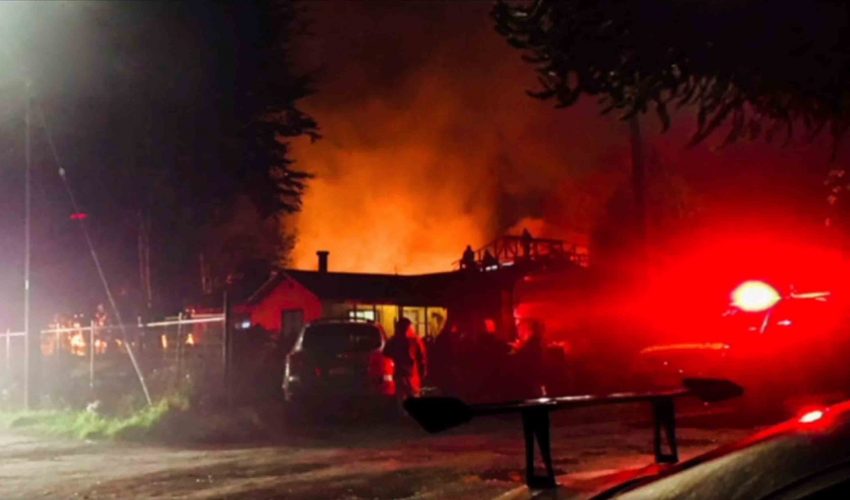
"We have seen cases, for example, of people whose properties or homes were burned in communes like Tirúa, and when they have sought support from the State, they have been offered barely a fraction, even close to a third, of the value of what they lost," she specified.
Regarding the creation of a commission to allow the administrative qualification of victims, it will allow for an institutionally organized response that, until now, according to Pérez, has been 'rather scattered'. "In our area, forced displacement exists, and we must correct that, allowing people to undertake and live where they see fit," she determined.
In summary, for Deputy Joanna Pérez, it moves in the right direction and should continue to be refined throughout its processing to incorporate different perspectives.
A thorough analysis of the project is proposed by Deputy Lilian Betancurt of the People's Party for district 21. "To ensure it truly responds to the needs of victims of violence in the southern macrozone. Many people have not only lost material goods but also their peace of mind and way of life, so any recognition and reparation system must be clear, effective, and timely," she stated.
Regarding the creation of the commission, she believes it could be a good tool for dialogue, listening to victims, and gathering information to improve the project. "But it is also essential to review how it will function in practice, what the deadlines will be, how people can apply to the programs, and what criteria will be used to access the benefits."
Deputy Betancourt recalled that today there is an office serving victims in the Province of Biobío, but noted that the processes are often long and bureaucratic. "Therefore, we believe it is necessary to reduce response times and facilitate access to aid, ensuring that reparation is real and effective for those who have lived with the consequences of violence for years," she stated.
As a way for the State to assume responsibility for the damage suffered by victims of violence in the southern macrozone, considered Deputy for district 20 Patricio Briones of the People's Party. "The proposed commission could help gather background information and provide a more organized response to each case, but we must also ensure the process is agile and accessible for those who need to apply to these programs," he noted. Regarding benefits in health, housing, education, and economic support, Briones stated they are moving in the right direction. "But it will be key to refine the initiative in Congress so that reparation is timely and effective," estimated the deputy.
Source:Diario Concepción





Comments (0)
No comments yet. Be the first to comment!
Leave a comment