

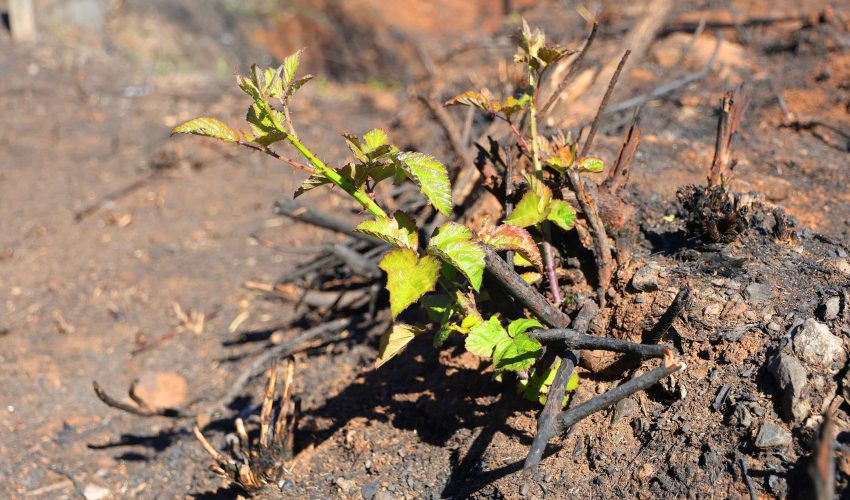
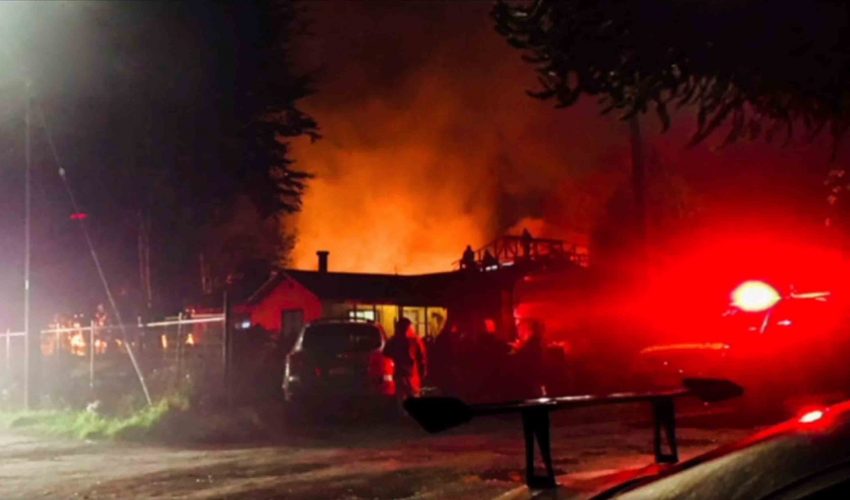
Nearly two months after one of the greatest socio-environmental disasters in the recent history of Biobío and Ñuble—the January fires that consumed thousands of hectares and hundreds of homes, resulting in about two dozen deaths and over 20,000 affected individuals, along with the loss of domestic animals and wild fauna and flora—there is tremendous damage that is hard to see in socio-ecological systems. However, this damage has had and will have impacts, so these systems must be restored to ensure vital functions for nature, productive activities, and social well-being.
Vast areas of soil were destroyed, from the visible to the invisible: "Fires have a profound impact on the smallest and often overlooked component of our soils—the microorganisms that make them fertile and alive," highlights Dr. Jeanette Vera, an academic from the Department of Basic Sciences at the Universidad del Bío-Bío (UBB).
The researcher leads a line of work addressing the response of soil microbial communities to disturbances like wildfires and the recovery of degraded soils using beneficial microorganisms. Her laboratory has generated robust evidence of the importance of native soil microbiota and its conservation as the foundation of ecological and productive resilience.
For these studies, whose scope she presented as a participant in one of the panels at the Congreso Futuro Biobío 2026, she and her team have collected, cultivated, and researched microorganisms from Ñuble, from the mountains to the coast.
Life from the Invisible
Soil is a foundation of life, with functions such as structurally supporting nature and humanity with their housing and development, hosting vegetation that provides oxygen, and providing food and resources. And because it sustains life, it is life: Dr. Vera emphasizes that it is a living, highly diverse, and complex system.
Microorganisms like bacteria, fungi, and protozoa, among other beings our eyes cannot see, play a crucial role there. They constitute a vast and vital biodiversity for nature and people, food, economies, development, and well-being.
To grasp that diversity, she states that "in a teaspoon of fertile soil, there can be more microorganisms than people on the entire planet, that is, on the order of billions." And their ecological roles are just as diverse.
On this, she highlights that microbes recycle organic matter and participate in nutrient cycles and processes that favor plant growth. Through photosynthesis, plants produce oxygen and can be crops that yield resources like food, timber, and economic benefits.
"Furthermore, microorganisms contribute to the soil's physical structure, helping to form aggregates that improve aeration and water retention," she specifies.
Soil without microorganisms is degraded soil, losing capabilities and fertility, and becoming more vulnerable to erosion and drought. This is the profound impact of a fire, the damage suffered by vast local territories this summer, and the growing risk in the face of the climate crisis, which increases favorable conditions for triggering large-scale disasters.
"During a high-intensity fire, surface temperatures can exceed 500°C, causing the immediate death of a large part of the soil microorganisms, especially in the top 30 centimeters, which are the most biologically active," she warns.
And, although there are very resistant microorganisms capable of surviving, the community becomes impoverished and altered. In fact, she mentions that studies show that immediately after a severe fire, microbial biomass can decrease by 80% to 90%.
"That's why today it is key to talk not only about visible reconstruction but also about how to recover the biological health of soils, how to protect them from future fires, and the role of science in this process," she states.
Environmental and Social Repercussions
The impact of fires on soil and its microorganisms has present and future effects.
Dr. Jeannette Vera explains that in the short term, biological activity decreases, with less recycling of organic matter and nutrients; in the medium term, the soil loses structure and the risk of erosion increases, especially in subsequent rains; and fertility and productivity are lost.
In this sense, she warns that "the recovery of microbial communities can take years or even decades, with direct consequences for soil fertility, agricultural productivity, and ultimately, the food security of rural communities."
And she adds that "a biologically impoverished soil needs more chemical fertilizers to maintain yields, but even then, plants tend to be weaker and more susceptible to diseases and water stress."
Evidence shows that after fires, there is a sustained decrease in the productivity of agricultural and forest soils in nearby areas, affecting the stability of productive systems, with a notable impact on small producers and local economies. Furthermore, the availability of food and resources can be altered.
Recover and Prevent
The current scenario and projections pose the challenge of restoring and conserving the native microbiota of soils for their recovery after fires and degradation, and also for preparation and resilience against future events.
And this requires investigative and practical work, from understanding each soil with its microorganisms to applying that knowledge in the field.
Soil microorganisms do not recover automatically; appropriate intervention and management are required, affirms the researcher.
"The first stage is to return food to the soil, incorporating organic matter like compost or plant residues that act as a substrate for microorganisms," she specifies.
As a second stage, she highlights using beneficial microorganisms like plant growth-promoting bacteria or mycorrhizal fungi that help re-establish key soil functions.
Anticipation and preparation are equally crucial for response, resilience, and conservation. With that horizon in mind, she knows and maintains that we must care for microorganisms, emphasizing the need to reduce activities that disturb the soil, avoid the use of agrochemicals, maintain plant cover, and promote more diverse productive systems. Additionally, studying and preserving the microbial community through strategies like collection, analysis, and cultivation, as they have done in her laboratory.
Source:Diario Concepción



Comments (0)
No comments yet. Be the first to comment!
Leave a comment