

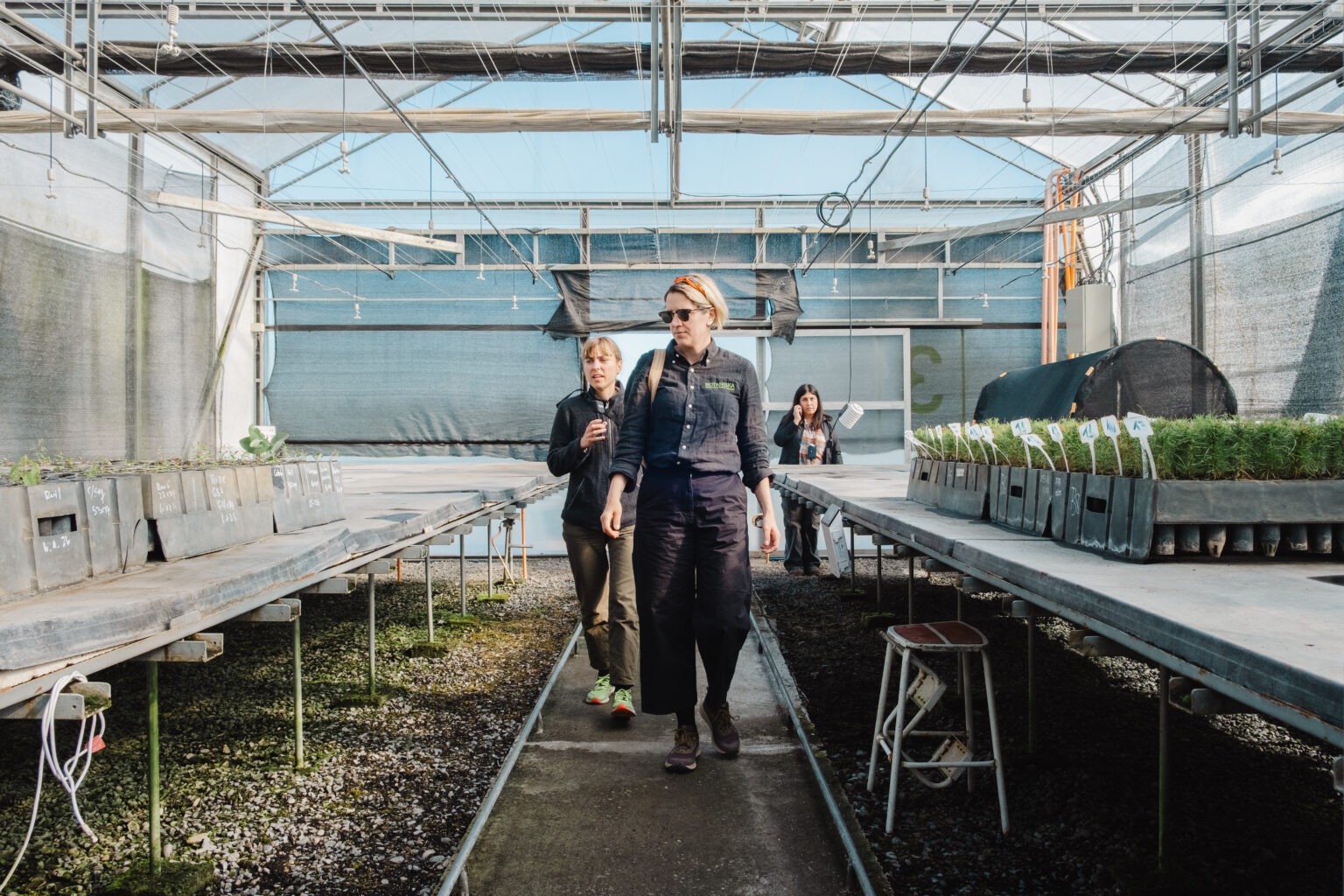
In a visit that strengthens international cooperation around one of Chile's most emblematic species, researchers Åsa Krüger and Stina Weststrand from the Gothenburg Botanical Garden toured various points of the country to learn about scientific advances related to the restoration of the Toromiro (Sophora toromiro), the only tree endemic to Rapa Nui, extinct in its natural habitat since 1960.
During their stay, they learned about ecological restoration initiatives and the work that CMPC carries out in its laboratories in Los Ángeles, Biobío, to contribute to the conservation of this species, including propagation and biotechnology processes aimed at increasing the availability of specimens for conservation and future reintroduction efforts.
"For us, it is very valuable to learn about the work being done here and see how we can contribute to the conservation of the Toromiro, a species that the Gothenburg Botanical Garden has been working with since the 1960s. Today we feel we are entering a new stage of collaboration with Chile to support its restoration," said Åsa Krüger.
Although it disappeared in the wild, the species survived thanks to the safeguarding of seeds and specimens in botanical gardens outside its natural environment, making it a unique case worldwide. In that history, the Gothenburg Botanical Garden has played a relevant role, keeping the species alive in Europe and safeguarding key genetic material for future restoration efforts.
"We were impressed by the scientific and long-term work that has been developed around the Toromiro. There is a serious effort to expand the base of available specimens and advance conditions that can support its future restoration," stated Stina Weststrand.
Alliance
As part of this alliance, CMPC and Botaniska promoted the exchange of in vitro propagated biological material, with the purpose of expanding the available genetic base and strengthening the chances of success in restoration processes. In this context, the specialists coordinated the transfer to Europe of 22 Toromiro specimens from the company's nursery, transported in a box sealed by the SAG, which will become part of the ex-situ conservation program of the Swedish garden.
Founded in 1923, the Gothenburg Botanical Garden (Botaniska) is the largest in Sweden and one of the most recognized botanical institutions in Europe for its work in conserving living collections and ecological restoration. Within this framework, Krüger and Weststrand are part of the team that safeguards and studies threatened species.
"We cultivate Toromiro mainly to preserve its genetic material. Our goal is to keep its diversity alive and share specimens with other botanical gardens in Europe, thus ensuring a backup for the species while progress is made in its restoration in Chile," explained Krüger.
Once the trees are received in Gothenburg, the researchers assured that they will be moved to the garden's new greenhouses and used as mother plants for future propagation. "They are especially valuable because they represent a distinct genetic line from those we already maintain in cultivation in Europe," added Weststrand.
Value for the Work
From CMPC, they valued the initiative, "they have great experience, therefore, for us, it is a pride that they come to Chile and value our work. Here, the key to the Toromiro's success is having greater genetic variability. If we manage to have traces, we will be successful and it will be a species that will be able to survive over time," emphasized Jean Pierre Lasserre, Manager of Technology and Planning at CMPC.
CMPC's work with the Toromiro has been ongoing since 2006, which involves recovering the ecological conditions necessary for the species to establish itself in Rapa Nui. Between 2008 and 2011, the company managed to reproduce the tree and was able to mass-produce the Toromiro, developing vegetative propagation and grafting techniques. Additionally, protocols for embryo rescue and germplasm massification were researched, which now provide more tools to face the challenge of restoring this species. In line with this, together with the University of Concepción, trials of inoculation with beneficial bacteria have been conducted since 2018 to recover soil biological activity and support nitrogen fixation, a key factor for the development of the native tree. This work has contributed to improving plant response in reintroduction trials.
One of the most relevant milestones of this process was achieved in 2025, with the shipment of 287 seedlings to Rapa Nui, germinated in its Biotechnology laboratory in Los Ángeles, in collaboration with CONAF, the Viña del Mar Botanical Garden, and the University of Concepción.





Comments (0)
No comments yet. Be the first to comment!
Leave a comment