

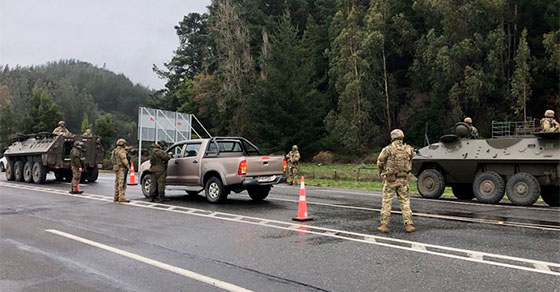
The Chamber of Deputies gave the green light to the continuation of the constitutional state of emergency exception in the La Araucanía Region and in the provinces of Arauco and Biobío, with broad support of 122 votes in favor, 19 against, and 9 abstentions.
This measure, which has been maintained for over 1400 days since its establishment on October 12, 2021, now faces its first renewal under the government of President José Antonio Kast.
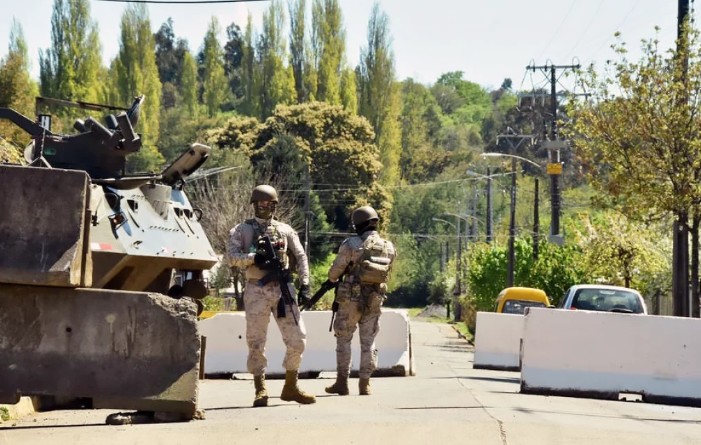
The parliamentary debate reflected the diverse positions of legislators, while the Minister of the Interior, Claudio Alvarado, justified the need for the measure by highlighting the insufficiency of police capabilities in the face of security challenges in the region. If approved by the Senate, the extension will prolong the military deployment for an additional 30 days.
Since its inception in October 2021, the state of exception has been a governmental response to the complex security situation in the Southern Macrozone. The administration of Gabriel Boric, predecessor of the current president, also resorted to this legal measure on 66 occasions, reflecting the persistence of challenges in the region.
The Minister of the Interior, Claudio Alvarado, defended the extension before the Chamber, arguing that the severity of events in La Araucanía and the provinces of Arauco and Biobío justifies the intervention of the Armed Forces. Alvarado emphasized that the situation exceeds the handling capacity of police forces, which has led the government to request military support.
The Chamber's decision has generated mixed reactions among parliamentarians. While some support the measure as necessary to ensure security and public order, others criticize it for not addressing the root causes of the conflict and potentially affecting the rights of the region's inhabitants.
The Senate vote will be the next step in determining whether the extension of the state of exception will be maintained. If approved, the government of José Antonio Kast will continue with the security strategy that has characterized the management of the conflict in the Southern Macrozone in recent years.
The situation in La Araucanía and the provinces of Arauco and Biobío remains a central issue on Chile's political and security agenda, with the hope that the measures adopted will lead to a lasting and peaceful solution for all involved.



Comments (0)
No comments yet. Be the first to comment!
Leave a comment