

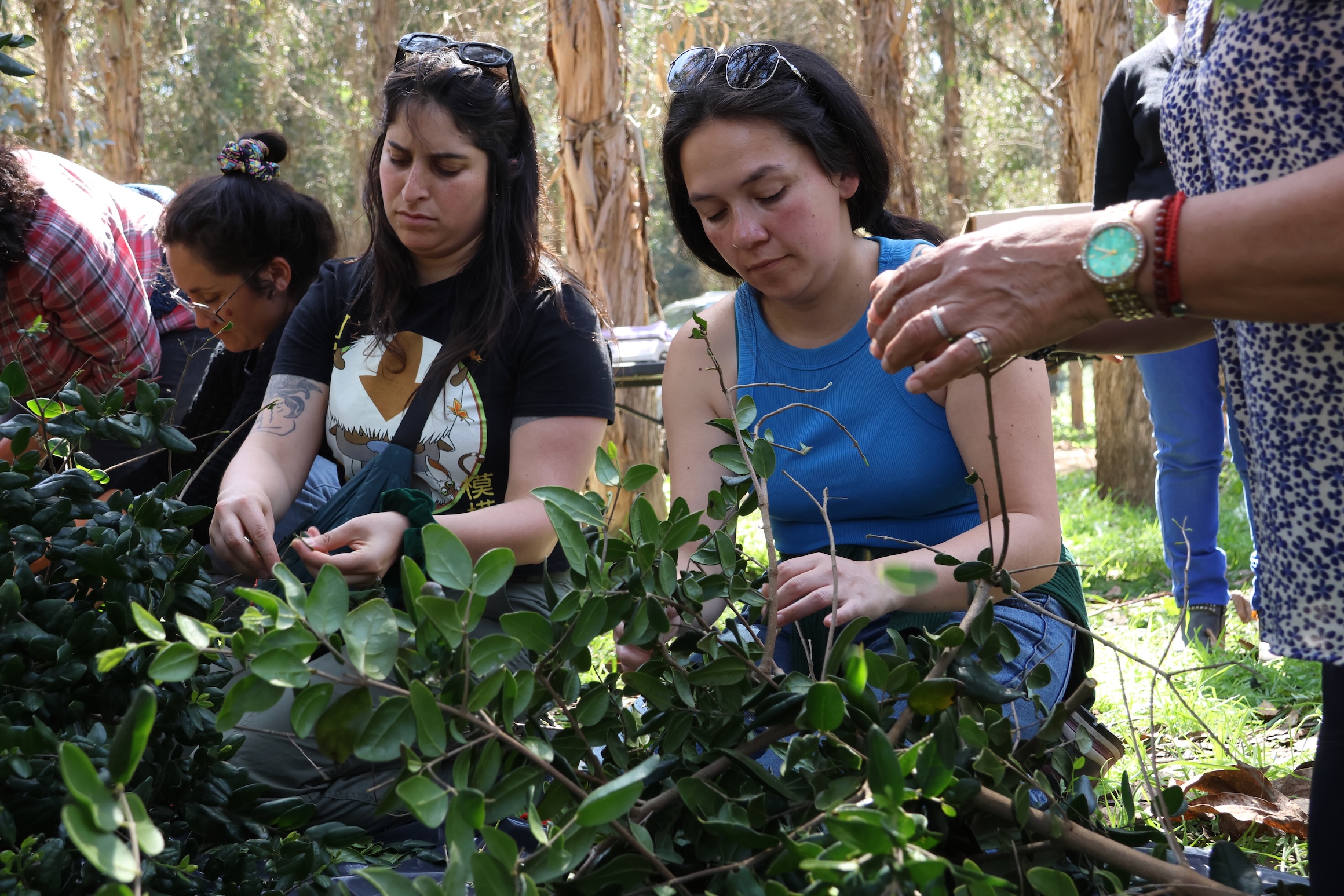
For centuries, boldo has been part of daily life in Chile. Present in homemade infusions, natural medicine cabinets, and now in sophisticated pharmaceutical and cosmetic products, this non-timber forest product (NTFP) is one of the country's most valued endemic species.
However, its commercial success—which crossed borders since the late 19th century—has also meant significant pressure on the resource. In this scenario, applied research has become key to ensuring its continuity. On this path, the Forestry Institute (Infor), under the Ministry of Agriculture, and particularly researcher and project director Susana Benedetti Ruiz, have taken a leading role.
Impact and Overexploitation
Boldo leaves are recognized for their digestive and hepatoprotective properties, mainly associated with boldine, an alkaloid that now attracts international interest. In addition to the traditional export of dried leaves, the export of powder obtained from grinding thin branches began in the late 20th century.
This market growth—with destinations such as Argentina, Brazil, Uruguay, Paraguay, Germany, Spain, and other European countries—generated significant economic impact but also a critical consequence: the overexploitation of natural boldo formations.
"The historical use of boldo has been almost exclusively from native forests. There are no commercial plantations, and this has led to a reduction in area and a change in its growth form: from tree to shrub," explains Susana Benedetti Ruiz. In areas from Coquimbo to La Araucanía, where the species is naturally distributed, it is increasingly difficult to find tree specimens today. Its high regrowth capacity has allowed its survival, but with serious problems of natural regeneration.
This scenario raised alarms in the scientific world. For the Infor team, boldo faced a real risk of vulnerability, especially considering it is an endemic species exclusive to Chile. "If we know it has enormous chemical and medicinal potential, the obligation is to protect its genetic material and seek productive alternatives," says Benedetti.
Without Pressures
This is where one of the central focuses of Infor's work emerges: developing sustainable cultivation models that allow maintaining the business without further pressuring the native forest. For over 20 years, the institution has researched boldo silviculture: how to propagate it, how to plant it, what management it requires, how much a cultivated hectare produces versus a natural formation, and which models best suit small, medium, or large landowners.
The impact of this work is especially reflected in rural territories and among people who have historically lived from harvesting. In regions such as Valparaíso, O’Higgins, Maule, Ñuble, and Biobío, Infor has worked directly with communities, many of them composed of women harvesters. Knowledge transfer has allowed owners to understand the real value of the resource and negotiate under better conditions.
"When we started, a kilo of dried leaf was paid between 60 and 70 pesos. Today it exceeds 2,500 or even 3,000 pesos," highlights the researcher. This change is not coincidental, as it responds to greater market transparency, access to information, and strengthening the position of small landowners and harvesters, who now understand that their product is the basis of a high-value chain.
The research has also gone beyond the leaf. Studies conducted with the University of Chile have identified a wide range of bioactive compounds—flavonoids, essential oils, and other alkaloids—present not only in leaves but also in branches and wood. This opens new opportunities for pharmaceutical, cosmetic, and functional food industries. Even innovative prototypes have been developed, such as gummies, herbal blends, and pilot experiences in food products.
Conservation Challenge
One of the most ambitious challenges is the genetic conservation of boldo. "My great goal is to leave the genetic material of the species protected," states Benedetti. INFOR has made progress in replicating outstanding individuals and is working on the idea of a germplasm bank that represents the regional diversity of boldo, a key tool for its long-term conservation.
Today, the projection for boldo combines tradition and future. In addition to international demand for dried leaves and powder, there is growing interest in extracts, purified boldine, and high-value-added applications. All this reinforces the need for a sustainable approach, where planned cultivation progressively replaces extraction from native forests.
Susana Benedetti emphasizes that Infor's role has been to articulate science, territory, and market. "From generating technical knowledge to transferring it to communities, our work has laid the foundations for a new relationship with this Chilean NTFP, fairer for people and more respectful of the ecosystem," she points out.
From Acoforag, we value the project promoted by Infor, highlighting that research on boldo demonstrates that forestry development can be sustainable, inclusive, and with territorial identity, generating real opportunities for small landowners and harvesters, and protecting a unique natural heritage of Chile.
The feature in theAcoforag Magazine


Comments (0)
No comments yet. Be the first to comment!
Leave a comment