

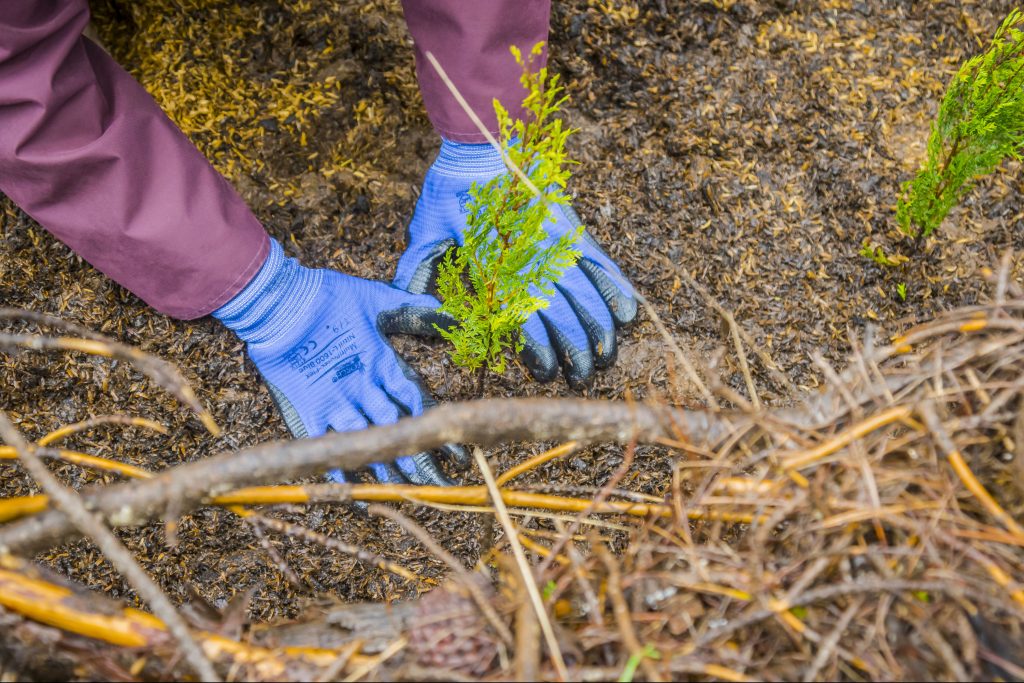
Prolonged droughts, landscape fragmentation, and pressure on ecosystems are part of the environmental scenario facing the Region. This is compounded by the recent catastrophe caused by the wildfires that affected areas of Penco and Lirquén, highlighting the territory's high vulnerability to extreme events. In this context, restoration is established as a key tool to recover ecosystem functions and increase landscape resilience.
During the month of February, work began on five hectares of the University of Concepción's property. These are site preparation and cleaning tasks, which are part of an ecological restoration process driven by the UdeC Nature Campus.
At first glance, these interventions may raise questions. However, they are not isolated actions nor an extractive use of the land. They constitute the first stage of a planned, long-term process aimed at recovering ecological attributes and key functions of the intervened system.
Ecological restoration has gained special relevance in a scenario marked by ecosystem degradation, biodiversity loss, and the effects of climate change, particularly in urban and peri-urban areas like Greater Concepción.
Preparing the Ground
The process beginning at the University of Concepción corresponds to a first stage covering five hectares of the property. The intervention will be carried out under the International Standards for the Practice of Ecological Restoration by the Society for Ecological Restoration (SER), which establish a work sequence based on diagnosis, initial management, progressive recovery, and monitoring.
In this context, site preparation and cleaning tasks play a key role, as they allow for reducing existing pressures, removing elements that hinder ecological recovery, and generating suitable conditions for the subsequent stages of the process.
The Director of UdeC Nature Campus, Cristian Echeverría Leal, has over a decade of experience in ecological restoration. For 14 years, he has led and executed projects of this type in the restoration trials of Nonguén National Park, an experience now being transferred to the university context.
"Ecological restoration is not an immediate or ornamental action. It is a process that requires knowledge of the system, planning, and time. In many cases, intervening on the site at an initial stage is a necessary condition for ecological processes to be reestablished," he explained.
The academic added that starting with a limited area allows for more controlled progress. "Working on five hectares allows us to adjust technical decisions and build learnings for the following stages," he stated.
He also specified that the intervention on exotic species is part of a fundamental technical decision within ecological restoration. "In many territories, these species have so altered the ecosystem conditions that, if not controlled, restoration is simply not viable. They continue competing for water, light, and nutrients, and keep the system in a degraded state from which it cannot escape on its own," he indicated.
He revealed that the goal is not to eliminate, but to reduce key ecological pressures. "It is about redirecting the ecosystem's trajectory towards a state closer to its reference. It is a responsible way to prepare the site and create the minimum conditions for restoration actions—such as the recovery of ecological functions—to make sense. Restoring is a long-term commitment to more resilient landscapes that sustain biodiversity and contribute to human well-being," he emphasized.
Coordinated Work
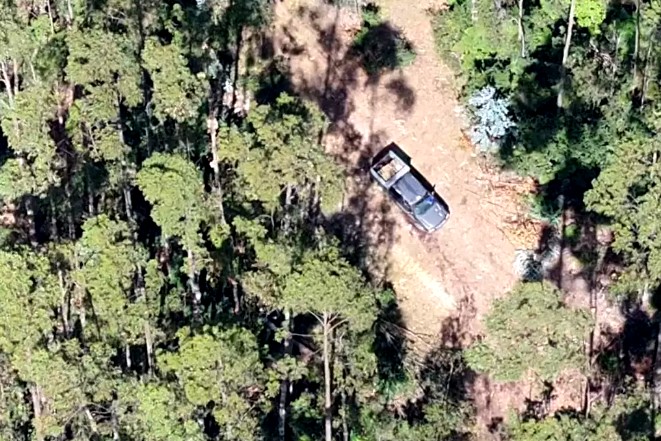
This first stage, corresponding to site preparation, involves clearing areas currently covered by exotic species, such as eucalyptus and acacia. These are limited actions, taking place between February and March, as long as weather conditions allow.
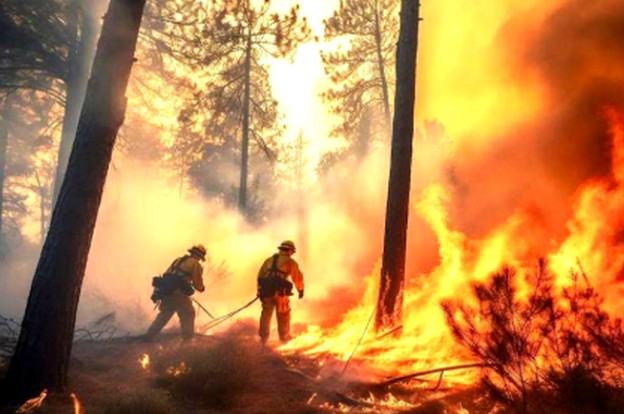
UdeC Nature Campus reminds that this period coincides with the wildfire season, so, upon the declaration of a yellow or red alert, the property is preventively closed for any type of activity.
In turn, the Directorate of Services of the University of Concepción emphasized that the tasks are carried out in a planned and coordinated manner, with safeguarding measures aimed at the safety of the university community and those passing through the area.
Juan Emilio Espinoza Carvajal, in charge of UdeC Properties and Forest Management, stated that the University has a wildfire protection program with 30 preventive and response preparation measures, and that, furthermore, these include access restrictions and activity suspension when weather conditions represent a high fire risk.
"For this, the University follows the Preventive Early Warnings issued by Senapred and the Conaf Red Button system. These provisions apply both to ongoing tasks and to the activities carried out by the Nature Campus project on the property," he added.
In this regard, he specifies that "in situations of elevated risk, presence of active fires, or any scenario that could endanger people, a preventive closure of the forested areas is carried out, always prioritizing the safety of the university community and visitors," and that these measures are well received by the community, "understanding that their main objective is to protect people's lives and safeguard the University's natural heritage."
On-site actions include controlled movements, preventive signage, and demarcation of work areas. The results of the ecological restoration, emphasize UdeC Nature Campus, will be observed in the medium and long term, according to the natural timelines of the processes.
Finally, it is important to reiterate that the sector where the work will take place corresponds to a private property belonging to the University of Concepción. While it is acknowledged that these spaces are commonly used by the community for recreational and sports activities, the University calls for avoiding transit through the intervened areas and respecting the established safety measures, in order to prevent risky situations.
Comments (0)
No comments yet. Be the first to comment!
Leave a comment