

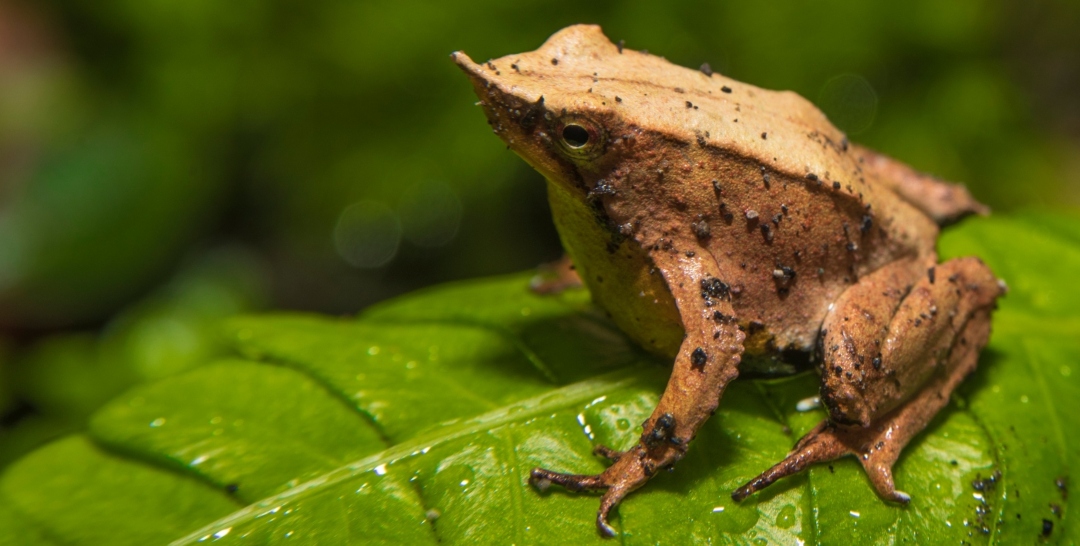
This Thursday, April 9, the Recovery, Conservation, and Management Plan (Recoge) for Darwin's frogs was published in the Official Gazette of the Republic of Chile. This initiative aims to safeguard these emblematic species from threats such as habitat loss, diseases, and climate change.
The document was prepared by the NGO Ranita de Darwin following extensive collaborative work involving over 20 public and private institutions. Its development spanned several years and succeeded in consolidating a concrete roadmap for the protection of these unique species.
In recent months, the plan had gained public notoriety after an administrative process that included its presentation as a draft in 2024 and its approval in July 2025 by the Council of Ministers for Sustainability and Climate Change. However, on March 12, 2026, it was temporarily withdrawn from the Office of the Comptroller General of the Republic during its final processing stage, being resubmitted six days later.
With its official publication, the plan comes into effect, marking a key milestone for the conservation of these endemic Chilean species.
The president of the NGO, Andrés Valenzuela Sánchez, explained that the instrument brings together essential information along with concrete actions to address the crisis affecting these amphibians. "It is a practical document containing specific measures, with implementation timelines, expected results, and defined responsible parties for each action," he stated.
The implementation of the plan will be overseen by state agencies such as the Ministry of the Environment and the Agricultural and Livestock Service, in addition to civil society organizations, universities, and forestry companies.
Unique and Endangered Species
Darwin's frogs—Rhinoderma rufum and Rhinoderma darwinii—are considered evolutionarily unique species and form an irreplaceable part of the world's natural heritage. Among their most surprising characteristics is that the male incubates the tadpoles in its vocal sac, a behavior unparalleled among the over 9,000 known amphibian species.
However, their situation is critical. The Northern Darwin's frog, which inhabited the area between Zapallar and Concepción, has not been seen since 1981 and is considered possibly extinct. If confirmed, it would be the first documented extinction of a native vertebrate in Chile in recent times.
Meanwhile, the Southern Darwin's frog survives in small, isolated populations in Chile and Argentina, facing threats such as the destruction of native forests, chytridiomycosis—an infectious disease affecting amphibians—and the effects of climate change.
A Precedent for Conservation
The launch of this plan marks a turning point for amphibian conservation in the country. It is the first Recoge Plan focused on this group, establishing an institutional precedent for the protection of highly vulnerable and often overlooked species.
Furthermore, its implementation is closely linked to the protection of native forests, a key ecosystem that provides essential services such as clean air, water, and climate regulation.
In this way, the initiative not only represents progress in biodiversity protection but also contributes to people's well-being and the sustainable development of Chile.




Comentarios (0)
No hay comentarios aún. ¡Sé el primero en comentar!
Deja un comentario