

At the close of the previous legislative period, the bill regulating the prevention and mitigation of forest fires, known as the Fire Law, moved to review by a Mixed Commission. This occurred after the Chamber of Deputies rejected part of the amendments introduced by the Senate during its second constitutional reading.
Although the Chamber supported most of the changes made by the Upper House to the initiative, three key points did not receive the necessary support. This will require deputies and senators to resolve the discrepancies in a Mixed Commission instance, which, it is worth noting, has not yet been formed one month after the vote.
Rejected Provisions
Among the provisions that did not succeed is the elimination, incorporated by the Senate, of compensation for owners within the framework of "property damage effectively caused due to compliance with the measures ordered by this law." Subsequently, the Chamber chose not to remove this right, thus maintaining the criterion approved in the first reading.
Likewise, due to not reaching the required quorum of 76 votes, the provisions regulating illegality claims and the modifications to communal, intercommunal, and metropolitan zoning plans regarding risk or protection areas did not advance.
Consequently, those matters on which the corporations disagreed must be reviewed by a mixed commission, which will have the task of proposing a consensus text so the bill can continue its processing.
Processing
Thus, the proposal, submitted by the Ministry of Agriculture and the Ministry of Housing and Urban Development and which has been in Congress for nearly two and a half years, is still awaiting the formation of the mixed commission to advance its processing.
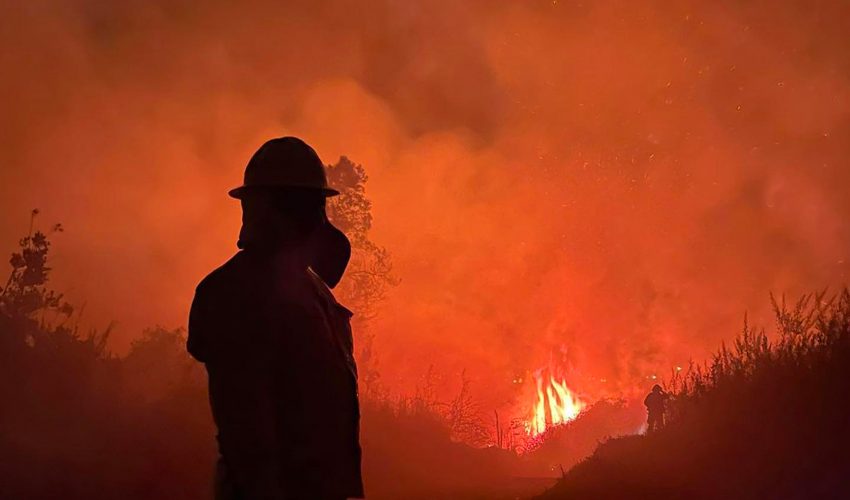
The concern among local congress members is that the instance may be formed promptly to dispatch the bill, which gained greater relevance after the catastrophe of the mega-fire that affected the Biobío and Ñuble regions, leaving areas like Lirquén and Punta de Parra devastated.
In this regard, Deputy Joanna Pérez (Democrats) referred to the processing of the regulation and emphasized that "it is necessary to resolve those discrepancies and for the executive branch to be able to take some proposal or starting point from this discussion to go to the mixed commission. We hope it does so promptly, because this is a project from 2023."
For his part, Deputy Patricio Briones (PDG) also expressed concern about the sluggish discussion of the fire prevention and management initiative, stating that "as representatives of a region as hard-hit as Biobío, our priority is that this law not only be processed quickly but also be effective and provide real tools to municipalities for prevention."
For Deputy Roberto Arroyo (PSC), the Fire Law moving to a Mixed Commission shows that there are differences, "but also that the project is very advanced."
Like the other congress members, Arroyo referred to the lack of formation of the mixed commission and indicated that "we hope this instance is formed promptly, resolves the pending points, and allows for a modern and effective regulation to be in place soon. Chile cannot continue facing each fire season with insufficient tools. This law is urgent and necessary to protect families and prevent greater impacts every time we have seasons where fires occur."
The Initiative
It is worth remembering that the initiative seeks to strengthen the national strategy for preventing forest fires, especially after the catastrophe of the fires this past January.
Furthermore, the project proposes classifying the country into low, medium-high, or critical risk zones. Additionally, the measures presented in the initiative are adapted to each local reality.
The initiative, which seeks to generate territories better prepared for fires, defines urban-rural zones where forest comes into contact with housing. It also creates buffer zones to stop or slow the advance of fire, with different obligations according to the level of risk.
If approved by Congress, the Forest Fire Law indicates that municipalities and public services must provide technical assistance, education, and community prevention actions against fires.
Another relevant point is that the application of the eventual regulation will be supervised, and the penalties consider the severity of the offense and the situation of the owners.
Source:Diario Concepción



Comments (0)
No comments yet. Be the first to comment!
Leave a comment