

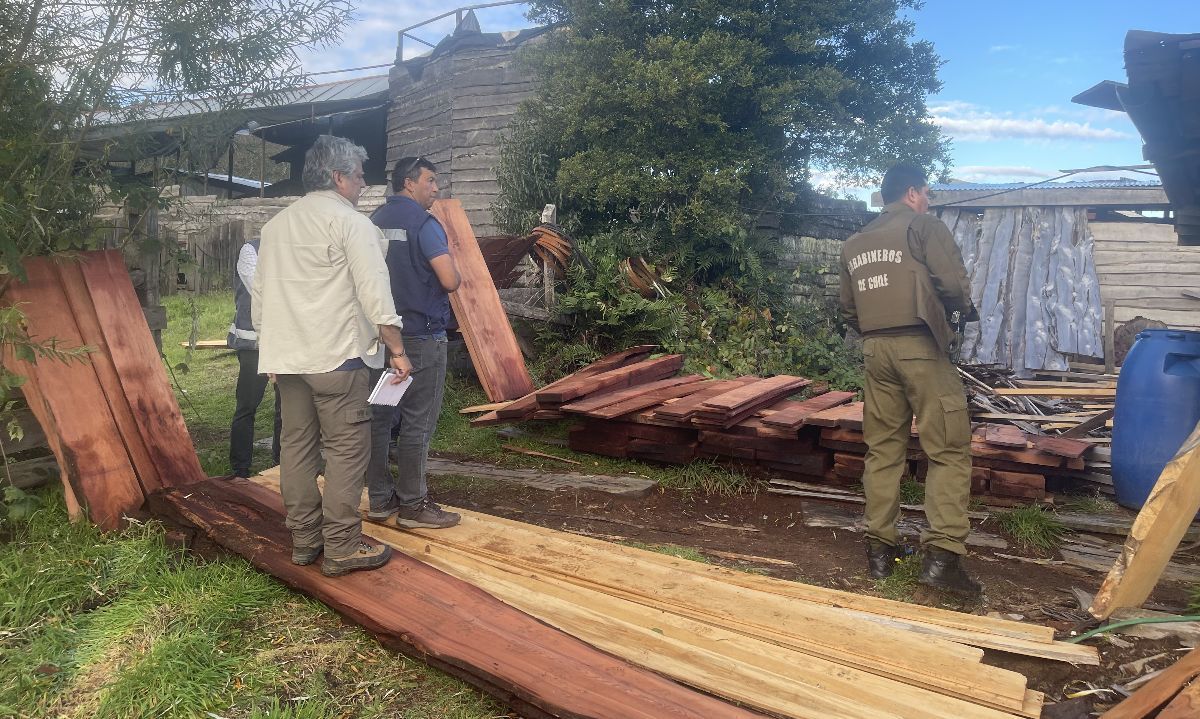
A joint deployment of public agencies in the province of Llanquihue led to the detection of irregular commercialization of alerce wood, a protected species in Chile, as part of actions aimed at reinforcing control over the use of native forests.
The operation was carried out at various points in Puerto Montt, specifically in the Alerce and Colonia Tres Puentes sectors, where inspection teams examined premises linked to the sale and processing of wood.
The intervention was coordinated between the National Forestry Corporation (CONAF), Carabineros —through its specialized unit— and the Internal Revenue Service (SII), as part of a strategy to monitor the origin of forest products circulating in the market.
During the inspections, authorities detected the presence of sawn alerce wood at one of the visited premises. At the time of the review, the legal origin of the material could not be verified, leading to its immediate seizure.
From the forestry sector, it was reiterated that current regulations are strict regarding this species, allowing only the use of dead alerce —from natural remnants— and always under duly approved management plans.
In this context, authorities emphasized the importance of strengthening traceability in the commercialization chain, as well as the role of consumers when purchasing forest products, recommending that they demand documentation supporting their origin.
This type of operation is part of sustained inter-institutional oversight work, whose objective is to prevent the illegal extraction of forest resources, safeguard protected species, and ensure compliance with current legislation.
The alerce, declared a Natural Monument in Chile, has had legal protection for decades, which prohibits the felling of live trees and establishes strict controls on its utilization and commercialization.








Comments (0)
No comments yet. Be the first to comment!
Leave a comment