

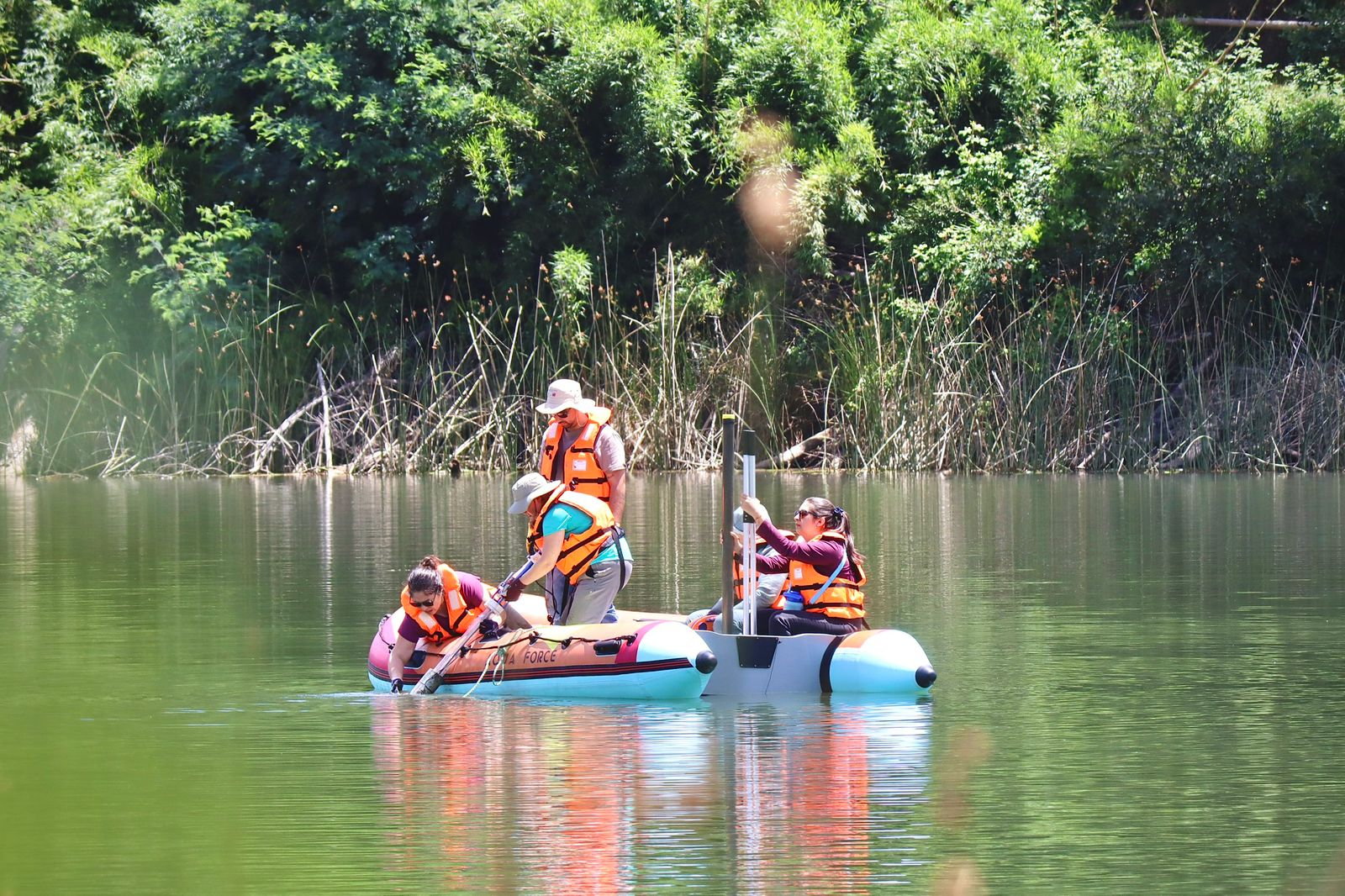
Reconstructing a part of the environmental history of the territory to project better conservation and restoration decisions is one of the purposes of the Fondecyt Initiation project "Forest fires and anthropogenic activity as drivers of erosion in the south-central zone of Chile during the Holocene," led by academic from the Department of Basic Sciences at the Universidad del Bío-Bío, Dr. Patricia Jana Pinninghoff.
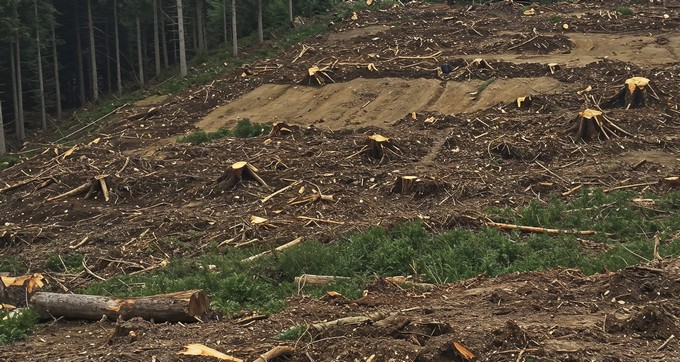
The research aims to analyze the occurrence of forest fires over the last 1,500 years in the Ñuble Region, along with identifying levels of human intervention and their relationship with erosion processes. Within this framework, the study will examine how activities such as agriculture or the introduction of forest plantations have influenced erosive dynamics, either mitigating or intensifying it.
"We seek to reconstruct periods of fires and also of human intervention, and link them with the erosive processes of the territory. This will allow us to understand how different activities have influenced soil degradation or conservation," explained Dr. Jana.
Furthermore, the project will address the evolution of fire frequency and the role of anthropogenic action in its increase, considering background evidence that shows a sustained rise since the 1970s. Based on this reconstruction, it is expected to determine whether this phenomenon responds to a recent trend or has antecedents in previous centuries.
Natural records to reconstruct the past
The research is based on the analysis of lake sediments, which are deposited continuously at the bottom of lakes, forming annual layers that allow for establishing precise chronologies. These natural records contain key information about past environmental conditions.
The study will be carried out in the Coyanco lagoon, located in the Florida commune in Biobío, in an area whose basin is linked to Quillón, making it possible to infer historical processes relevant to the Ñuble Region. Through the analysis of different indicators, the aim is to identify agricultural practices, establish temporal markers, and evaluate the impact of human intervention since the arrival of the first Spaniards approximately 500 years ago.
To achieve this, paleolimnology techniques will be used, a discipline that allows for reconstructing environmental and climatic conditions from lake sediments. "This type of study has not been conducted in the Ñuble Region, so there is an opportunity to generate novel knowledge about the environmental history of the territory," highlighted the researcher.
Microscopic evidence of fires and erosion
Among the methodologies considered, microscopic charcoal particles present in the sediments will be analyzed, which will allow for identifying the occurrence and frequency of forest fires over time. This approach seeks to complement available historical records, which indicate, for example, the use of fire to clear land during the colonization process.
Simultaneously, the study will incorporate the analysis of elements of terrestrial origin, such as titanium, whose presence in lake sediments constitutes an indicator of erosion. "If we observe an increase in these elements over time, we can associate it with greater processes of material transport from the basin to the lake," specified Dr. Jana.
This analysis will be complemented with other indicators, such as changes in sediment grain size, nutrient input, and organic carbon accumulation, which will allow for a comprehensive reconstruction of the erosive dynamics of the territory and its relationship with natural and anthropogenic factors.
Contributions for environmental management and restoration
The academic emphasized that understanding the history of the territory is fundamental for guiding future decision-making in environmental matters. "Knowing what happened in the past is key to defining how we want to intervene in the present, whether to conserve or restore ecosystems," she stated.
In this line, the project will provide information on the original characteristics of the soils, degradation processes, and transformations experienced over time, contributing to establishing clear restoration objectives and defining the most appropriate strategies for their implementation.
In this way, the initiative will not only contribute scientific knowledge in an area little explored in the south-central part of the country but will also provide relevant inputs for the sustainable management of the territory.

Comentarios (0)
No hay comentarios aún. ¡Sé el primero en comentar!
Deja un comentario