

The commemoration of the 147th anniversary of Navy Day brought together political authorities and Navy representatives this Thursday at the Talcahuano Naval Base. But beyond the tributes to the feat of Iquique, it also served to address La Moneda’s agenda: public security, the processing of the National Reconstruction Law, and the imminent first State of the Nation Address by President José Antonio Kast.
Representing the Executive, the Minister Secretary General of the Presidency (Segpres), José García Ruminot, and the Undersecretary of the Interior, Máximo Pavez, attended.
Regarding the day, García highlighted La Moneda’s decision to deploy authorities to different points of the country during May 21. “The country is one,” he stated, noting that the goal is for “the entire country to vibrate with May 21.”
Security and State of Emergency
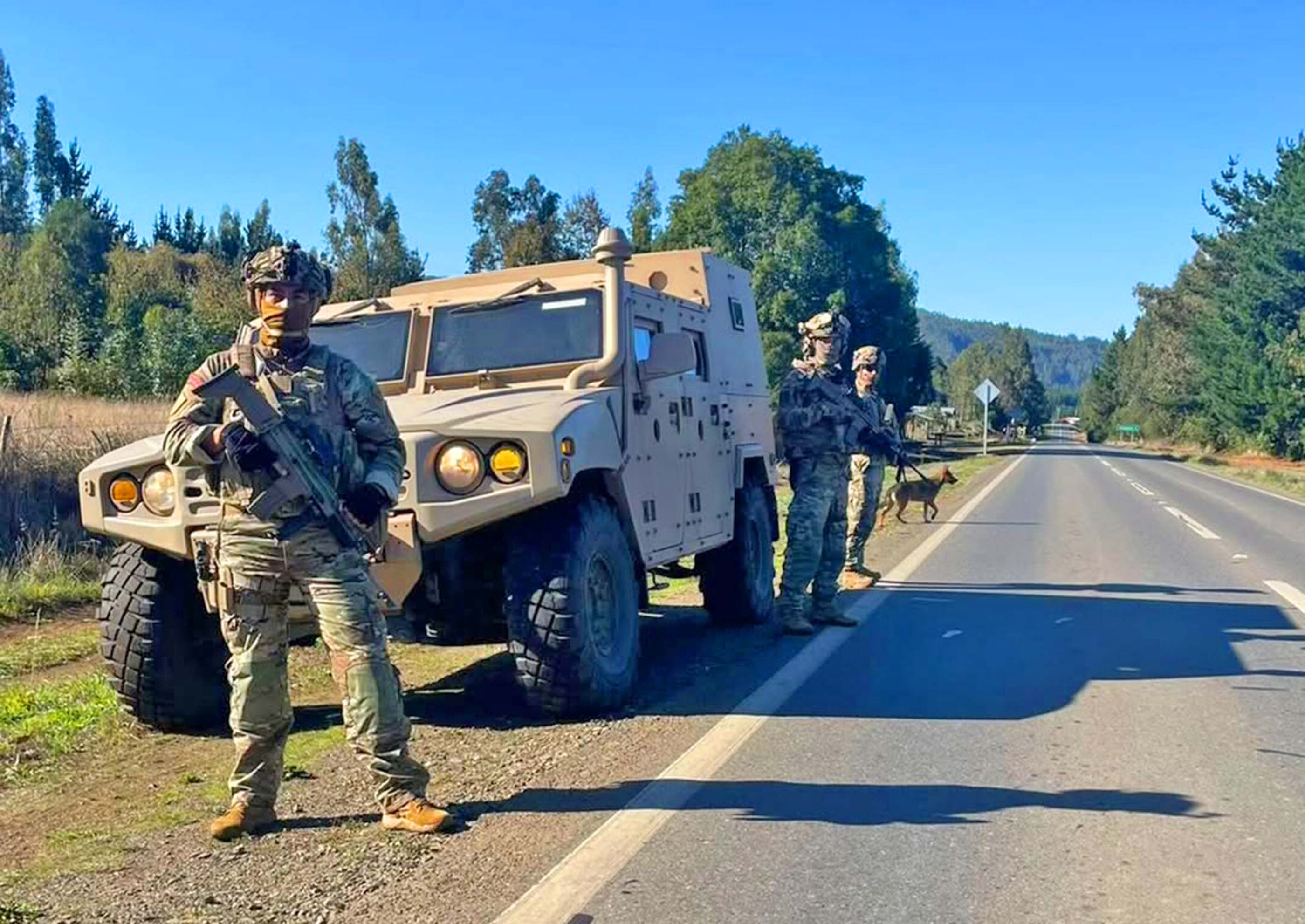
One of the main announcements came precisely from the security sphere. Asked about the continuity of the Constitutional State of Emergency (EEC) in force in the Southern Macrozone, the head of Segpres ruled out a potential de-escalation of the measure.
“We will maintain the State of Emergency,” the Secretary of State stated, adding that “as long as these violent groups, these groups that use weapons to carry out their terrorist action, are not properly dismantled, the constitutional state of emergency has been and is a tool that allows us to live in peace.”
This definition takes on special relevance in the context of the recent cabinet reshuffle. On Tuesday night, the Executive removed Trinidad Steinert from the portfolio, one of the most criticized ministers due to criticism regarding the lack of a formal security plan.
Subsequently, the head of the portfolio anticipated that efforts are being made to strengthen the powers available to the Armed Forces within the framework of the EEC. Among them, he recalled the announcement made by the Minister of the Interior (Claudio Alvarado) regarding a project that would allow identity checks to be carried out without the mandatory presence of Carabineros.
However, security emerges as one of the issues that could mark the President’s imminent address. Referring to the upcoming State of the Nation Address, García confirmed that the ministerial meeting at Cerro Castillo will focus on preparing the message, adding that each portfolio must contribute the main milestones and achievements reached.
In that line, Senator for Biobío, Enrique van Rysselberghe (UDI), suggested that the arrival of Martín Arrau at the Ministry of Security could help clear up some of the doubts raised in recent weeks regarding the government’s strategy.
“The new minister will nourish the President so that he can explain the security plan,” said the parliamentarian, stating that the portfolio did have a roadmap, although it “had not been adequately explained or adequately communicated.”
However, the reading from part of the opposition is far from coinciding. In recent hours, Senator for Biobío, Gastón Saavedra (PS), harshly criticized the Executive after the ministerial adjustment. “Politics is not for interns,” he said, adding that Steinert’s departure confirmed that “there simply was no plan.”
A similar assessment was recently made by the deputy for District 20 and leader of the Christian Democracy (DC), Álvaro Ortiz, who stated that the Government “is falling apart” and accused some of the authorities who were part of the political committee during the first weeks of management of lacking political experience.
National Reconstruction Law
Another of the issues addressed, from Talcahuano, was the future of the National Reconstruction and Economic and Social Development Bill, which this week passed its procedure in the Lower House and was sent to the Senate.
Regarding the scenario the proposal will face in the Upper House, García valued the support obtained in the eastern wing of Congress and expressed confidence regarding the next legislative stage. “We will talk with the senators from all parties, and we also hope to have great support,” he stated.
From the ruling coalition, Senator Van Rysselberghe projected a swift discussion in the Senate, highlighting that the government coalition has a favorable position in various legislative instances. “We expect a quick process, just as it happened in the Chamber of Deputies,” he commented.
A similar view was held by the deputy for District 20, Paz Charpentier (REP): “We are very happy that it was approved,” she indicated, stating that the proposal will allow progress in the reconstruction of damaged homes in Biobío, Ñuble, and Valparaíso, in addition to “recreating opportunities” for families.
Despite the ruling coalition’s optimism, the initiative continues to face strong resistance from the opposing side.
In this scenario, Senator Gastón Saavedra has maintained a particularly critical stance regarding the so-called “Miscellaneous Law,” which he recently described as “a project born from miserable minds,” questioning its fiscal, economic, and institutional effects.
In a dialogue with Diario Concepción, the congressman reaffirmed his objections and called on the Executive to open negotiations to correct the text. “The project is bad,” he argued, adding that “it does not guarantee job creation or investments, but it does mean the country will have a deficit of 4 billion dollars.” In this context, he defended the use of amendments as a legitimate tool to modify those aspects of the proposal he considers deficient.
Advances in Naval Construction
Beyond the political contingency, the commemoration left room for one of the axes that the Navy has been strongly promoting in the region: the development of naval construction and its impact on the country’s industrial capacity.
During his speech, the commander-in-chief of the Second Naval Zone and head of National Defense for the provinces of Biobío and Arauco, Rear Admiral Edgardo Acevedo, highlighted both the institutional participation in emergencies and the Constitutional State of Emergency, as well as contributions related to national technological development and the progress of the National Continuous Naval Construction Policy.
“Naval construction is a Chile that grows, develops, increases its capabilities and its industrial independence,” he stated.
His remarks come at a time when Asmar is advancing in the final construction phase of the first multipurpose vessel of the Escotillón IV project, an initiative that involves an investment close to US$410 million for the construction of two units destined for the Navy.
The first of these, which according to the latest official data reached 99.4% structural progress in January of this year, is at a key stage of the process prior to its entry into operation.
Finally, he confirmed that the launch of the Antarctic tugboat Magallanes remains scheduled for next June 17. “It will float majestically. It will be a piece of Chile that will be floating,” he concluded.
Source:Diario Concepción








Comments (0)
No comments yet. Be the first to comment!
Leave a comment