

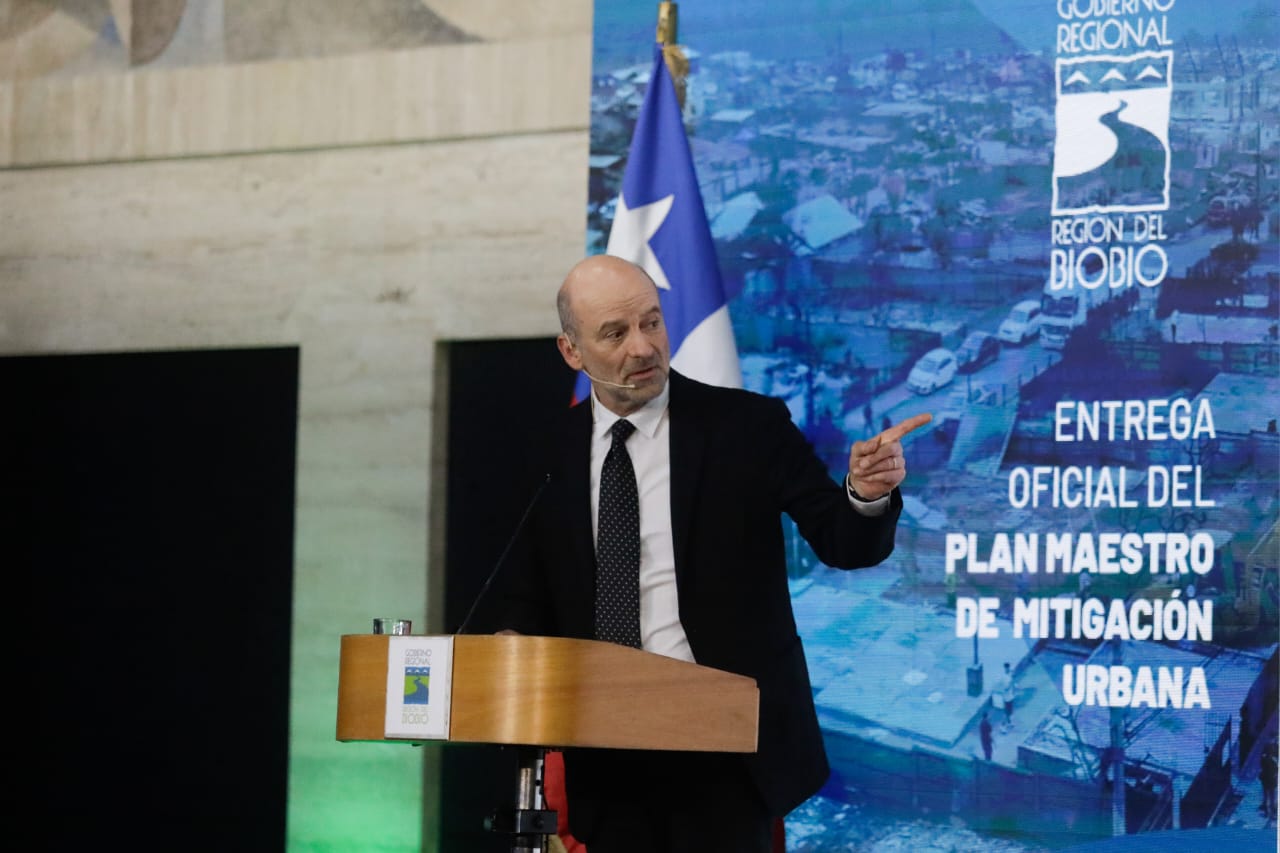
The Regional Government of Biobío officially presented the Urban Mitigation Master Plan (PMMU), a territorial planning tool aimed at reducing community vulnerability to wildfires and strengthening response capacity in urban-rural interface zones.
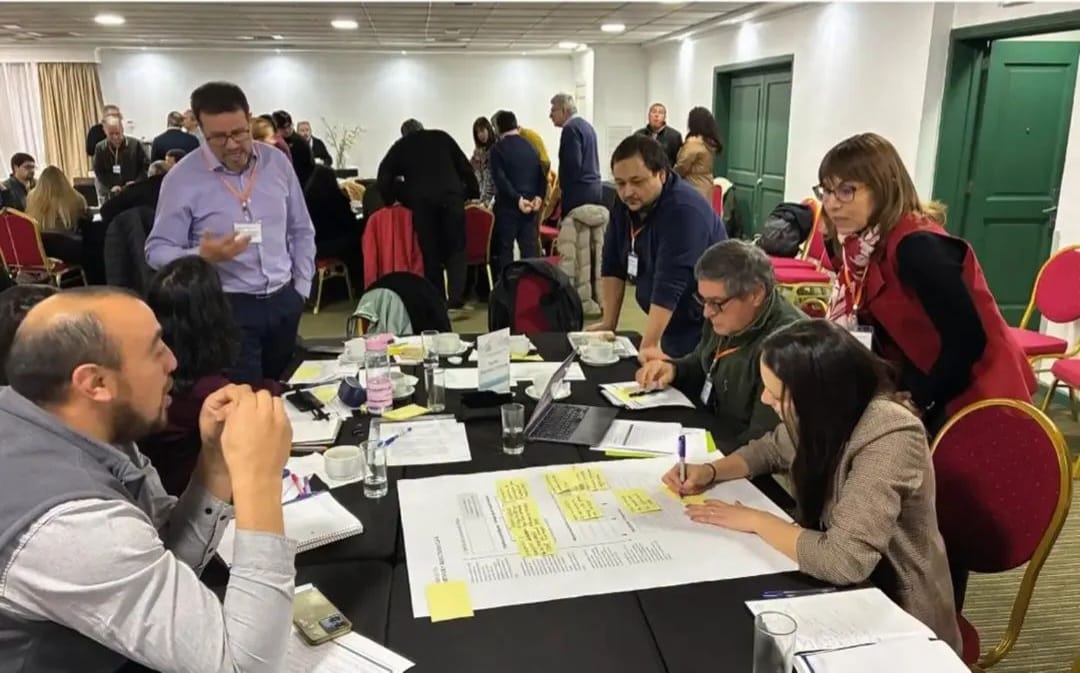
The document was delivered this Thursday by the regional governor, Sergio Giacaman, to President José Antonio Kast, in a ceremony held at the Regional Government headquarters. The proposal arises after the devastating wildfires recorded during the summer and was developed over 150 days by a multidisciplinary team comprising reconstruction experts, academics, mayors, public services, and representatives of affected communities.
"This is a very serious piece of work that we have presented to the President of the Republic and that can also serve as input to advance the discussion on the reconstruction project," Giacaman stated.
The PMMU includes eight master plans gathering 152 initiatives aimed at reducing the risk of future disasters. Among them, the creation of lagoons, mitigation parks, evacuation routes, and other works designed to improve the protection of areas exposed to wildfires stand out.
One of the most innovative aspects of the proposal is the implementation of mitigation parks, defined by the plan's coordinator, Sergio Baeriswyl, as natural systems capable of increasing water availability and environmental humidity.
As he explained, these spaces allow intercepting watercourses through small damming that favors infiltration into aquifers, increasing soil moisture and reducing conditions that facilitate fire spread.
"This generates vegetation with lower combustibility, increases environmental humidity, and helps reduce temperatures, key factors in fire prevention," Baeriswyl stated.
The specialist added that initial modeling shows positive results when these systems are complemented with firebreaks and other territorial protection measures.
From a municipal perspective, mayors of affected communities valued the proposal for incorporating residents' experiences and considering a comprehensive vision of reconstruction and prevention.
The total estimated investment to execute the initiatives reaches US$100 million, a figure that, according to authorities, highlights the need to urgently advance financing mechanisms and the implementation of public policies aimed at disaster risk reduction.
In this regard, the governor announced that the methodology used in the PMMU will be replicated in other communes with high exposure to wildfires, such as Santa Juana, Nacimiento, and Yumbel.
"Territorial planning must become a fundamental tool to anticipate risks and protect communities. This model can be applied in any region of the country," Giacaman concluded.
The proposal positions itself as one of the most ambitious initiatives developed in Biobío to address the challenges posed by the increasingly frequent and intense occurrence of wildfires, combining infrastructure, water management, and citizen participation to strengthen territorial resilience.



Comments (0)
No comments yet. Be the first to comment!
Leave a comment