

Chilean forest exports reached US$2,254.1 million between January and May 2026, a figure representing a 15.4% decrease compared to the same period last year, according to the latest report prepared by the Forest Institute (INFOR).
This result reflects a complex international context for the sector, marked by lower demand and a drop in prices for some of the main exported products, especially pulps, boards, and wood moldings.
Minister of Agriculture, Jaime Campos, stated that these figures confirm the need to continue strengthening the competitiveness and resilience of the national forest sector. "We are facing a demanding international scenario, but we have a sector that has demonstrated its capacity for adaptation and a significant contribution to the country's economic and territorial development. Our challenge is to continue promoting innovation, market diversification, and the strengthening of small and medium-sized forest enterprises to better cope with fluctuations in international markets," he said.
Chemical pulp remained the main exported product, concentrating shipments worth US$1,246.3 million, equivalent to 55.3% of the total exported by the sector. Within this group, bleached eucalyptus pulp stood out, with exports of US$645 million, followed by bleached radiata pine pulp, with US$376.6 million.
However, both products recorded decreases compared to the same period in 2025, influenced by a reduction in their average export prices. In contrast, eucalyptus textile pulp showed a positive performance, reaching US$150.1 million and a growth of 24.7%.
China continued to be the main destination for Chilean forest exports, concentrating purchases worth US$932 million, equivalent to 41.3% of the total exported. It was followed by the United States, Mexico, Peru, and Japan. Among these markets, Peru stood out, with a 15.3% growth in its imports of Chilean forest products.
INFOR's Executive Director, Gabriel Valenzuela, explained that while the figures reflect a general contraction, they also show relevant signals regarding new opportunities for the sector. "We observe a challenging international scenario, particularly due to the drop in prices of strategic products for our export matrix. However, we also see positive signs in specific segments, such as eucalyptus textile pulp and eucalyptus nitens chips, in addition to the growth recorded in some destination markets. These findings reinforce the importance of continuing to generate strategic information to support public and private decision-making," he stated.
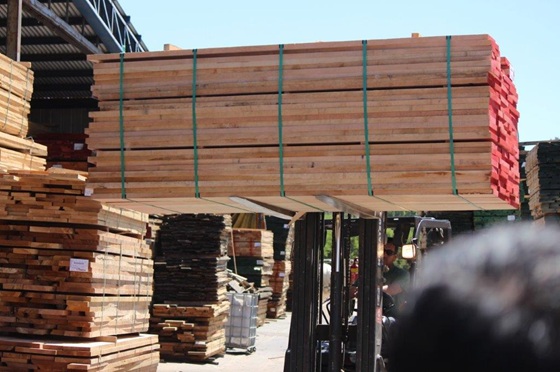
The report also highlights that sawn wood exports reached US$167.7 million, recording a decrease of 4.2%. South Korea remained the main destination, followed by Mexico and Peru. These last two markets recorded increases of 8.8% and 4.8%, respectively, evidencing a gradual diversification of commercial destinations for this product.
Meanwhile, wood boards totaled exports of US$224.4 million, with a decrease of 14.3%, while wood moldings recorded one of the largest contractions of the period, decreasing 28.4% compared to January-May 2025.
During 2025, Chilean forest exports reached US$5,922.5 million, a figure representing a 7.0% decrease compared to 2024, mainly due to the drop in international prices of chemical pulp, boards, and sawn wood.
Finally, INFOR's Executive Director pointed out that the evolution of global demand and international prices will continue to be a determining factor for the sector's export performance in the coming months, in a context where "generating strategic information is key to anticipating trends and strengthening the country's forest competitiveness."






Comments (0)
No comments yet. Be the first to comment!
Leave a comment