

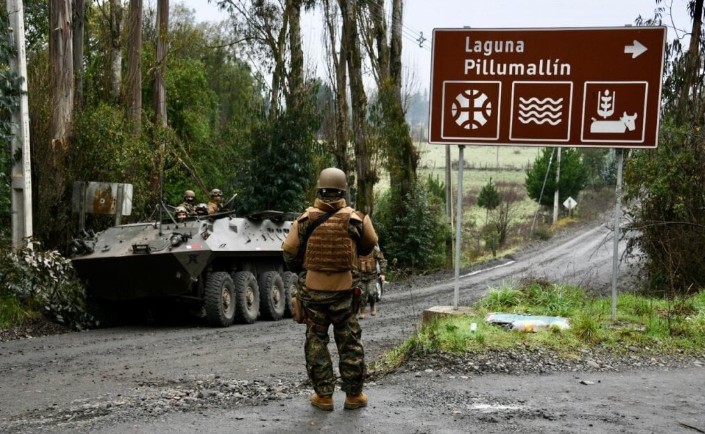
During a visit to the Navy Shipyards and Arsenals (Asmar) in Talcahuano, Defense Minister Adriana del Piano raised the possibility of de-escalating the state of constitutional exception in effect for the southern macro-zone since 2021. Although the Secretary of State indicated that the measure would consider "some" municipalities and its application must be analyzed together with authorities and National Defense chiefs, forestry and timber industry unions flatly rejected the proposal.
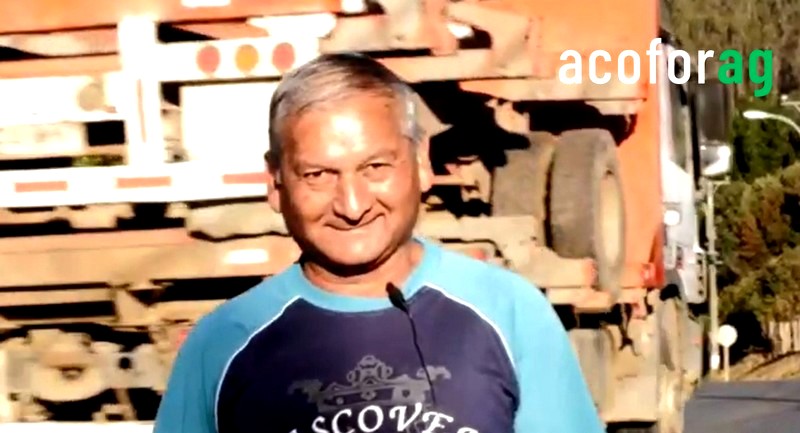
From the Association of Forestry Contractors (Acoforag), its manager, René Muñoz, argued that as long as the State lacks the will to pursue the perpetrators of violent acts, it is not advisable to roll back the state of constitutional exception. On the contrary, the executive called for reinforcing actions through the Rules for the Use of Force (RUF) and the Critical Infrastructure Law. "After 12 years of being submerged in this environment of violence, we forestry contractors believe that de-escalation is not advisable, based on what we have suffered all these years," he questioned.
For Muñoz, only once efforts are reinforced and the perpetrators of the attacks are found, could a progressive withdrawal begin to be discussed. "The minister does not suffer what the contractors and forestry workers have suffered," he accused.
The manager of Acoforag claimed that statistics can be "a bit misleading" given the contraction of economic activities. "When they say that violence has decreased in Arauco, it turns out that half the province has no forestry work and there are no machines to burn," he justified. On the contrary, Muñoz recommended reading statistics with a critical eye and consulting with the right people about what is happening. It is worth noting that the state of constitutional exception in southern Chile's macro-zone was officially established in 2021, with decrees starting in late October that affected the provinces of Malleco, Cautín, Arauco, and Biobío to control violence. During the current period, extensions date from May 2022.
RISK OF MORE DEATHS
For the National Federation of Forestry Transport Unions (Fenasitransfor), the state of emergency must be maintained under current conditions, due to the risk of more deaths of drivers and forestry workers. Its president, Heriberto López, stated that the scenario of controls and surveillance has allowed dismantling groups that have nothing to do with local communities and that, in some way, have further criminalized the territorial struggle of the Mapuche people.
"It has generated much confusion and distrust among us, forestry workers and transport unions, the fact that high-ranking Carabineros officers and civilians are convicted for setups in the so-called Operation Hurricane. This means that the real danger faced by workers was never considered, as those actions could have and could still today trigger the bloodshed of more people," he stated. Faced with the situation, the leader called on both the Government and the Judiciary to reconsider their policies of persecution and imprisonment of Mapuche people's leaders and to finally initiate a process of reconciliation and peace between the Mapuche nation and the State.
PREMATURE DECISION
The president of the Chilean Wood Corporation (Corma) in La Araucanía, Los Ríos, and Los Lagos, Antonio Soto, pointed out that the decision would be "very hasty," since arson attacks with clear intentions are still being recorded.
In the representative's view, the state of exception has been an effective tool to reduce acts of violence in the southern macro-zone. However, he indicated it is "regrettable" that violence remains latent, with clear acts of intent in the fires.
"The protection of aerial and land resources remains vital for the region, as there are still areas where it is not possible to carry out forestry operations normally," he noted.
Soto detailed that the situation not only affects the forestry sector but has a cross-cutting impact on all productive sectors such as agriculture, salmon farming, construction, transport, tourism, commerce, and also essential services like rural health and other public institutions.
Source:La Tribuna






Comments (0)
No comments yet. Be the first to comment!
Leave a comment