

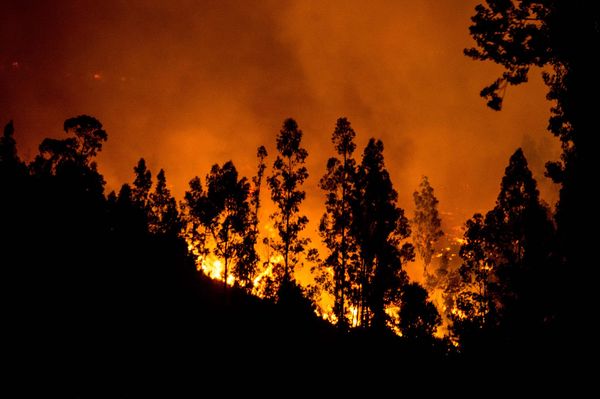
The increase in large-scale wildfires favored or caused by climate, the expansion of the wildland-urban interface, and inadequate forest management pose a major challenge for many countries, including Chile, where traditional suppression has proven insufficient to confront extreme wildfire events.
In Chile, over 93% of wildfires are directly linked to human activity. Within that percentage, 55% are due to negligence and 38% are intentional. Another important figure indicates that interface zones are increasingly affected, meaning over 60% of wildfires originate in places where vegetation and urban areas border each other.
"Within the framework of Integrated Fire Management, which integrates ecological, cultural, socioeconomic, and technical factors, we can move beyond the traditional control approach (business as usual) and advance towards prevention, preparedness, and adaptation in order to coexist with and/or best avoid social, environmental, and economic losses and damages, which is a paradigm shift," says Dr. Mauro González, an academic at the Faculty of Forest Sciences and Natural Resources of the UACh and principal investigator at the Center for Climate and Resilience Science (CR2).
According to the ecological and socioeconomic system in which fire occurs, the application of this conceptual framework considers, among other actions, the reduction of biomass and structural heterogeneity for greater resilience of forest landscapes.
This strategy has been studied and implemented in various parts of Europe and Latin America, including Chile. Its focus has been mainly on the prevention and preparedness of communities in urban-rural interface zones, the reduction of combustible biomass associated with forest plantations, and also on greater inter-institutional coordination.
More Resilient Landscapes
So how can we better prepare considering we have to coexist with wildfires. The UACh professor stated that "globally, and especially in Latin America, Chile possesses a lot of experience and knowledge to address this problem, although there are significant challenges in the area of landscape and forest biomass management."
Regarding prevention and preparedness, he added that much progress has been made. "There is the extensive and continuous work of CONAF through its forest fire protection program and, following the mega-fires of 2017, the Community Prevention Network, with support from forestry companies. Today there are over 300 local communities working in coordination to prepare for and prevent wildfires and respond appropriately," he emphasized.
For the academic, the institutional framework is also better organized to take efficient and timely actions. However, aspects remain to be improved, and one of them is the configuration of landscapes more resilient to fire.
"We have brigades, technology, inter-institutional coordination, private and public collaboration, and also local communities increasingly aware and prepared to prevent and confront wildfires, but given the climatic conditions this is not enough, as we possess a very combustible landscape," affirmed Dr. González.
"Currently we have very dry summers with maximum temperatures over 40 degrees, high-speed winds, especially in the central zone, where there are very extensive and homogeneous plantations. There are municipalities where over 60% are plantations," he added.
On the contrary, what is expected is to advance towards a more diverse landscape, accommodating different socioeconomic activities (not just forest plantations), so that when a wildfire occurs its propagation is not so fast, as due to the change in vegetation type and biomass the fire would decrease in intensity and be easier to control.
Along the same lines, the professor mentions land-use planning as another aspect Chile must work on. "In the sense of being able to restrict -in some cases- certain vegetation covers. In Portugal, for example, there are places where planting eucalyptus is not allowed, because there is already continuity of that type of vegetation and it is known that when it burns it is very difficult to extinguish," he indicated.
In the case of forestry companies, the issue of fuel is addressed from the point of view of preventive silviculture, which involves creating firebreaks and reducing biomass. However, in sensitive areas like urban-rural interface zones, it would be important to diversify land use. "It is a task for the State, of course with private sector commitment, to either change the forest cover to another type of cover or implement strategies to reduce or eliminate vegetation in high-risk areas," expressed the academic.
Dr. Mauro González points out that policies are needed to guide and incentivize the different actors to contribute to this comprehensive strategy and vision for addressing the problem, considering that Chile, along with other countries, is facing unprecedented wildfires.


Comments (0)
No comments yet. Be the first to comment!
Leave a comment