


The city of Los Ángeles was one of the epicenters of the 2nd Chile–California Mission, an initiative that seeks to strengthen collaboration between Chile and the United States in wildfire management and ecosystem protection.
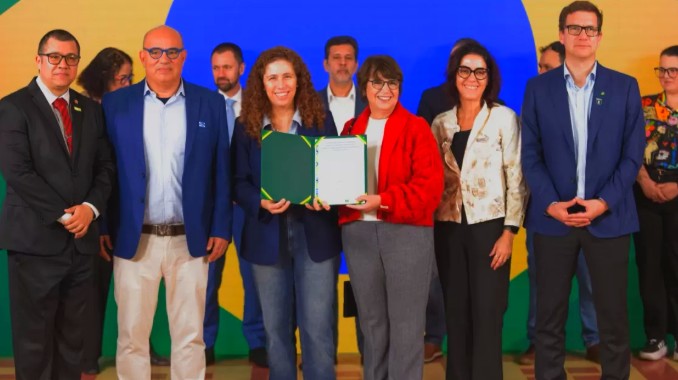
On their first visit to CMPC's corporate building, the U.S. delegation, led by Daniel Berlant, Chief of the California State Firefighters Corps, was accompanied by senior representatives from CAL FIRE, an acronym for "California Department of Forestry and Fire Protection," a U.S. government agency responsible for the prevention and suppression of wildfires.
From this department came Nathan Barcklay, Deputy Director of Cooperative Fire Protection, and Helen López, Deputy Director of Tribal Affairs. Also participating were Chris Anthony, Technology Advisor for Earth Fire Alliance, and Andrew Karn, leader of Seneca, a company that develops autonomous drones for early fire detection.
International Cooperation
The visit—which is part of an agenda covering Santiago, Concepción, and Los Ángeles—included a technical meeting at CMPC's corporate building in Los Ángeles, where the company presented its fire prevention and combat strategies, as well as its focus on innovation and community risk management.
During the day, the specialists learned about CMPC's comprehensive model, which combines active rural fire prevention and the development of technologies for emergency monitoring.
"These instances are key to sharing experiences, technology, and continuing to add ideas and strength in the prevention and combat of fires, which in Chile affect us strongly every summer," said Rafael Correa, Manager of Forests Chile–Argentina for CMPC.
Global Perspective
For his part, Daniel Berlant, Director of Fire Prevention for California, highlighted the importance of strengthening preventive work and mutual learning in the face of climate change: "95% of fires in California originate from human activities. That's why prevention is a critical part of our strategy: stopping fires before they start. Today, fires are more intense and destructive, the climate is warmer, and the fire season has extended by more than two months in recent decades. This forces us to innovate, increase resources, and improve coordination to protect communities," expressed Berlant.
Work with Tribal Communities
Helen López, Deputy Director of the CAL FIRE Office of Tribes, emphasized the importance of joint work with California's native communities to strengthen a more inclusive and effective prevention culture. She explained that, like the State Office of Emergency Services, her institution develops a program aimed at collaborating with local tribes to face various disasters.
López detailed that CAL FIRE has been promoting this initiative for a year and a half, connecting prevention teams with the 21 tribes that have their own firefighting corps. "We train together, share experiences, and prepare together to mitigate and respond to emergencies, including wildfires," she said.
Public-Private Partnership for a More Resilient Future
The mission, organized by the Chile–California Council together with the Ministry of Foreign Affairs and various institutions such as CONAF, CORMA, UC Davis, the University of Concepción, and the U.S. Embassy, seeks to consolidate a Memorandum of Understanding that fosters technical and scientific cooperation in prevention, management, and post-fire restoration in both hemispheres.
Rafael Correa, Manager of Forests Chile–Argentina for CMPC, highlighted that the visit to Los Ángeles reflects international collaboration in the face of common challenges: "Together we can innovate and develop concrete solutions to protect our forests and the communities that depend on them."
The article inRevista Contratistas Forestales



Comments (0)
No comments yet. Be the first to comment!
Leave a comment