

The last month has been intense for Empresas CMPC, linked to the Matte family. In late September it announced the agreement to sell its corrugated business in Chile to multinational Smurfit Westrock for about US$ 420 million.
Last week it reported the sale of some 60,000 hectares of forest land in the Maule Region, for US$ 365.5 million, to J.P. Morgan Natural Capital. And last Thursday it was learned that Natureza, its US$ 4.6 billion megaproject in Brazil, which would be added to the Guaiba plant in that country, received the prior license granted by the State Foundation for Environmental Protection (Fepam) of Rio Grande do Sul.
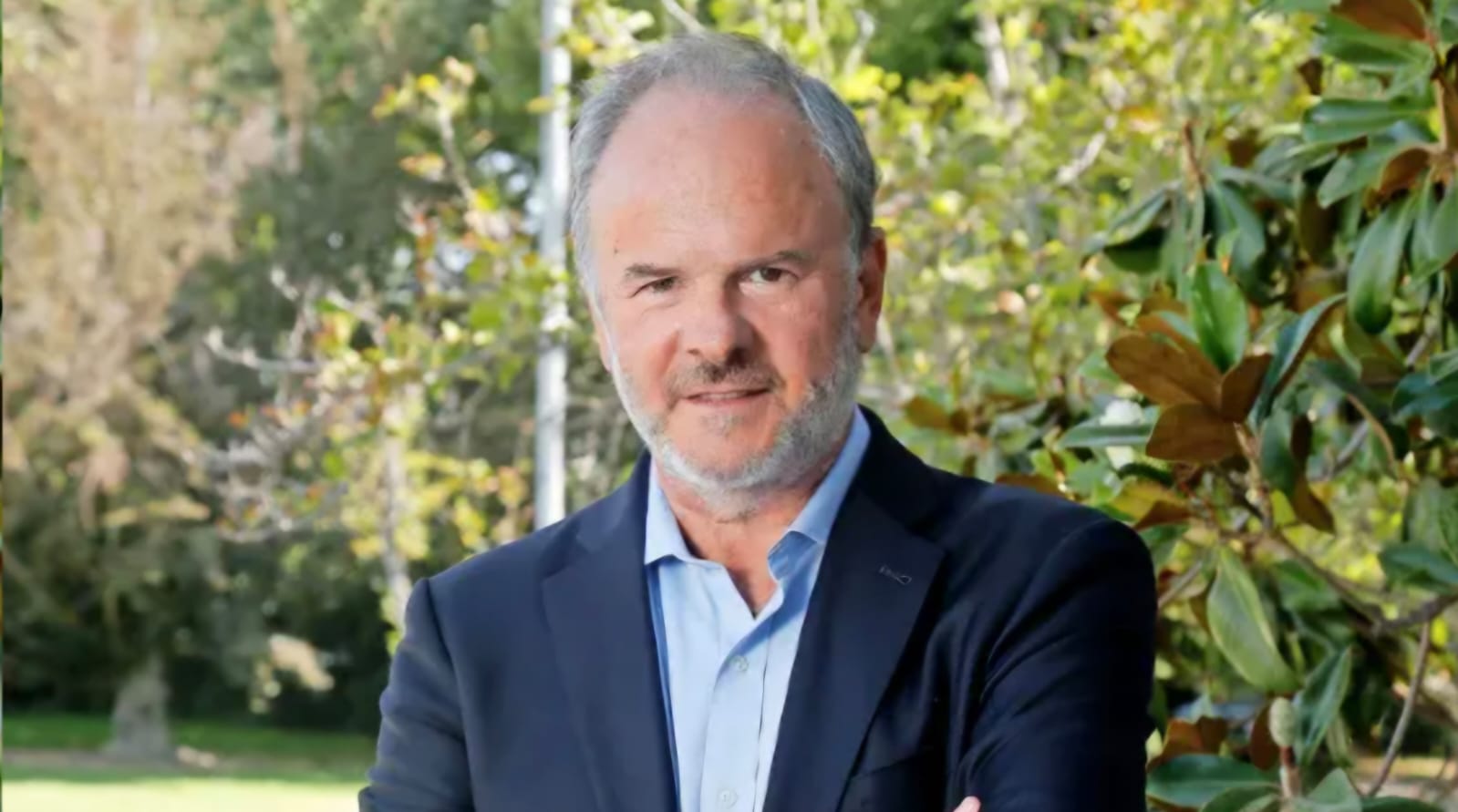
CMPC Chairman Bernardo Larraín Matte spoke yesterday with "El Mercurio"—during the Enade business meeting—about the impact of those divestments and the plans with Natureza in Brazil.
—With the recent sale of assets, are you building up the capital to invest in Natureza?
"Natureza has the prior license, which is not the final license. It is quite relevant because what the prior license conveys is that the project, under the conditions in which it was presented, can be done in that location.
"What comes next is an installation license, where CMPC must submit a series of more detailed background information, so that the environmental authority authorizes us to begin construction. That is a path we are advancing along. Natureza's financing plan is being worked on with traditional instruments, from BNDES in Brazil, the credits provided by the export agencies of the countries that supply the equipment, bonds, hybrid bonds and also other more sophisticated instruments. The Finance management has the challenge of showing us the entire range of financing possibilities."
"The divestments that have been announced have more of a sense of focusing on the core businesses, such as pulp and tissue; of course we remain in wood products and the rest of the papers. But they are not related only to Natureza. From the economic and value standpoint for the company they are positive. Of course they also represent a source of resources to generate the enabling conditions so that when the board decides to undertake Natureza, the company's balance sheet is prepared for it."
—Are you today in a better financial position to tackle that investment?
"Of course. The enabling conditions for Natureza are, first of all, the matter of permits. Second, something quite relevant is that every day that passes we use it to optimize the project. There are always opportunities to make it more efficient, reduce capex, the investment cost... We are also looking at the commercial strategy. It is 2.5 million tons of pulp
(per year) with Natureza that must be sold to the different markets of the world."
—Is the market today fit for a project like this?
"The pulp market has been going through a longer period than previous cycles at a price below 600 (dollars per ton). But these projects are looked at for the long term. The fundamentals of the industry remain solid... In India, tissue paper consumption is one kilo per person per year and in the United States it is 28 kilos. That shows the potential that tissue paper has. Not to mention packaging products. E-commerce demands cardboard boxes, specialty papers. Pulp is also an input for producing textiles, there are new applications, so the fundamentals are there."
—You have been producing in Brazil under different governments, how do you see the scenario now after Luiz Inácio Lula da Silva's victory on Sunday?
"The Natureza project has advanced. The environmental permit is granted by the regional government... Regarding the central government, we also had a lot of work with it, because the port through which the pulp will be exported, the terminal concession, is granted by the central government. And, for example, on Thursday when the prior license was granted, Geraldo Alckmin, who is the vice president of Lula's government and also his running mate, was at the ceremony where our manager in Brazil was given that license. So, that shows that in Brazil there is a lot of political support for industries, for growth, for large investor projects."
—For investments of that magnitude in Chile, are you not in the conditions?
"In the forestry industry in Chile CMPC invests every year US$ 400 million to US$ 500 million, which is not little... Obviously there is room to grow in forest plantations. In 10 to 15 more years, why not think that there could be more pulp plants in Chile? Suddenly we limit ourselves, we go around as if it were an unquestionable reality that no more is planted. It must be encouraged. There are 26,000 small forest owners."
Source:El Mercurio



Comments (0)
No comments yet. Be the first to comment!
Leave a comment