

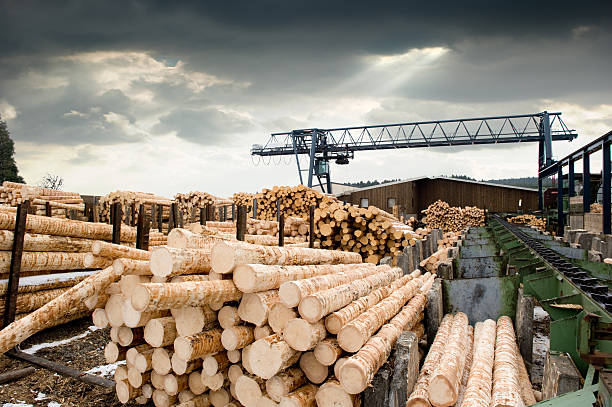
The country's sawmills marketed 2,767,040 m³ of wood by-products during 2025, a volume that represented 62.5% of national production. This is indicated by Infor figures, which show cogeneration plants as the main destination for these materials, concentrating more than one third of the total marketed.
According to the information, cogeneration plants received 1,059,844 m³, equivalent to 38.3% of the volume. In second place were industrial plants, with 320,562 m³ (11.6%), followed by heating pellet production facilities, which reached 275,252 m³ (9.9%). Other relevant destinations were chipping plants, panel plants and intermediaries.
Use of by-products
Regarding the raw materials used, bark and primary sawdust were the main components destined for cogeneration plants, with shares of 45.3% and 41.9%, respectively. At pellet plants, meanwhile, primary sawdust clearly predominated, representing 72.1% of the volume received.
The figures also allow for observing differences in the composition of by-products according to industrial destination. While cogeneration concentrates significant volumes of bark and sawdust, other facilities mainly use residues derived from wood processing, such as slabs and chips.
Lower marketing and self-consumption
When comparing the results with 2024, the volume of wood by-products marketed recorded a decrease of 1.6%. The decline was more pronounced in self-consumption, which presented a year-on-year reduction of 10.9%.
Despite this decrease, self-consumption represented 34.5% of national by-product production during 2025. Its use was mainly destined for wood drying, reflecting the importance of these materials in resource utilization and in the productive processes of the forestry industry.






Comments (0)
No comments yet. Be the first to comment!
Leave a comment