

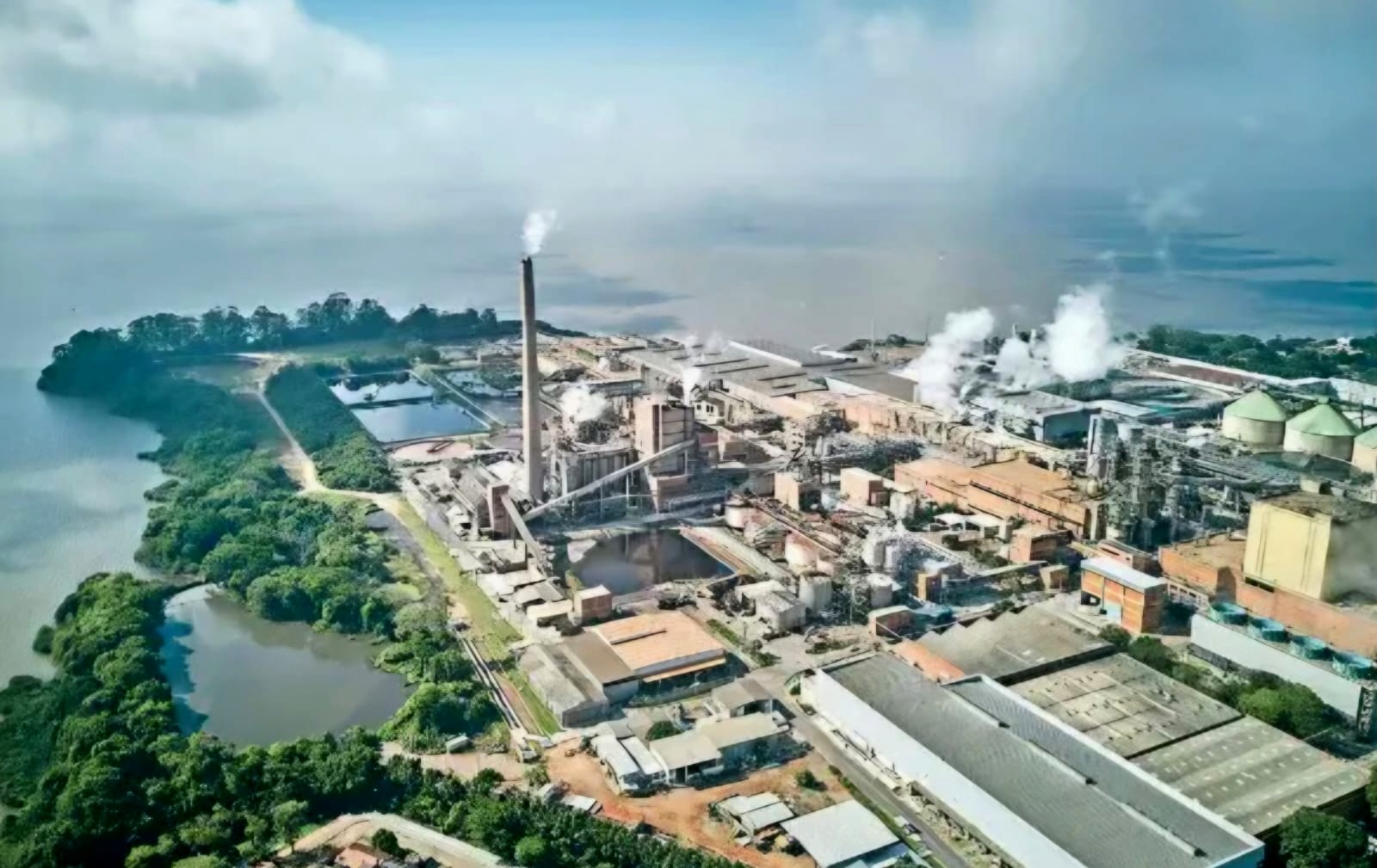
"Maintaining investment grade is a fundamental priority for the company, a rating we have held for more than 30 years." That is how Empresas CMPC puts it, after agreeing in less than a month to sell its Corrugados business in Chile and 60,000 hectares of forest in the Maule region for US$786 million.
The sales are the company's latest move to preserve its BBB-, the last rung of investment grade.
Fitch Ratings estimates that, with the forest sale, net leverage would fall to 2.8 times in 2027, versus the 3.1 times it would have without it. And they come just before the decisions on Natureza, the pulp plant with which CMPC seeks to secure the competitiveness of its business.
For now, the large local institutions have not reduced their exposure. As of October, the AFPs held US$1.049 billion in CMPC bonds, practically the same as in September (US$1.048 billion), a variation of 16.5% over 12 months. Only Celulosa Arauco y Constitución (US$1.810 billion) and Ferrocarriles del Estado concentrate a larger holding of Chilean corporate debt in the pension funds.
Fitch, which maintains the BBB- rating with a stable outlook, describes the Maule sale as neutral for the rating, but consistent with the strategy of focusing on core businesses, gaining competitiveness and improving the capital structure.
In a comment sent to El Mercurio Inversiones, Rodolfo Schmauk, director of LatinAmerica Corporates at the rating agency, says its projections point to a reduction in leverage in 2027, mainly due to higher pulp prices and improvements in the Softies business. "That supports the assigned stable outlook," he states.
The agency expects net leverage to remain below the downgrade threshold it sets for the company throughout its rating horizon, even in a scenario of more pressured pulp prices. This, despite projecting that 2026 will close at 3.8 times, above the 3.5 times threshold, due to lower-than-expected prices between January and August, which averaged US$586 per ton.
The asset sales, Fitch explains, accelerate the reduction of debt beyond what would be achieved organically and, once the funds are used to pay down liabilities, will leave the company stronger at its rating level and with more headroom. That headroom, however, has a limit: Natureza. The agency will assess its impact when it is announced and it is known how it will be financed, and warns that the sales help prepare the balance sheet, but are not necessarily enough to execute it with debt alone.
Fitch also sees no room for a rating upgrade. "Although we do not see a rating increase in the short term, to return to BBB we would expect the company to be able to maintain net leverage below 3.0x and positive free cash flow on a sustained basis," Schmauk says.
How its bonds are performing
The bonds reflect that relative calm. Although they trade below par value, the 2030 (92.2), 2031 (86.2) and 2033 (95.5) notes yield between 6.59% and 6.97%, with spreads of 201 to 225 basis points, and the 2027 bond trades almost at par (99.7), as of November 11.
That said, there is a premium versus peers. According to FYNSA, the 2030 bond yields 60 basis points more than Suzano's and 15 basis points more than Arauco's, with practically identical duration, while the 2031 offers about 22 basis points more than Klabin's and the 2033 about 24 basis points more than Arauco's 2032.
The gap with Arauco, however, is narrower than with Suzano. For Fitch's Schmauk, that is explained in part because Arauco is going through an intense investment phase and has high leverage, which also weighs on its bonds. CMPC, by contrast, has not yet announced its new project and its indebtedness tends to decline, so the market demands only a little more of it than of its local competitor.
The warning before the sales
The biggest warning comes from S&P Global Ratings, which on August 19 affirmed the BBB-, but revised the outlook to negative, with a one-in-three probability of a downgrade within two years.
It cut its projected Ebitda to US$1.120 billion for 2026 (from close to US$1.300 billion) and to US$1.270 billion for 2027 (from somewhat more than US$1.400 billion), due to lower long-fiber pulp prices, lower volumes and the weak performance of Biopackaging.
To that it adds rising cash costs: 14% annually in short fiber (US$254 per ton) and 9% in long fiber (US$419).
For S&P, the strategy is advancing more slowly than planned. In its projections, the rating agency had postponed the asset sales from 2026 to 2027, although that analysis predates the agreements for Corrugados and the Maule forests.
The agency has two triggers for a downgrade: adjusted leverage exceeding 3.5 times or funds from operations (FFO) covering less than 20% of debt. Both are measured as a three-to-five-year average, so a single bad year is not enough on its own to generate the downgrade. With its August projections, adjusted leverage, which touched 4.9 times in the 12 months to June, would fall to about 4.2 times by year-end and only in 2027 would it fall below the key threshold.
These figures are not directly comparable with Fitch's, because S&P uses an adjusted measure of debt and Fitch a net one.
Asked by El Mercurio Inversiones, CMPC does its own calculation with the already agreed sales: "In a simplified arithmetic exercise, if we considered the US$786 million corresponding to the agreed sales of Corrugados and forest assets in the Maule, the Net Debt/Ebitda ratio at the close of September would stand below 3.5 times, that is, within the range established in our financial policy."
Source:El Mercurio





Comments (0)
No comments yet. Be the first to comment!
Leave a comment